An excerpt from the book 'Strange Stars' explores how science fiction and the works of William Burroughs fueled David Bowie's iconic alter ego, Ziggy Stardust
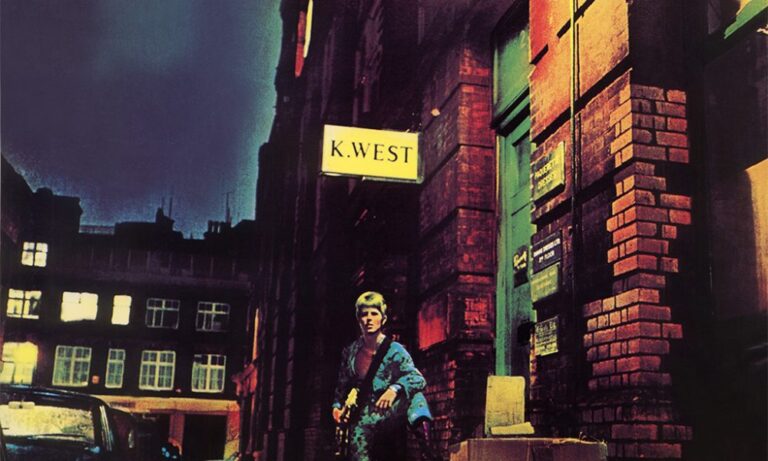
June 16, 1972: David Bowie unveils his album The Rise and Fall of Ziggy Stardust.
The book of Jason Heller, “Strange Stars: David Bowie, Pop Music, and the Decade Sci-Fi Exploded” talentedly recounts the influence of science fiction on the music of the 70s. And we couldn't escape it: Heller looked at the creation of Bowie's most famous alter ego, Ziggy Stardust.
On the night of February 10, 1972, a small crowd of around sixty fans stood in the Toby Jug pub, in the heart of Tolworth, a suburban district in southwest London. A DJ played his records to warm up the audience before the headliner. The room was nothing more than a ” place ordinary reception ». The two-story brick building that housed it was just an old building, which had also hosted many rock bands in recent years, including Led Zeppelin, Jethro Tull And Fleetwood Mac.
Most of the spectators already knew who was David Bowie – the famous singer who, three years earlier, had released “ Space Oddity“ who has been very discreet since then, focusing instead on records that have barely made a dent in the charts. The single “ Changes”, released a little earlier in January, was not an immediate success in England. The song's lyrics seemed to signal an impending metamorphosis, which Bowie himself made clear in an interview for Melody Maker : “I am gay and always have been” he declared. “I'm going to be famous, and that's kind of scary in a way.”. Bowie clearly had a plan.
Before Bowie took the stage at the Toby Jug, an orchestral crescendo introduced him. This was a recording of Beethoven's Ninth Symphony, taken from the soundtrack of A Clockwork Orange. For anyone who had seen the film, the music conveyed a rather sinister feeling, one that led directly back to Kubrick's masterpiece. Grandiloquence, cinematic and cosmic atmosphere: there was no better backdrop for Toby Jug spectators to get into the swing of things from the start…
Around 9 p.m., the lights go out. A spotlight cuts through the darkness. Bowie takes the stage. But was it really him? Physically, there is no doubt. But this Bowie, no one had ever seen him before. Her hair – which at the time of“ Hunky Dory » were blonde – were now cut in a mullet style, with a bright orange hue. Her face was sumptuously covered in makeup. He wore a jumpsuit with a plunging neckline, revealing a delicate, bony chest. Further down, a pair of red ones were revealed. Bowie was never redundant about his attire. But this was quite a leap into the unknown.
Then he started singing. His group – nicknamed the Spiders from Mars and including the guitarist Mick Ronsonthe bassist Trevor Bolder and the drummer Woody Woodmansey – played strong, efficient. They were all dressed in sparkling metallic clothes, a sort of space suit, reminiscent of the costumes from the film. Barbarella (1968). The film which revealed Jane Fonda had enormous success in England then gradually became cult in the United States, thanks in particular to its representation of a sensuality rediscovered after years of virtual and sterile sex.
In the same way, this new incarnation of Bowie could therefore surprise, even shock, frighten. Combined with this, his recent coming out, while married to his first wife, Angela. A pile of novelties and risk-taking, coming from another planet.
But what captivated the audience the most was the music. Amidst a set of well-known songs like “Andy Warhol”, “Wild Eyed Boy by Freecloud” and, naturally, “Space Oddity”the Spiders from Mars have added a handful of new tracks, including “Hang On to Yourself” And “Suffragette City”which hadn't even been recorded yet. The audience, applauding, finds themselves totally captivated. Although the crowds seemed rather sparse, it was said that people balanced on tables and chairs to get the best view possible. Bowie seemed ready to be propelled much higher than Major Tom in “Space Oddity”.
After two hours of concert, Bowie broke the ice, once and for all, and announced the name of his new identity on stage: Ziggy Stardust.
When suddenly, a new era
Bowie's fifth album, “The Rise and Fall of Ziggy Stardust and the Spiders from Mars »was revealed on June 16, 1972. By this time, Ziggy had become a veritable popular sensation. Following the Toby Jug concert in February, fans embraced Bowie's new persona, showing him off at concert venues across the UK. Where, moreover, the attendance increased every evening. Exponentially.
Around the time of the album's release, he and the Spiders appeared on the show Top of the Pops from the BBC, where they performed the centerpiece of the record: the song “Starman”. Watching Bowie on television that evening shook the stratosphere as much as the legendary Beatles on the American Ed Sullivan Show, eight years earlier. Bowie performed the song wearing his multi-colored jumpsuit, which Melody Maker described as “what the well-dressed astronaut should wear, according to Vogue magazine”.
https://www.youtube.com/watch?v=mYtRp9UNx8Y
Musically, “Starman” was the quintessential pop song, exactly what Bowie needed at this precise moment in his career. Basically, he took the opportunity to introduce this science fiction story centered on Ziggy Stardustwho was both Bowie's alter ego and the fictional protagonist of this new concept album “Rise and Fall”. The extraterrestrial – Bowie – announced his exceptional arrival on Earth: “A slow voice on a wave of phase(…) Look out your window, you can see his light, If we can sparkle, he may land tonight. »
If we could think that “Starman” was an explicit reference to Starman Jones by Heinlein, the book that Bowie loved so much as a child, the musician never admitted it publicly. Finally, the story of “Rise and Fall” also reminds us of another work by Heinlein : Stranger in a Strange Land (translation : “In a foreign land”). The novel that also influenced David Crosby in the 60s and, later, many other musicians who were fans of 70s science fiction.
The main character of the book, Valentine Michael Smithcomes from Mars; In “Rise and Fall”the planet in question is squarely part of the title. So, Valentine and Ziggy become figures of the androgynous gender. Bowie later claimed that he had refused to star in an adaptation of the novel, calling it“incredibly, incredibly banal”. Regardless, he had clearly read the book and developed an undeniable opinion about it – perhaps enough for some of its themes and iconography to seep into his own work.
The opening song of the album, “Five Years”elegiacally describes a dystopian future: the world will end in five years due to lack of resources, and society will disintegrate in mad paralysis. The sinister chorus of the song, “We’ve got five years”is sung urgently by Bowie, his voice sounding more panicked and disturbed than ever ” It was about trying to make fun of the future”said Bowie in 1972. “Making fun of something and making fun of it scares me less” – This ” something “ being the apocalypse.
During their meeting, Burroughs brought up the rumor that Bowie might play the role of Valentine Michael Smith in a film adaptation of Heinlein's book. Bowie rejected it again. “It seemed a little too obvious, and it made me a little suspicious. » For his part, Bowie's friend Mick Farrenmusician of Deviantslater admitted that he still thought Valentine remained a major influence for the Ziggy Stardust. “I was sure someone would call him for plagiarism, » said Farren. “But no one did. »
Bowie may have denied his affinity for “ Stranger in a Strange Land“ but he did not hesitate to declare his love for one of the authors to whom society has previously compared him: George Orwell. Before parting ways, Bowie told Burroughs, “Now I’m tackling Orwell’s 1984, a television adaptation”. This project will never come to fruition, but it will lay the groundwork for his next concept album (Aladdin Sane), again turning to science fiction jargon. A new cycle of atmospheric and unstructured songs, which will plunge Bowie into the limbo of dystopia…