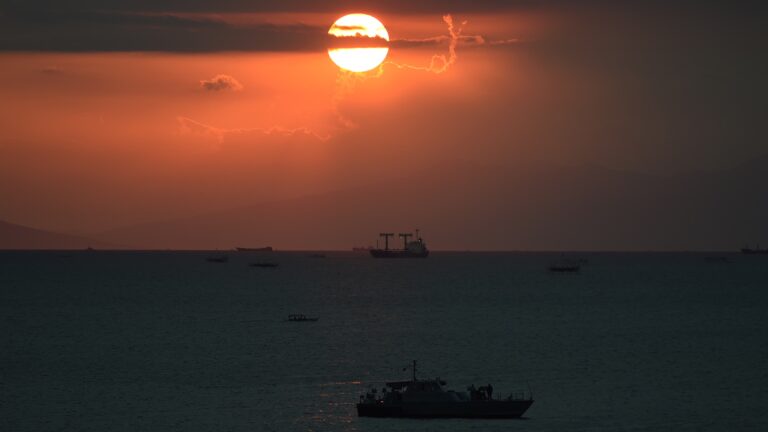
A diplomatic tug-of-war is unfolding in Southeast Asia, where two neighbouring countries are refusing to accept a shipment of radioactive waste adrift in the waters off Manila. What began as a routine trade shipment has turned into a complex environmental and political puzzle.
A toxic cargo with no home
For more than a week, 23 containers of zinc dust contaminated with Caesium-137 — a radioactive isotope — have been stranded in Manila Bay, caught between the Philippines and Indonesia. Neither country wants to take responsibility for the hazardous cargo, which was initially sent from the Philippines to Indonesia before being turned back.
According to Indonesian officials, radiation was detected in the shipment, prompting Jakarta to reject and re-export the containers to their point of origin. Now, the cargo remains anchored off the Philippine coast as authorities scramble to determine what to do next.
“It’s a bit of a puzzle,” admitted Carlo Arcilla, head of the Philippine Nuclear Research Institute (PNRI). “We need to find a proper disposal site soon, but it’s not a national emergency. The radiation levels are low and manageable.”
Where the contamination began
The containers are believed to have originated from Zannwann International Trading Corp, which allegedly exported the material after sourcing it from Steel Asia, a major steel recycling company. The contaminated zinc dust is thought to be a by-product of steel production, possibly tainted during the recycling of scrap metal.
Steel Asia, however, has denied any wrongdoing. The company briefly suspended operations at its recycling facility but dismissed the PNRI’s findings as “unscientific” and claimed the cargo in question was not theirs. Attempts to reach Zannwann International Trading Corp have so far gone unanswered.
The dispute leaves the contaminated containers floating in limbo, with environmental agencies warning of potential risks if the material is not handled properly.
A regional ripple effect
The timing of the incident couldn’t be worse for Indonesia, which is already facing public scrutiny following reports of radioactive contamination in some imported products, including food. Authorities there recently discovered traces of Caesium-137 — the same isotope found in the containers — in several imported goods, raising alarm among consumers.
The U.S. Food and Drug Administration (FDA) also issued a recall of certain Indonesian imports, including frozen shrimp and cloves, after detecting low levels of the isotope. Though experts stress that exposure at these levels is minimal, the discovery has reignited concerns about industrial contamination across Southeast Asia.
According to the FDA, prolonged exposure to Caesium-137 — even in small doses — can increase the risk of cancer. The isotope is commonly used in medical radiotherapy, industrial gauges, and nuclear research, but improper handling or disposal can lead to long-term environmental damage.
A race to contain the fallout
While officials emphasise that there’s no immediate threat to public safety, the diplomatic standoff underscores the difficulty of managing cross-border waste in the region. With neither the Philippines nor Indonesia willing to accept the shipment, international mediation may be required to find a safe solution.
“The key now is containment and transparency,” said a nuclear safety expert based in Singapore. “Radioactive waste doesn’t care about national borders. It demands responsible cooperation.”
As the 23 containers sit at sea, bobbing quietly under the tropical sun, they serve as a stark reminder that global trade and environmental safety remain precariously intertwined. What began as an industrial by-product has now become a political and environmental headache — one that neither country can afford to ignore for long.