
In the tense world of inter-Korean relations, where every action seems to spark a new wave of controversy, a recent development has added a fresh layer of complexity to an already fragile situation. After months of South Korean balloons filled with trash drifting into North Korea, the tables were turned, and North Korea launched its own aerial retaliation with drones. The situation is not just a battle of military might; it’s a clash of psychological warfare, technological advancements, and deeply entrenched national pride.
A Longstanding History of Tension
The relationship between North and South Korea has always been marked by friction. Since the end of the Korean War in 1953, both countries have remained technically at war, separated by a heavily militarized border. While the dream of reunification has often seemed like a distant hope, tensions have escalated in recent years. Kim Jong-un, the leader of North Korea, has openly referred to South Korea as the “primary enemy,” signaling the deepening divide between the two nations.
But the tensions aren’t confined to military actions or diplomatic verbal duels. Over the past few months, an odd but significant form of retaliation has emerged—balloons filled with waste sent from the North into the South, and more recently, drones carrying politically charged messages from the South to the North.
North Korea’s Drone Response
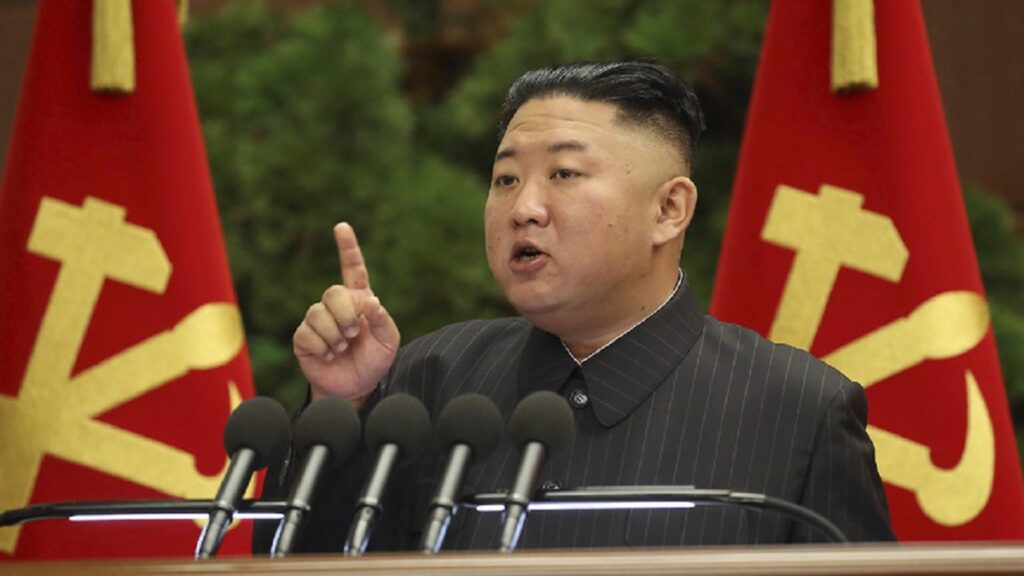
On October 3, North Korea detected a drone hovering above Pyongyang, which was carrying anti-regime pamphlets. The pamphlets, according to North Korean authorities, were full of what they termed “incendiary rumors” and “political waste”. The situation escalated quickly as Kim Yo-jong, the sister of Kim Jong-un, issued a stern warning, threatening a “strong retaliation” and hinting at a “horrible disaster” if another drone were to cross into North Korean airspace.
In an attempt to de-escalate the situation, South Korea denied any involvement from military drones, acknowledging that South Korean citizens might have been behind the pamphlet-laden flights. However, this ambiguous response only added fuel to the fire, leaving many uncertain about how these drone incidents should be interpreted.
Trash-Filled Balloons From the North
While drones have become the latest weapon in this psychological battle, balloons filled with trash have been the North’s tool of choice for months. Since May, more than 5,500 balloons have been sent from North Korea to South Korea, carrying a mix of waste, feces, and occasionally dangerous items. These “balloons of anger”, as they’ve been dubbed, are seen as an effort by North Korea to harass and provoke South Korea both psychologically and physically.
The contents of these balloons have sparked widespread concern in the South, not only for the potential health risks but also because some of them have caused fires and damaged infrastructure. There’s growing fear that one day, these balloons could carry something much more dangerous—perhaps biological weapons. In response, South Korea has issued threats of “military action” if one of these balloons were to cause human casualties or cross a “red line.”
A Mirror Game of Provocations

This tit-for-tat tactic of sending flying objects across the border isn’t new. For years, South Korean activists have been sending balloons loaded with anti-regime pamphlets, banknotes, and even USB drives containing K-pop music into North Korea in an attempt to weaken the regime. Pyongyang has long disapproved of these efforts, and in December 2022, North Korea sent drones over Seoul, leading to a deployment of South Korean fighter jets.
The ongoing cat-and-mouse game shows how both sides are locked in a psychological war that blends propaganda, technology, and the desire to one-up each other in increasingly creative ways.
The Escalating Tension
North Korea’s recent actions, including the destruction of sections of roads linking the North and South, indicate a symbolic act of defiance. Pyongyang seems intent on cutting off any possibility of dialogue. Meanwhile, South Korea has reignited a psychological warfare tactic of its own, using loudspeakers along the border to broadcast propaganda and even K-pop songs into the North. It’s an unusual battle of hearts and minds, but one that carries serious geopolitical risks.
In this high-tech conflict, both countries are demonstrating their ability to use new technologies for not just military purposes but also for propaganda and psychological warfare. As tensions continue to simmer, the use of drones and balloons will likely evolve, as each side tests the boundaries of what can be used to provoke, influence, or retaliate.
While the world watches this unsettling dynamic unfold, one thing is certain: North and South Korea remain locked in a high-stakes game of chess, where the moves are unconventional, the stakes are high, and the future remains uncertain. The question now is not just how far these provocations will go, but how the world will respond when these technological and psychological battles cross even more dangerous thresholds.