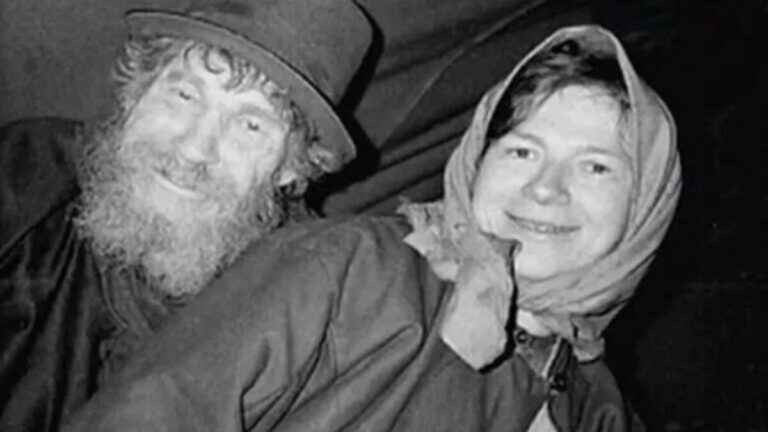
In today’s world of constant digital connectivity and instant communication, the story of the Lykov family, who spent 40 years in complete isolation deep in the Siberian wilderness, seems like a tale from another century. Their remarkable journey of survival and solitude stands as a stark contrast to our fast-paced, tech-dependent lives.
The Lykov Family: A Life Unplugged
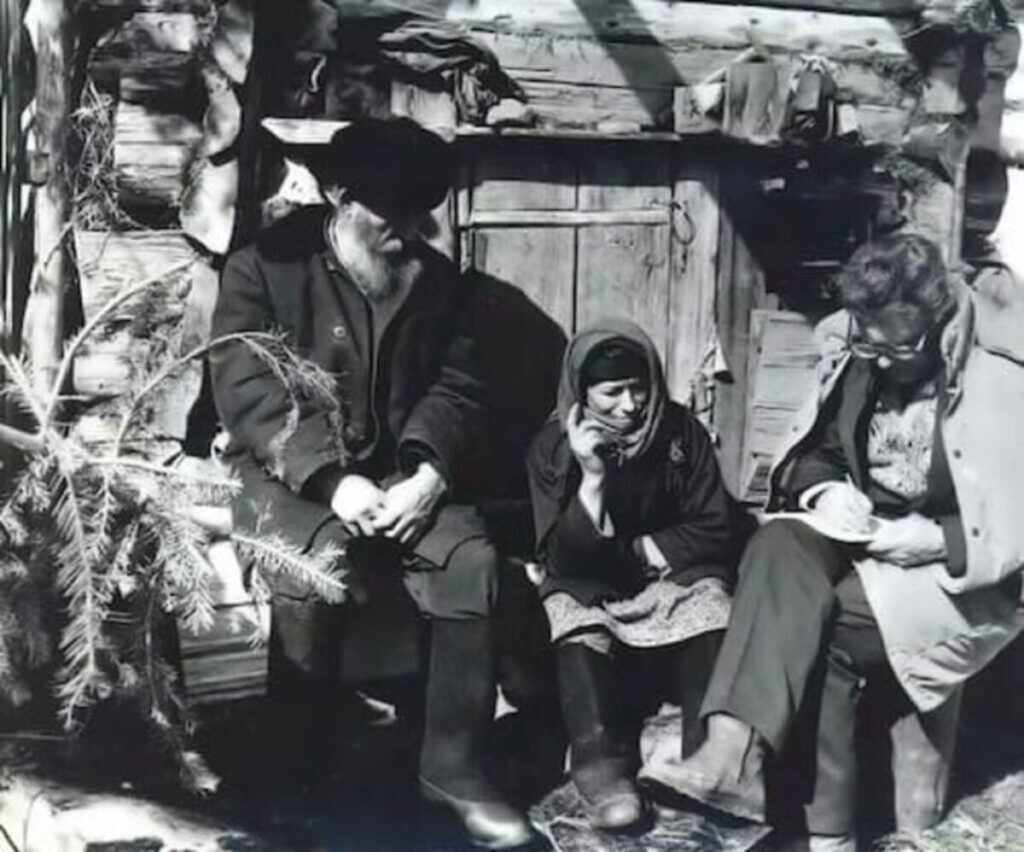
Imagine living in a place so remote that the outside world doesn’t even register. This was the reality for the Lykov family, who made their home in the dense, harsh forests of Siberia, far from any human contact. Their extraordinary seclusion was shattered in the mid-1970s, when a group of Soviet geologists accidentally discovered their hidden cabin.
The story begins in the mid-1930s, when Karp Lykov, a devout man, fled with his wife Akulina and their two young children, Savin and Natalia, to escape the growing pressure from Soviet authorities. Their family had already suffered the tragic loss of Karp’s brother, who was killed by Soviet soldiers, which only deepened their resolve to live away from civilization. Thus began their retreat into the wilderness, cut off from the world for decades.
A Testament to Resilience and Simplicity
For over 40 years, the Lykov family lived off the land, surviving with minimal resources. They crafted their own clothes from hemp and tree bark, and their diet, though simple, kept them alive through the harsh Siberian winters. Hunting and gathering were their main means of survival, and the family’s only entertainment was the old family Bible.
Perhaps the most striking aspect of the Lykovs’ isolated life was that the children, including those born in the wilderness, had no knowledge of the outside world. They were completely unaware of significant events like World War II, and had never met anyone other than their immediate family. The wilderness was their home, and they had no need to seek anything beyond it.
The World Intrudes
The Lykov family’s secluded existence came to an end when they were accidentally discovered by geologists, bringing them into the modern world for the first time in four decades. However, their encounter with the outside world was far from a joyous reunion. Despite their newfound fame, the Lykovs chose to remain in the wilderness. This decision, unfortunately, led to tragedy: most family members died within a few years of their discovery, unable to adapt to the changes brought on by human interaction.
Karp Lykov, the family patriarch, lived to the age of 90, passing away in 1988. His death marked the end of an era, leaving his youngest daughter, Agafia, the sole survivor of the family. Even today, Agafia continues to live in the forest, carrying on the legacy of her family’s remarkable story of survival and self-sufficiency.
A Modern Hermit’s Tale

Agafia Lykov’s decision to remain in the wilderness, even after the deaths of her family, serves as a poignant reminder of the resilience and strength the Lykovs displayed throughout their lives. Living in a more modern, yet still rustic, home, Agafia is the last link to the story of a family who lived for decades in near total isolation.
Her continued survival in the Taiga, despite the challenges, speaks volumes about human adaptability and the sheer will to live. While her situation may seem extreme to those of us accustomed to technology and human connection, it forces us to reconsider what we truly need to survive. The Lykovs lived simply but found a deep sense of peace and purpose in their remote, self-sustained existence.
A Reflection on Survival and Human Needs
In a world where we’re increasingly tied to technology and social networks, the Lykov family’s story invites us to reflect on the essentials of life. What do we truly need to survive and thrive? The Lykovs’ experience challenges us to think about our own relationship with comfort, technology, and nature. Their extraordinary story serves as a reminder that, even in the most isolated circumstances, humans are capable of enduring and adapting to the harshest conditions.
Their legacy is one of courage, simplicity, and resilience—a legacy that continues to inspire, reminding us that the strength to survive lies not in the conveniences of modern life but in the depths of our own resourcefulness and determination.