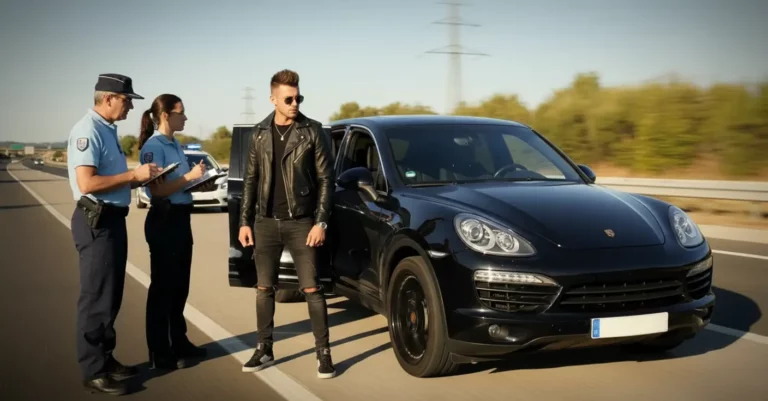
A Record-Breaking Sprint
According to local police, this was the highest speed ever recorded by this particular radar system. The jaw-dropping event took place on July 28, just west of Berlin. While Germany’s Autobahns enjoy global fame for having stretches with no speed limit, the truth is, plenty of sections do have speed caps—especially in busy areas or during construction.
So, what kind of car does it take to shatter radar records? In this case, a Porsche Panamera provided the horsepower, transforming the driver into an overnight legend—and not necessarily in a good way. On Highway 12, blazing through at 321 km/h where the sign clearly said 120 isn’t just pushing boundaries; it’s flinging them out the window at warp speed.
The Penalties (Are They Enough?)
What does the driver face for this gravity-defying feat? Regional broadcaster MDR reports the following consequences:
- A fine of €900 (about $980 USD)
- Two demerit points on their license
- A three-month driving ban
Does this really fit the crime? The difference between 120 km/h and 321 km/h isn’t something you can just miss—unless, of course, you were intentionally trying to set a new speed record.
“321 instead of 120 km/h—there’s no way you can pretend you didn’t notice. That little difference was more than obvious on the speedometer. Yet the small fine and just 2 points? That’s not right for something so calculated! Confiscating the car and selling it to help road accident victims would have taught a real lesson. And a year without a license should be a minimum. There are too few checks, and people just a bit over the limit get punished much more harshly by comparison. What if a car doing 120 tried to overtake someone crawling at 90? We’d be picking up the wreckage with shovels and rakes, no doubt…”
The Autobahn: Not Always a Free-for-All
Germany’s highways might be famous for speed, but as seasoned drivers will remind you, those speed-free zones aren’t everywhere. Many stretches—especially the most trafficked or under construction—come with clear limits. It seems in this case, either the driver didn’t see the sign, or he simply decided the rules didn’t apply.
“Clearly, you’ve never driven on German highways. There are barely any zones with speed restrictions. Here, the driver either missed it or blatantly ignored the rule. When I used to drive there, I’d sometimes see these supercars flying past. But the headlight flashes I’d get after crossing the Rhine always came from someone only doing 135 km/h… Made me laugh, really.”
Public Opinion: Harsh Enough or Too Lenient?
It’s not just the authorities talking—public reaction is heated. Many argue that the consequences for such a deliberate act are way too light. Suggestions range from longer bans to selling the offending vehicle, with proceeds going to support road accident victims. There’s also a call for better monitoring, since minor speeding tends to get hit with stricter penalties, while extreme offenders seem to walk away with little more than a slap on the wrist.
As shocking as this highway sprint is, maybe the real question is: what lesson (if any) will stick—and how many more Porsches will rocket past logic before rules catch up?