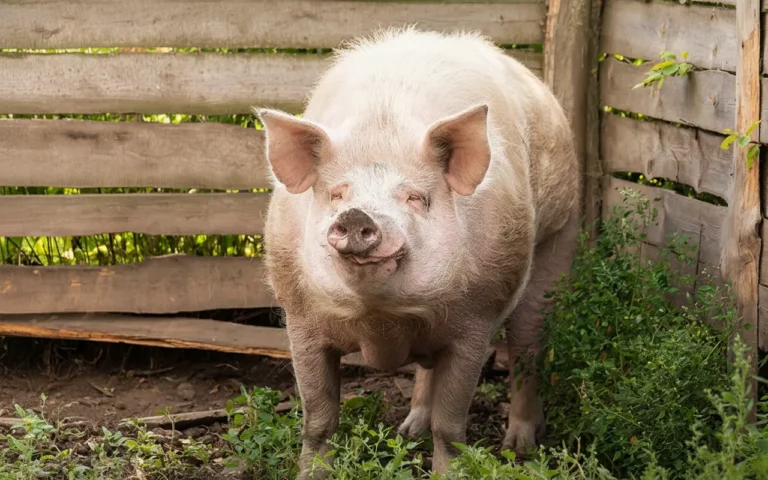
On a farm, pigs rarely go unnoticed. Sure, their imposing shape catches the eye, but it’s their unmistakable noise—the infamous “oink”—that leaves a mark! Ever wondered what a pig’s vocalization actually means, or what it says about their personality? Beneath that seemingly simple question lies a surprisingly rich universe, blending animal language, cultural history, and scientific discoveries.
The Sonic World of the Pig
Cows moo. Horses neigh. And pigs? Pigs grunt and squeal—or at least that’s the official verdict. These sounds may seem coarse, deep, and rough, but to think pigs only have two possible sounds severely underestimates these farm animals. The domestic pig is a true vocal chameleon, producing a broad spectrum of calls, from high-pitched squeals to rumbling, low growls.
Researchers from INRAE (the French National Research Institute for Agriculture, Food and Environment) have identified more than twenty distinct pig vocalizations, each tuned to a different emotion or context: fear, pain, contentment, food searching, social play… And in case you’re doubting the noise levels, science backs it up: pigs have been recorded at an ear-rattling 115 decibels—louder than a lawnmower, about on par with a rock concert. Not bad for a farm animal!
What’s in an “Oink”?
Our attempts at a pig “oink”—usually a sort of snuffling from the back of the throat—don’t hold a candle to the real thing. Physically, pigs have a larynx and vocal cords much like other mammals, but it’s the unique shape of their pharynx and the powerful build of their chest that lend their calls such a deep, resonant, and sometimes deafening quality. The classic children’s “oink oink” is just the amuse-bouche; the real pig voice is far richer and more complex.
Emotion frames the soundtrack of pig life. When a pig feels negative emotions like fear or pain, it emits long, piercing screams or squeals. In normal or positive social situations, sounds become shorter and morph into grunts or little barks. These vocalizations are often paired with body language: ears pointed forward, tail flicks, or wags. The grunt isn’t a simple noise—from seeking food to friendly interaction or maintaining contact with the herd, it’s the anchor of a whole “grammar” of pig communication.
More Than Meets the Snout: Pig Intelligence
Reducing pigs to just noisy bellies or curious snouts misses their true nature. Scientific studies show that the domestic pig is impressively clever, mastering complex learning, memory tasks, and even problem-solving. Pigs have been caught red-hooved manipulating objects with their snout, recognizing themselves in a mirror, telling symbols apart, and even learning to use a joystick to move a cursor on a screen. All of this places pigs among the cleverest mammals—right up there with dogs and even dolphins.
In 2022, researchers developed an algorithm as part of the SOUNDWEL project to analyze pig vocalizations. This tool crunched a whopping 7,414 recordings from 411 pigs, mapping their sounds to different emotions and life stages—from birth to (well, let’s say retirement at the sausage factory). The upshot? By reading a pig’s voice, you can get a pretty accurate read on its emotions and health. So, understanding pig calls isn’t just for curiosity: it now plays a practical role in modern farming.
Pig Grunts: A Tool for Better Care
Some experimental farms now use sound sensors to continuously record pig noises. With analysis, farmers can detect early signs of stress, respiratory illness, or feeding trouble in their herds. What once sounded like a simple grunt becomes a valuable index of animal welfare. This approach opens the door to a more respectful relationship with farm animals, where listening to their signals becomes an essential tool for management and care.
But the pig’s research potential extends beyond the barn. Because their vocal tract closely resembles ours, pigs serve as useful models for studying human vocal and respiratory issues. By analyzing pig breathing and vocal cord mechanics, scientists deepen their understanding of voice and breathing disorders. Some research even uses pig tissues to test new treatments for voice loss or laryngeal transplants. Those infamous pig grunts have become unlikely allies in the quest to improve human health!
Beyond their voices, pigs have become models in cognitive science too. Scientists are increasingly fascinated by their memory, ability to recognize symbols and individuals, and knack for cooperating to reach goals. In some experiments, pigs have even shown they can anticipate situations or display a form of empathy by responding to the stress of others. This often underestimated intelligence is challenging our perception of pigs and raising new questions about the ways they live.
Most of us think of pigs as farm animals, but some people have welcomed them into their homes as companions. Miniature breeds—like the Vietnamese pot-bellied pig or the Göttingen mini-pig—now appear in households across the globe. Their smarts and sociable natures make them surprisingly charming pets: they respond to their names, learn simple tricks, and even form real bonds with their human families.
That said, pig adoption is not for the faint of heart. Even mini-pigs are demanding, needing space, mental stimulation, and a diet suited to their needs. But one thing is clear: behind those sometimes thunderous grunts is a sensitive, communicative, and curious creature, full of surprises and worthy of a second look—whether at the petting zoo or the dinner table.