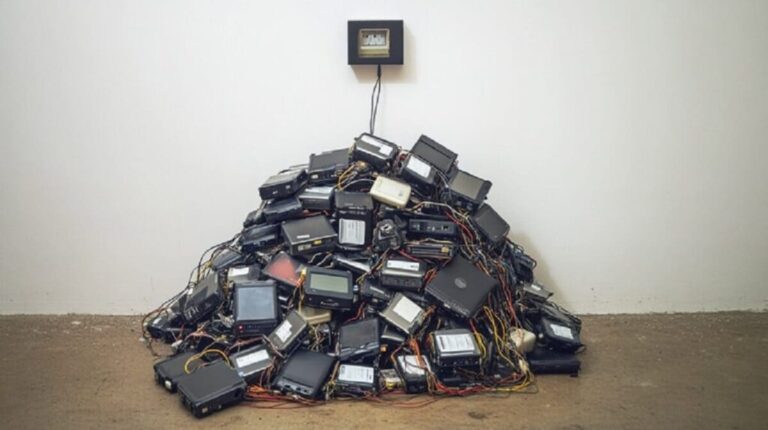
In an age where most of us replace our gadgets the moment they slow down, one man has been quietly proving that old technology still has plenty of life left in it. Since 2016, he’s been running his entire home using nothing more than recycled laptop batteries and solar power—a clever DIY system that has kept his lights on, his appliances running, and his carbon footprint remarkably low. What began as an experiment has become a blueprint for sustainable living and energy independence.
How it all started
The idea took shape in late 2016, when he noticed how many discarded laptops contained batteries that were only partially degraded. “Most of these cells still hold a charge,” he realised, “so why throw them away?” What started as a side project quickly evolved into a full-scale off-grid energy system.
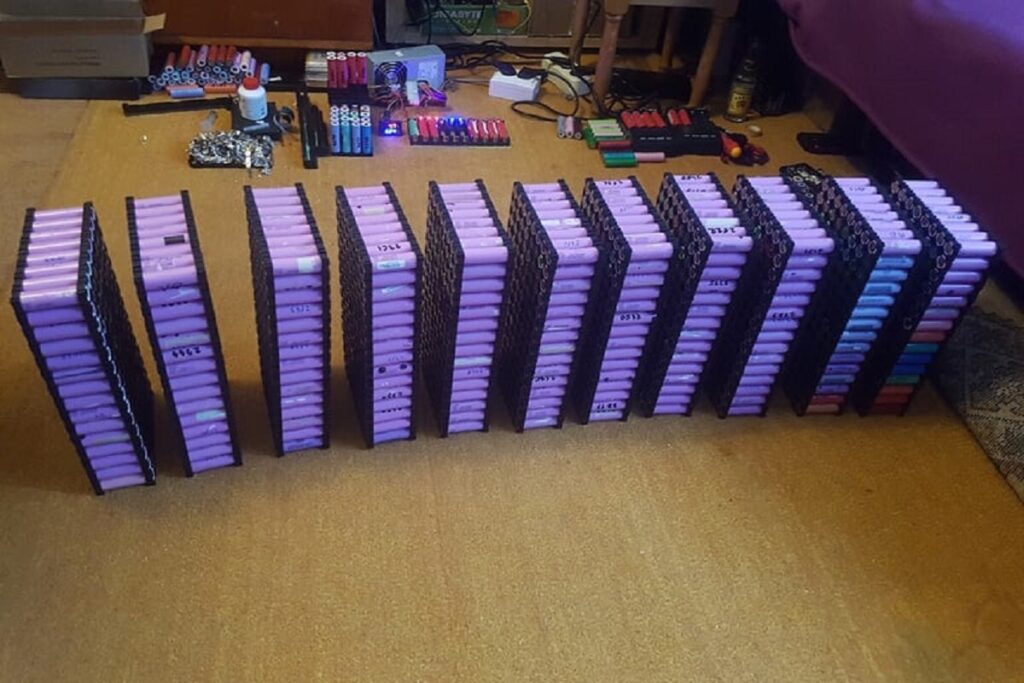
Working from a shed about 50 metres from his house, he began collecting old laptop batteries, testing and sorting them into usable cells. The initial setup consisted of roughly 650 lithium-ion batteries, grouped into carefully designed packs. By connecting them with durable copper cabling and combining them with solar panels, he created a self-sustaining circuit that could store and distribute power efficiently throughout his home.
Almost ten years later, the system is still going strong—without a single fire, short circuit, or battery replacement.
Solving technical challenges along the way
Of course, innovation rarely comes without trial and error. Early on, he faced one of the biggest challenges in battery reuse: uneven discharge rates. Because each laptop battery ages differently, their voltages don’t always match. To fix this, he disassembled individual cells and rebuilt them into balanced modules, allowing for stable performance across the entire network.
Over time, he expanded the setup. Today, it includes 24 solar panels, each generating 440 watts of clean energy. Together, they provide enough electricity to power an average-sized home while keeping storage levels consistent throughout cloudy days or long winters.
His dedication to maintenance and balance has paid off—since 2016, his system has operated without interruption, proving just how robust recycled technology can be when handled with care and know-how.
A glimpse into the future of self-sufficient living
What makes his project particularly inspiring is how accessible it feels. You don’t need corporate funding or cutting-edge tech to build something sustainable—you need curiosity, persistence, and a willingness to think differently about waste.
Experts in renewable energy agree that small-scale initiatives like this one can make a real difference. The International Energy Agency (IEA) has reported that household-level solar storage systems could play a key role in reducing grid dependence over the next decade, especially as energy prices and climate concerns rise.
His example also challenges how we view discarded electronics. Every year, the world produces over 50 million tonnes of e-waste, according to the United Nations. Projects like this show that much of it still has untapped value. With a little creativity, yesterday’s trash can quite literally power tomorrow’s homes.
Rethinking what “sustainable” really means
For this inventive homeowner, living sustainably isn’t about deprivation—it’s about resourcefulness and resilience. His battery-powered life is a reminder that progress doesn’t always come from new inventions; sometimes it comes from reimagining what we already have.
His story has inspired online communities of DIY engineers, homesteaders, and environmental enthusiasts to follow suit, experimenting with everything from repurposed EV batteries to hybrid solar systems. Each one is a small step toward a world that’s less wasteful and more self-reliant.
In the end, his project isn’t just about energy—it’s about mindset. It proves that sustainability isn’t a luxury or a trend; it’s something that can start in a shed, with a handful of tools, and a pile of forgotten batteries.
And perhaps that’s the real power in his story: turning what others throw away into something that lights the way forward.