There are no creative blocks if there is consistency involved.
The young man who grew up hugging album covers, listening to compilations of The Beatles and composing with his friends, he now resumes his solo project with new ideas and compositions that reflect his years of experience. Regarding his most recent release, “I need to know”, We spoke with the Mexican musician about discipline, the myth of creative blocks and the defense of the album concept to spread music.
Leonardo de Lozanne He is a musician who does not stop. Currently participating in the live project Rock Jude Festis frontman of The Concordes and Phobiaand has a podcast called The Tip of the Icebergwhere he interviews colleagues and friends about problems that are on the surface, but deserve to be further explored.
Within all its activities, Leonardo de Lozanne He found a space for his solo project: “I don't think I had it as a priority and it requires much more time, much more work and sometimes it doesn't give results as quickly, because the solo project is a daily battle. It's more of a whim than anything else.”
And his personal career is also his own legacy: “Yes, it is important to take care of it and follow it up, because at the end of the day it is the only thing you have, right? Everything else… the bands break up, do things, become a side project, whatever, or they disappear. And your solo project, well, is yours for life and you can always do it. And yes, for me it is very important to have it as one of my priorities.”
Even because their great idols have done it: “Look at Paul McCartneyNo? It's been… how many years? 40 years as a soloist!”
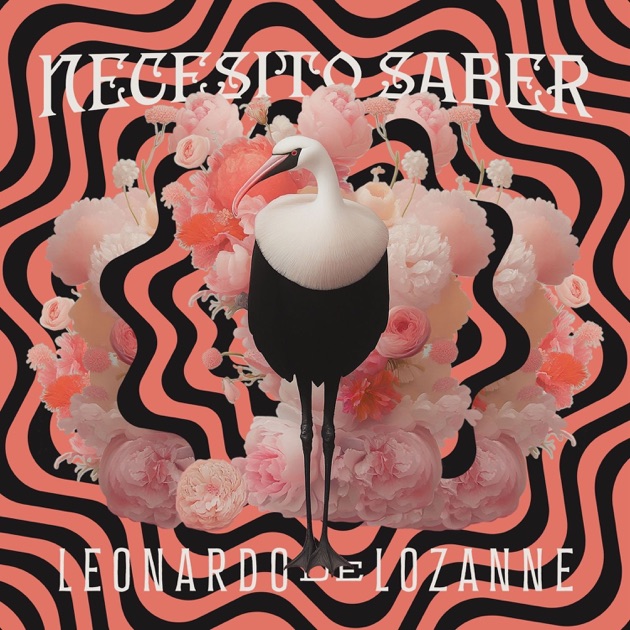
His new single, “I need to know”talks about a relationship that from the beginning warns that things will be complicated. In this, one of the two parties decides to throw themselves into the uncertainty of who we are, what is going to happen and why this hurts. That's where the need to know is, which the song title refers to. However, Leonardo de Lozanne He warns that the story is told in a very simple way, far from pretensions and ostentatious verses: “The choruses are very easy to sing. It is very catchy, very fresh, very summery.”
“This song is very particular, because I think it is the most contagious, the most catchy and has one of the best melodies I have written in my entire life. It talks about the need that all human beings have to have clarity and understand things. No matter how bohemian and very liberal we want to be, we always need explanation and clarity. Just like in the book The man in search of meaningI believe that we have to find meaning in everything; If not, well, we don't find meaning in life, like that.”
For him, this song also represented a new perspective in his way of making music: “It's something that, honestly, I haven't done in a long time. I'm more into composing darker and slower things. But when you face an audience, you realize that there are missing songs. So, I always, since I started making this album, said: 'I want more rhythm, more guitars, more dancing, more party'.”
However, after so many moving lyrics – which have even earned him the recognition of Trajectory 25 Years for the Society of Authors and Composers of Mexico—, it is easy to wonder how he continues to reconcile inspiration for his works: “Both inspiration and motivation are muscles too. But that 'let's see when I get the inspiration to make a song'… it never comes. 'And let's see when I'm going to feel motivated. The day I feel motivated I'll make another album.' You will never feel it. That is, motivation is a result of discipline.”
And it is that, in the musical routine of Leonardo de Lozannethere is no trick other than constant work: “Every day you have to set a goal and you have to hit it. I, most days, play the guitar and nothing ever comes of it. Weeks or months can go by when there are good ones, and suddenly one day: 'I remembered this'. It's an artisanal process, every day. And I don't always feel motivated to do it, and I don't always feel inspired. But it's a discipline, and the more you put it into action, the better results it gives you.”
Constant work implies being awake, receptive and sensitive to everyday situations: “People ask me many things: 'And how do you compose so much?'. Well, because I give it to them every day. I mean, I work all the time. I'm thinking, I'm imagining, I'm writing things down. The songs don't come out of nowhere, they come out of a process that doesn't even count later.”
Within the themes of inspiration and creativity, Leonardo de Lozanne highlights: “People who talk about creative blocks… there is no creative block. What happens is that you are terrified. What exists is a tremendous fear and a brutal insecurity. And I understand it. I have been there. And it continues to happen to me. The way to dismantle it is to move forward. And if it doesn't work for me alone, I join someone else. And I move forward.”
The particularity of the work of musicians is that their works can expose and affect them in unthinkable ways: “You feel very exposed and very vulnerable, because you talk about very personal things, that everyone is going to hear. So, it causes a lot of insecurity and a lot of fear. And sometimes the fear is so great, because the fear of being judged and criticized is so great, that it paralyzes your creative process.”
But every time a process is paralyzed, there are friends: “I leaned a lot on other people now, with some songs that I already had completely stuck on, and they reached another level. I am always in favor of the collective. If it is going to be better, I give a part of the authorship to whoever helps me. It doesn't matter. And if there are songs that come out quickly, and I do them alone, and they come out incredible… but if it is going to be better with someone else, you always have to push forward.”
Recently, Leonardo de Lozanne He presented some concerts in Mexico and Colombia, but his plans are to advance to Central America and tour South America and European countries. During his tour, the composer highlighted how audiences and ways of consuming music have changed: “I was born the year the two separated. Beatles. So when I started buying records from the BeatlesWell, there were already compilations and the best of the Beatles. And I bought some great CDs that had all the songs on them… So, for me, it was confusing on which album which song came on.”
And it is precisely in the music industry where it is increasingly urgent to rescue complete works, that is, the creation of an album beyond singles separated: “If we transfer this to literature, it is as if a novel writer took only fragments of the novel and published chapters. In other words, the work of art, I think, has to have a beginning and an end. Well, it doesn't have to, right? There is everything, and that is precisely why the joke is that art is free. But to human beings, the piece, the conclusion, makes sense. The beginning is as important as the end. In other words, there has to be something encompassed, and it makes us That makes more sense. And the albums, well, too. I mean, I think… I mean, there are many artists, surely, who will release songs and songs and songs and that's it.”
But an album is also the evolutionary record of an artist: “And it tells you the story of the band and the evolution of the band. Or pink floyd either Led Zeppelinall these legendary bands. EITHER queen. And then you can explore it by disk.”
And in books it is easier to see this evolution: “Garcia Marquez. You say: 'Let's see, I'll go to his first books' and then I'll see how it evolved. I mean, I think it is an important thing for me. But, again, art is free and everyone does it as they want. And, well, maybe albums will no longer exist. My vision is that I believe they will return. Vinyls are already coming back, and eventually the object will come back. I think it's cool to have a collection. And it's great to have your digital issue in your cloud. But I think, for me, it is important to have albums. In other words, it should be about something, it should have a title and it should narrate an album. It's like having a diary divided into stages of your life.”
I mean, it's a beautiful, historical thing. That's what art is about. Many times it is more about that than the work itself. Like the Mona Lisa: it's more about what happened to that painting than really about the painting.”
The songs he has released Leonardo de Lozanne In 2025 they will be part of a new solo album that will be released next year on a date that has not yet been published. While this happens, enjoy “I Need to Know” here.