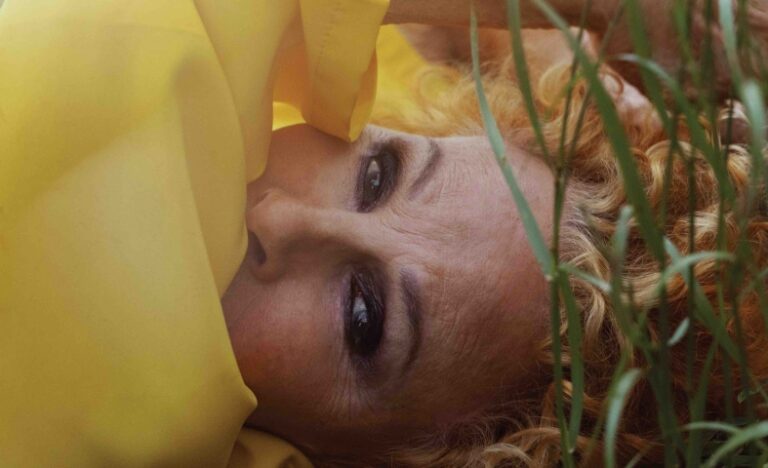
The news of Ornella Vanoni's death, which occurred at the age of 91, generated a wave of emotion that swept through the entire Italian cultural panorama, confirming her position not only as a successful artist, but as a true unclassifiable icon.
A sunny day is enough to be in a good mood!
He told us during an interview on the occasion of the release of his penultimate album “Unique”.
His career, over six decades of musical history, is truly a day in the sun and stands out for its almost unrepeatable longevity. An arch supported by two complementary pillars: a tireless search for timbric quality and a rare courage in stylistic contamination.
The key to her art, however, lies in her profound emotional honesty, which led her to experience and interpret vulnerability, including the struggle against anxiety and depression, with a radical clarity, elevating her vocal gesture from simple singing to universal confession and giving her repertoire an indisputable literary depth.
His obsession with sound architecture has its roots in art theatre: his debut took place at the Piccolo Teatro in Milan with “Canzoni della mala” (1959), a “popular invented” repertoire created by Strehler, Dario Fo and Fiorenzo Carpi. From this dramatic baptism, the song was understood as a sung recitative and literary fiction, a rigor that immediately imposed very high production standards.
Not surprisingly, his debut albums made use of very high-profile arrangers, including Fiorenzo Carpi himself and, significantly, Ennio Morricone, establishing that the record was not a disposable pop product, but a truly symphonic art object. This meticulous attention to production remained a constant, also evident in subsequent albums such as “Io Fuori” (1977) and in conceptual operations such as “Più” (1976), also curated in its image by figures of visual art.
The most courageous and far-sighted act of contamination of his career took place in 1976 with “La Voglia, La Madness, L'Incoscienza, L'Allegria”, created with Vinicius de Moraes and Toquinho.
The project, which aimed to translate the more sophisticated bossa nova into Italian, defined by producer Sergio Bardotti as a form of “blues brasileiro,” prone to melancholy, was rejected by other divas (such as Mina) for fear of taking a commercial risk with a concept album.
Vanoni, the intellectual anti-Diva, was the only one to embrace the aesthetic depth of this minor sound, thanks to her natural affinity with saudade (Brazilian yearning), a feeling she had already learned to interpret with the dark plots of the underworld. Through this album, which became a model of stylistic integration, she established herself as the main cultural mediator between Italy and sophisticated global music, expanding the boundaries of Italian songwriting and even finding affinity between Brazil and the Neapolitan tradition in an “amazing soul and core”.
His research never stopped in the past; in the following years, records such as “Sheherazade” (1981), recorded in an isolated villa in Forte dei Marmi, confirmed his tendency towards refined exoticism and concept albums.
This push for experimentation was also renewed in adulthood with the album Different (2020s), an “extremely contemporary” project which saw Vanoni collaborate with artists such as Mahmood and Elodie, naturally adopting “modern bases” and confirming an unaltered standard of production quality.
Critics, recognizing her ability to use her voice not for power (like Mina, who “flies”), but for texture and emotional precision (drawing “new geometries”), have defined her as a “saxophone” capable of “soaring”, an interpreter who has always favored the control and “management” of the note, in line with the rigor required by Italian music.
Ornella Vanoni's very long and complex career can be read as a manual on stylistic coherence achieved through diversity.
His success was not built on adhering to a single genre, but on the ability to move fluidly between distant repertoires, from Milanese crime news to Latin jazz, from intimate songwriting to pop electronics, always maintaining an unmistakable vocal identity.
His legacy is not only musical, but human. Vanoni has always expressed his life with the same brutal honesty with which he approached art, combining personal fragility (“Sometimes I miss a caress”) with intellectual ferocity (“I've made a mess of things in my life (…) But for them to continually tell me that isn't kind.”
The final, perfect gesture of style that sums up his entire career lies in his farewell arrangements. When asked about her funeral, Vanoni expressed her desire to wear a Dior dress and have jazz trumpeter Paolo Fresu play.
This final request is the sublimation of his philosophy: a moving and definitive homage to jazz and contamination, the art form that more than any other embodies improvisation, research, and sophisticated elegance.
With this choice, Ornella Vanoni has closed the circle of her artistic life, affirming the pre-eminence of aesthetic rigor and experimental courage until her last breath. His legacy is that of having taught Italian music that fragility is not a weakness, but the root of every true and lasting work of art.