
On November 27, 2005, Shakira published Oral fixation vol. 2an album that, two decades later, is remembered as the work with which he ended up becoming a global superstar. It was their first album entirely in English, and although it came accompanied by enormous expectations, it also went through a peculiar path: a lukewarm debut, a single that did not take off and, finally, a re-release that changed everything thanks to one of the most recognizable pop songs of the 21st century.
Before reaching Oral fixation vol. 2, Shakira was living a crucial moment. She had been triumphing in the Latin field for more than ten years and was an established artist in Spanish thanks to albums like bare feet (1995), Where are the thieves? (1998) and Laundry service (2001), which had already included several topics in English. Her voice, her aesthetics, her way of writing and her mix of pop, rock and Latin rhythms had made her a global figure… although still with one foot in each market. For the Spanish-speaking public it was an absolute reference; for the Anglo-Saxon, an expanding promise.
At the beginning of the 2000s, the recording industry was looking for a great Latin star who would definitively conquer the American market. Jennifer Lopez had achieved it from cinema and urban pop; Ricky Martin had devastated with “Livin' la vida loca”. And Shakira, with talent, personality and an unmistakable creative seal, was the natural candidate to take the next leap. She was the first to understand it. For that reason he decided to make an album completely in English, not as a commercial concession – in fact, he never put it that way in interviews – but as a logical step to expand your creativity and reach the widest possible audience.
WECB Classic
WECB Classic
The experiment began with the single “Don't bother”. It was a theme pop-rock, direct, forceful and with a spirit that recalled the electric Shakira of the late nineties. On an artistic level it worked: good production, impeccable interpretation and an ambitious video clip. But commercially it did not explode. In the United States it stayed halfway on the charts, in Europe it had a discreet reception and the general feeling was that the album needed another boost to connect with the mass public. And then came the play that changed everything.
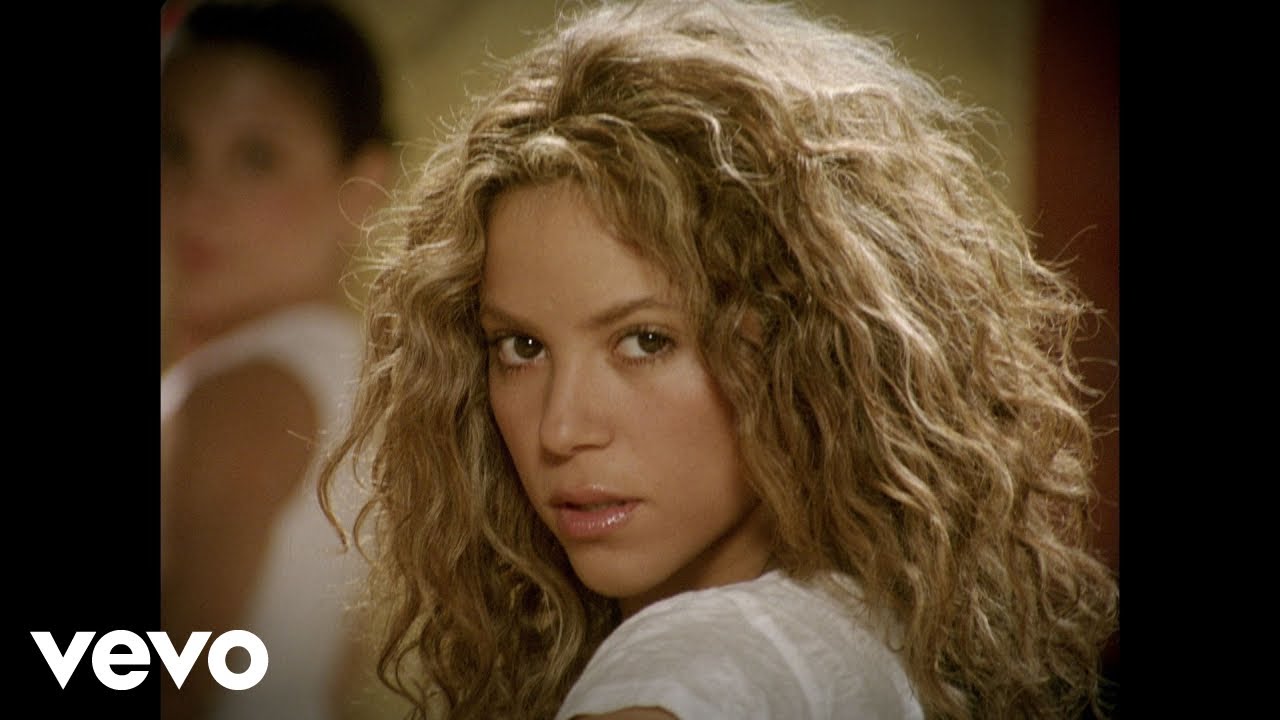
A reissue of the album was released in 2006, retitled Oral fixation vol. 2 (deluxe edition), which included “Hips don't lie”, Shakira's collaboration with Wyclef Jean which became an instant global phenomenon. The song had everything to be a hit: an irresistible base, memorable trumpets, a fresh-sounding Latin pop rhythm and, above all, a performance by Shakira in top form. That mix of charisma, dance and melodic hook was unbeatable. Suddenly, the album took on a new life.
“Hips don't lie” reached number 1 in the United States, number 1 in Spain, number 1 in more than 20 countries and became the best-selling song globally in 2006. His performance with Wyclef in the final of the World Cup in Germany finished sealing the magnitude of the success. And the album, which had started with a moderate performance, became an international triumph thanks to a single that still resonates today at any party, list or playlist of the planet.
Beyond the impact of that topic, Oral fixation vol. 2 has an additional merit: it was the definitive confirmation of Shakira as a global artist. Not a Latin artist who sings in English, but a universal figure capable of moving between languages, genres and styles without losing identity. The album naturally mixed pop, rock, light electronics and Latin elements, and reinforced Shakira's image as a composer who controls every phase of her work.
In commercial terms, the album ended up selling more than 8 million copies throughout the world between its different editions. It went platinum in the United States, triple platinum in Spain and obtained certifications in much of Europe and Latin America. The most significant thing, however, was his role on the international pop map: with Oral fixation vol. 2, Shakira went from being a huge Latin star to one of the most important female voices in the world. mainstream global.
It was risky, irregular in its initial launch, surprising in its relaunch, but in the end completely decisive. From him, Shakira It stopped moving between two worlds and became a bridge between both. And few artists have known how to dance—in every sense—in that balance with the same talent, instinct and personality.