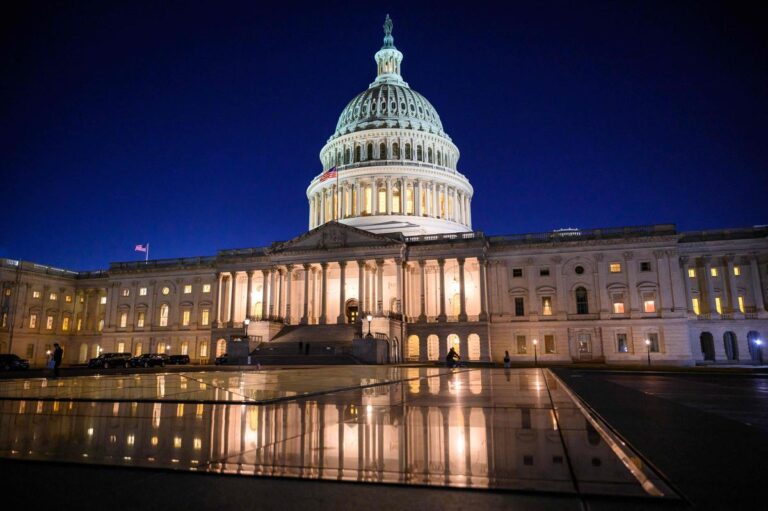
Tension is building in Washington as the United States edges closer to a potential federal shutdown. With the deadline to approve a new budget fast approaching, government workers, contractors and millions of Americans dependent on federal services are holding their breath.
Budget deadline sparks new political showdown
By the end of the month, Congress must pass a new budget – even a temporary one – to keep the federal government running. Failure to do so would trigger a shutdown, halting large parts of the U.S. administration and sending thousands of employees home without pay.
A memo from the Office of Management and Budget (OMB), circulated to government agencies this week, paints a stark picture. Agencies have been told to prepare contingency plans that include mass layoffs, particularly in departments whose programmes lack secured funding or external financial support.
Russel Vought, Director of the OMB, reminded departments that over the last ten fiscal years, Congress had always managed to reach a bipartisan agreement before the deadline. ‘Unfortunately,’ he warned, ‘this year Democrats appear ready to break with that tradition.’
What’s at stake if the government shuts down
A shutdown doesn’t just mean political theatre. It translates into hundreds of thousands of furloughed workers, stalled pay cheques, and delays in essential public services. Air travel could be disrupted, federal parks might close, and millions of Americans relying on benefits such as food assistance or health support could face interruptions.
According to the Congressional Budget Office (CBO), the 2018–2019 shutdown cost the U.S. economy an estimated $11 billion, much of which was never recovered. A repeat scenario could have ripple effects across sectors already grappling with inflation and uncertainty.
For federal employees, the prospect feels all too familiar. ‘We’ve been through this before,’ said a Department of Housing and Urban Development worker in Maryland. ‘You start saving up food and petrol money, hoping your agency is considered essential. It’s a strange way to live.’
A political stalemate with no clear end
Republicans, who currently control both chambers of Congress, insist their seven-week stopgap funding plan is the only viable path forward. It would extend government funding until late November, buying time for further negotiations.
Democrats, however, argue the proposal fails to address critical priorities such as healthcare spending. Senate Minority Leader Chuck Schumer has dismissed the OMB memo as a ‘scare tactic’, accusing the administration of using federal jobs as leverage in political negotiations. ‘This isn’t leadership,’ he said. ‘It’s intimidation.’
Meanwhile, no meeting has yet been scheduled between the President and Democratic leaders to break the impasse.
The human cost behind the numbers
Beyond the headlines, the real impact of a shutdown is felt in everyday lives. Families dependent on federal paychecks, small businesses serving government offices, and citizens waiting on grants or licences could all face weeks of uncertainty.
Economists from Moody’s Analytics warn that each week of shutdown could shave 0.1% off GDP growth, while shaking public confidence in Washington’s ability to govern.
For now, agencies have been told to keep working as usual – but with one eye on the clock. If Congress fails to reach an agreement by midnight on the 30th, the U.S. could wake up to shuttered offices, delayed services, and yet another reminder of how fragile political compromise has become.
As one veteran civil servant put it: ‘We don’t need more speeches. We just need them to pass a budget so we can do our jobs.’