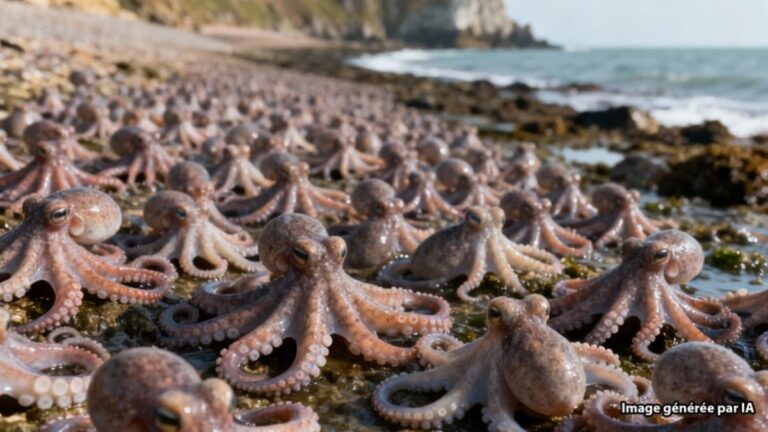
Sightings of octopuses along the south coast of England were once the sort of anecdote divers shared over a pint. Now, they are washing ashore in such numbers that fishermen, conservationists and chefs are all asking the same question: what on earth is happening in the Channel? A quiet ecosystem has tipped into something far stranger – a wave of tentacled newcomers feeding voraciously and reshaping the local marine world.
when octopuses take over
Not long ago, spotting an octopus in British waters was a rare treat, the kind of moment that left fishermen shaking their heads in disbelief. Today, that disbelief has turned into concern. Along the Sussex coast in particular, catches have soared to levels many describe as unprecedented. Some fishers report hauls multiplied by ten or even a hundred, a shift that feels as sudden as it is dramatic.
What used to be waters dominated by prawns, langoustines and other familiar crustaceans now looks like the domain of these highly adaptable hunters. And anyone who has ever watched an octopus dismantle a crab will know that calling them voracious is no exaggeration. One fisherman summarised it vividly: they eat almost everything they find.
why the sudden population boom?
Marine biologists point to a combination of factors, with warming seas appearing near the top of the list. According to the UK’s Met Office, the Channel has been experiencing a steady rise in sea temperature, and this shift is crucial for species like octopuses, whose eggs survive better in warmer waters. In short, the Channel is becoming more Mediterranean in feel, offering these creatures a friendly new home.
Other environmental pressures may also play a role. Reduced numbers of natural predators, pollution altering habitats and long term overfishing all contribute to a chain reaction favouring species that are quick to adapt. The Marine Conservation Society has repeatedly warned that disrupted food webs can open the door to exactly this kind of imbalance.
an ecosystem under strain
While the octopuses are clearly thriving, the rest of the ecosystem is not celebrating. By consuming crustaceans, molluscs and fish at astonishing rates, they compete directly with both wildlife and the local fishing industry. The Channel’s food chain, already fragile in places, now finds itself stretched further. With few predators capable of keeping octopus numbers in check, their rise risks reshaping the biodiversity of the region altogether.
Economically, the impact is just as stark. Traditional fisheries – already navigating quotas, rising fuel costs and shifting consumer demand – now face an unpredictable competitor with eight arms and no appetite for moderation.
challenge or opportunity?
Some restaurateurs, however, see potential. Octopus is widely appreciated in Mediterranean cuisine, and chefs in coastal towns are beginning to experiment with local catches. For them, it represents a way to diversify menus while easing pressure on overstretched species. Sustainability groups, including the World Wildlife Fund, caution that if interest grows too quickly, history may repeat itself: overfishing a species just as it becomes abundant.
Turning a temporary surge into a long term resource demands careful management – something Britain’s fishing communities have learnt the hard way with cod, scallops and other once plentiful stocks.
the Channel meets its unexpected resident
The sudden arrival of these cephalopods is a reminder of how quickly nature can shift when environmental conditions tip past a threshold. The British seas have gained a fascinating, efficient, sometimes disruptive new inhabitant. Whether this octopus boom becomes a lasting feature or a fleeting moment in marine history depends on how the ecosystem adjusts – and how humans respond.
For now, the UK finds itself sharing waters with a creature known for intelligence, stealth and an appetite that stops for no one. A powerful reminder that in the balance between climate, wildlife and economic livelihood, change rarely arrives quietly.