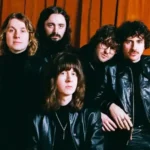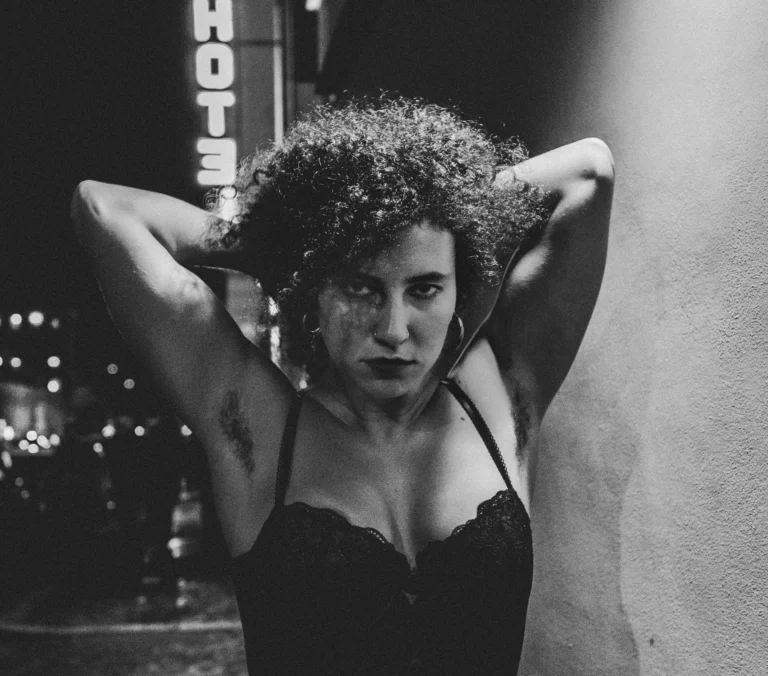
There is a moment, in the night, when everything gives up the noise and lets emerge what we normally keep under the skin. That's where Jungle Julia moves, an artist who chooses darkness as an emotional laboratory and the body as a primary language.
“Vespro” is the first sound act of a triptych that escapes the logic of the “debut”, it is his official entry into the discography, a story in two songs that arrive strong and intense.
Flesh and Demon they are two polarities of the same impulse, two confessions that flow with a rough, almost animal sincerity, registered as if they were a breath held for too long.
Meeting her means crossing the same internal landscape: a vision that combines instinct, lyrical density and a feral visual imagination, built through the accumulation of symbols rather than aesthetics. Julia tells her story without gaps, without protections, in the naked truth of the gesture.
THE INTERVIEW
I listened to your EP: dense, important, thoughtful. What is this “Vespers”? A prayer?
It's exactly my nightly prayer. “Vespro” holds together the two songs that make up this first episode: it is the first chapter of a triptych that will then lead to a complete album. Each episode represents a different moment of the day: I start at night and arrive until the following afternoon. This first fragment is the most twilight part, the one in which everything begins.
What do the two songs, “Carne” and “Demonio” take inspiration from? Where does this lyrical drive of yours come from?
They were born instinctively, with guitar in hand. They are songs that speak about me directly: they tell of things that I live, that I have experienced, that pass through me. They both deal with the idea of abandonment: in Flesh I entrust myself to the other person's body, while in Demon the center is me, my surrender to myself.
There's a lot of physicality in your songs. It's not just language: it seems like your personal signature, a way of being in the world.
Yes, I would say that's my approach to life. I live and talk about myself in a physical, direct, instinctive way. Sometimes animal. It's my nature: what I am inevitably ends up in music.
The production also reflects this immediacy: you told me that you recorded live.
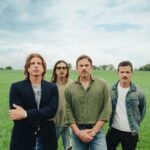
Exact. The songs are born with voice and guitar, then we worked so as not to distort that first impulse. This is why we recorded with real musicians, real instruments, in the studio. I was lucky enough to do it with people I respect: Matteo Cantagalli and Daniele Fiaschi (guitarist), Andrea Palmeri (drums) and Federico Ciancabilla (bass), recorded with Fabio Rondanini (drums), Roberto Dragonetti (Drago) (bass), Raffaele Scogna (Rabbo) (keyboards and synths), Daniele Fiaschi (guitars) … truly extraordinary musicians.
The visual part is also very strong, starting from the double video you published.
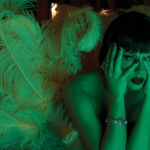
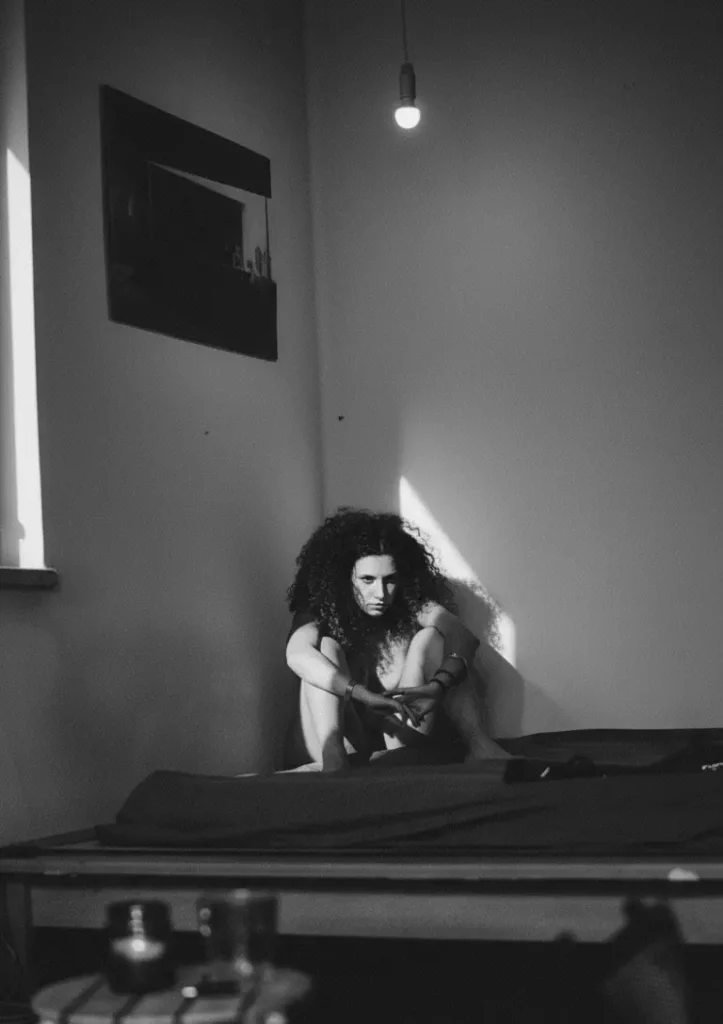
I felt the need to find an image that conveyed the idea of abandonment. From here this mini-short was born which unites the two songs also on a narrative level. Everything moves in a deliberately dark imagery, a bit “pulp”, as I define it. It was the goal.
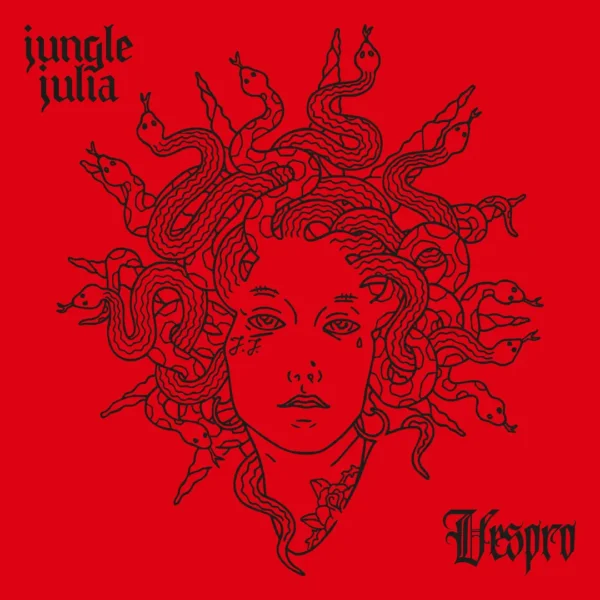
The cover is powerful, almost iconic. Who made the drawing?
One of my closest friends. He did this years ago in an attempt to represent me. It's me, with this slightly languid look, even if that's not the right word, and with snakes on my head. A detail that makes you smile, because I really have exaggerated hair. Looking at her, yes, she reminds you of Medusa.
Let's talk about musical references: which ones did you bring into these two tracks?
I don't have a single flu. I could cite the references song by song, but it would become a bit didactic. For writing I look a lot at songwriting: Dalla, De André, Battisti. For the sound, however, I bring with me more raw elements: the Italian scene of Afterhours, Bluvertigo. And then the international world: I listen to a lot of different music. In this period, for example, Tinariwen – who however does not appear in this episode – the Alabama Shakes, who will instead be heard in the second, and the Idles.
Speaking of the second chapter: when will it be released?
We should be in February, without setting a specific date. But yes, it will approximately be that period.
Will there be live feedback before the album is complete?
Absolutely yes. We are working on it and the project will also have a live dimension this summer. The first appointment, if we want to call it live, will be January 17th in Milan at Magnolia. And there will be more moments before the full album comes out.
VIDEO
ABOUT
Jungle Julia, stage name of Giulia Covitto, was born in Maremma, the third of six children.
He grew up between the countryside and the community of the Neocatechumenal Way: an environment that nourished his relationship with the word, spirituality and introspection. He began playing and writing early, developing a verbose, intense and physical style, rooted in a peasant imagination and in a rough, rock and blues musical attitude.
At 18 he moved to Rome, where he won the Officina Pasolini tender, training with artists such as Tosca, Giovanni Truppi, Piero Fabrizi and Pietro Cantarelli.
He takes part in the Reset Festival, writes a song with Cristina Donà and wins the award for Best Performance at the Bianca D'Aponte Award.
In 2024 he landed in the XFactor selections performing “Swimming in the air” by Marlene Kuntz and “Rid of Me” by Pj Harvey. The experience does not lead Julia to enter the program but allows her to be discovered by what will become her manager, Marco Sorrentino.
With influences ranging from PJ Harvey to Idles, from Radiohead to Alabama Shakes, in her music Julia builds a musical language that is rough and intimate at the same time, in which body and emotion coincide, overlapping and confusing in equal measure, a unique language that makes her immediately recognisable.
WEB & SOCIAL
@junglejuliajunglejulia