It began with a piece of paper, a fading memory, and a promise passed from father to son. Eighty years after war forced his family to flee, one man followed a hand-drawn map and uncovered a long-buried chapter of his own history.
A legacy buried as war closed in
As Europe slid towards chaos at the outbreak of the Second World War, countless families were forced into impossible choices. In what was then eastern Poland, the Glazewski family faced the advance of Soviet forces and made a quiet, desperate decision. They buried their most precious belongings near their home, hoping one day to return.
They never did. Borders shifted, homes were destroyed, and the family scattered. The valuables remained hidden in the ground near what is now Lviv, Ukraine, known only to those who buried them. Over time, the place became overgrown, the manor vanished, and the story faded into family memory.
A map drawn from memory
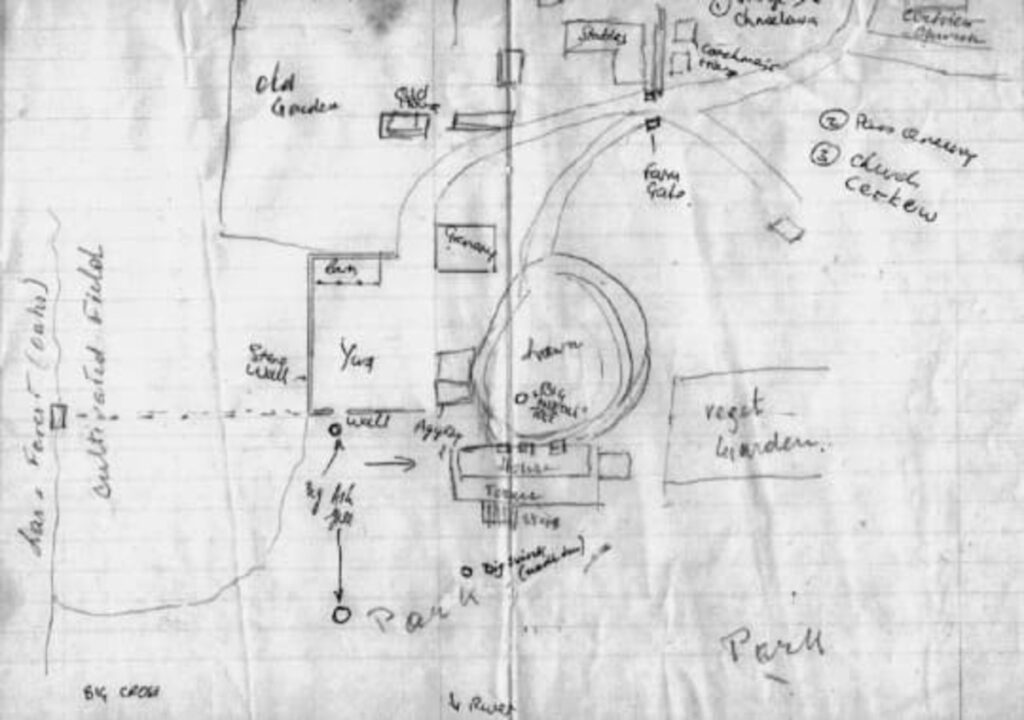
Decades later, that memory resurfaced. Jan Glazewski was approaching his seventies when his father did something remarkable. Fifty years after leaving their homeland, he sat down and drew a hand-drawn map, guided by nothing more than recollection.
‘He gave me the map and a few directions,’ Jan later explained. ‘It was all from memory. Fields, a slope, the edge of a forest. That was it.’
The sketch wasn’t neat or precise, but it carried emotional weight. It marked the site of the old family estate, long destroyed, and hinted at where the valuables might still lie. For Jan, it felt less like a suggestion and more like a family mission he couldn’t ignore.
Following the past, step by step
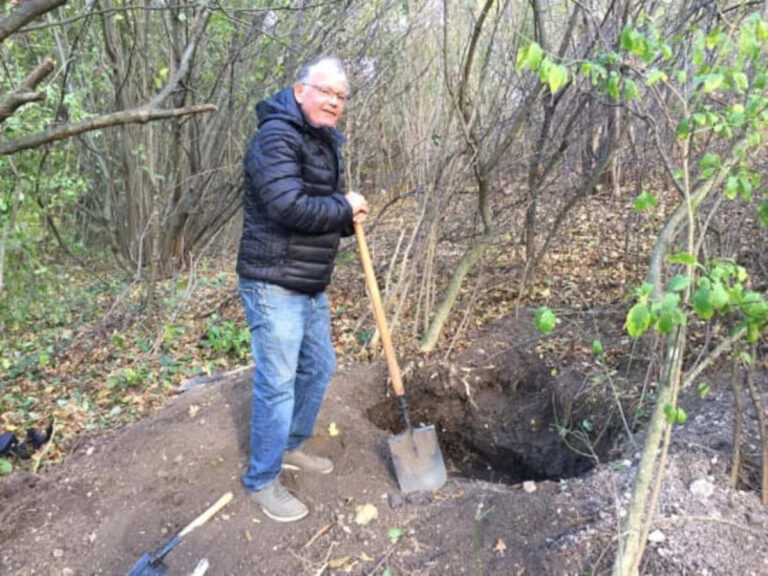
Armed with the map and a metal detector, Jan travelled to the region. What he found bore little resemblance to the stories he’d heard as a child. Cultivated land had given way to wild growth. The landmarks existed only in fragments.
Still, the map guided him. Down a gentle slope. Towards the trees. At the edge of the forest, the detector finally signalled something beneath the soil.
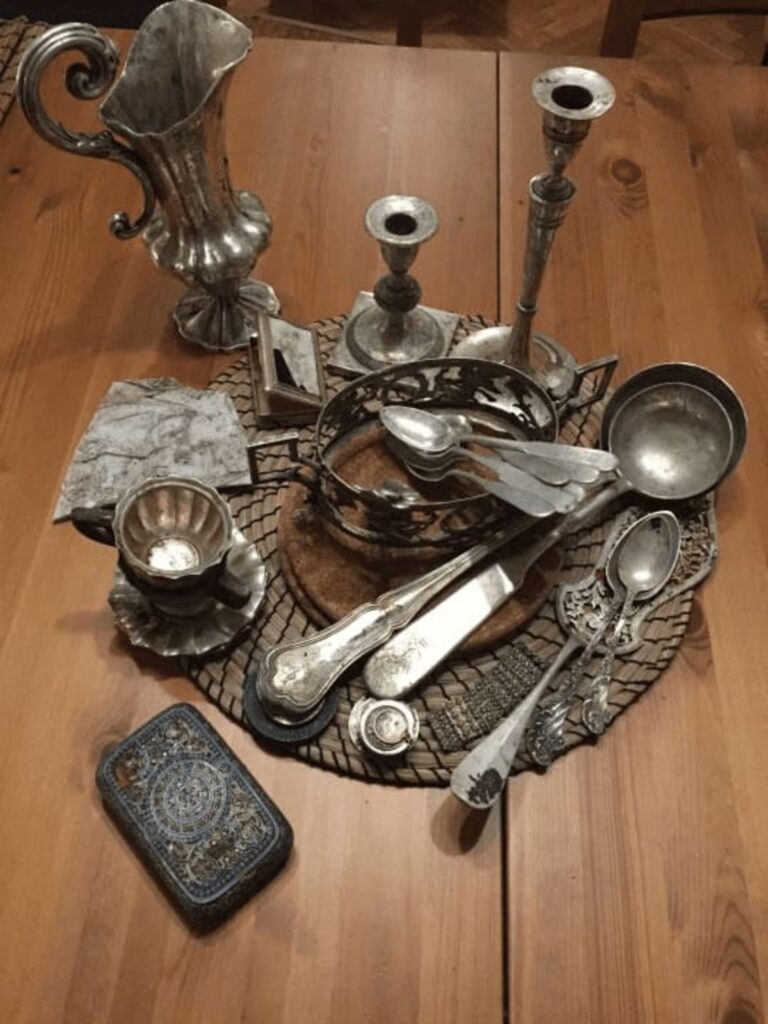
What emerged was a small box, untouched for eight decades. Inside were items his mother had packed away before fleeing. She died when Jan was seven, making the discovery all the more powerful.
Unearthing more than objects
‘Touching those things was overwhelming,’ Jan said. ‘These were the objects my mother had chosen to protect. Finding them felt like completing something my father had asked of me.’
The contents included jewellery, an engraved baptism spoon, and other personal items. Their financial value runs into the thousands, but Jan is clear that this was never about money. It was about heritage, continuity, and honouring those who came before him.
One item in particular, the spoon engraved with a child’s name, stopped him in his tracks. ‘It made everything real,’ he said. ‘It connected me directly to a moment in my family’s life that existed long before I was born.’
Closing a chapter left open
Jan plans to preserve and display some of the pieces as a tribute to his parents and grandparents. For him, the discovery represents resilience rather than loss.
According to organisations like UNESCO, family artefacts play a vital role in safeguarding cultural and personal memory, especially in regions shaped by conflict and displacement. Jan’s story is a living example of that idea – proof that history doesn’t always live in museums. Sometimes it waits patiently underground.
In the end, the greatest treasure wasn’t what came out of the soil. It was the sense of closure. By following a fragile map drawn decades earlier, Jan didn’t just recover objects. He recovered a story, honoured a promise, and finally brought an 80-year-old family chapter to rest.