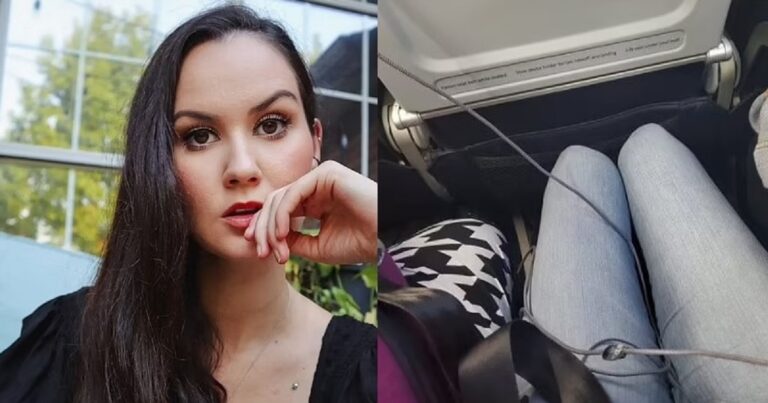
Flying is rarely glamorous, but one passenger’s uncomfortable three-hour journey sparked a global debate about personal space, empathy, and what airlines owe their customers. What began as a blunt social media rant ended with an apology – and a small but unexpected gesture from the airline.
A tight squeeze at 30,000 feet
Anyone who flies regularly knows the feeling: knees pressed against the seat in front, elbows fighting for armrest territory, and a creeping sense that economy class is shrinking by the year. For Sydney Watson, that discomfort crossed a line on a domestic flight in the United States.
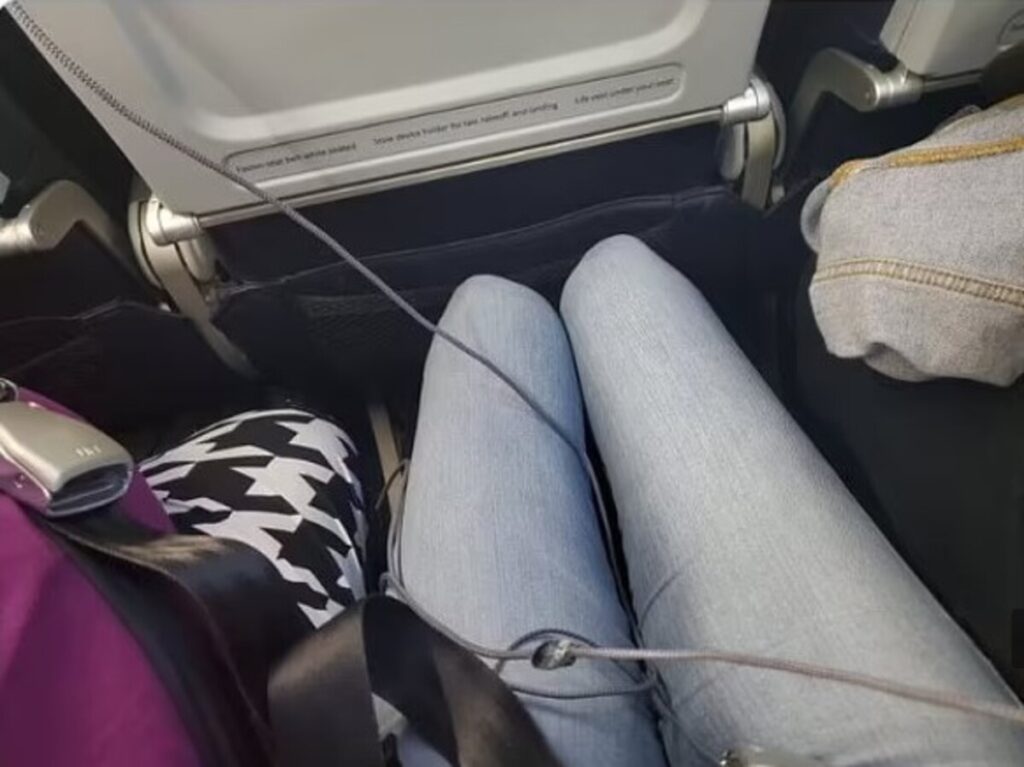
Seated between two larger passengers, she felt physically hemmed in for the entire journey. With little room to move and nowhere to rest her arms, she reached for her phone mid-flight and posted a series of messages online describing the experience in stark terms. She said she felt her personal space had vanished and that her body was in constant contact with those beside her. Photos accompanied the posts, and within hours they were everywhere.
Some readers sympathised instantly. Others accused her of fat-shaming, arguing that public transport requires tolerance and that her language was unnecessarily harsh. The internet, predictably, split into camps.
When a complaint goes public
Airlines deal with seat complaints every day, but they’re rarely aired so publicly. Initially, the carrier involved responded with a standard message: passengers come in all shapes and sizes, and the airline regretted that the flight had been uncomfortable. Her formal complaint was declined.
From a customer service perspective, the case seemed closed. But the online reaction kept growing, drawing in commentators, health advocates, and frequent flyers who shared their own stories of cramped cabins and awkward journeys.
A week later, the situation shifted. The airline contacted Watson directly, acknowledging her disappointment and offering a $150 travel voucher as compensation. The message stressed that staff aim to prevent seating issues wherever possible, even if they can’t always resolve them in the moment.
Compensation, but not satisfaction
Watson shared the email publicly, but her response was far from celebratory. She described the compensation as insufficient and said she would rather redirect the money toward something she considered more constructive. The gesture, she suggested, didn’t address the deeper issue of how airlines manage seating and comfort in increasingly packed cabins.
Her reaction highlights a familiar truth in air travel: financial compensation doesn’t always equal emotional resolution. Anyone who has received a voucher after a delayed or disrupted flight will recognise the feeling. It’s something, but it rarely erases the memory of the experience itself.

A broader debate about comfort and respect
The incident touches on a sensitive balance. On one hand, passengers expect a basic level of comfort for the ticket they’ve paid for. On the other, airlines and advocacy groups regularly remind travellers that flying is a shared space, requiring patience and courtesy.
Organisations such as the International Air Transport Association (IATA) have noted that cabin density has increased over the past decades as airlines try to keep fares affordable. Meanwhile, consumer groups continue to call for clearer policies on seating, armrests, and accommodation when flights are full.
From personal experience, I’ve seen how quickly tensions rise in a cramped row. A polite word to cabin crew can sometimes lead to a seat swap or a quiet conversation that defuses the situation. Going public, however, turns a private discomfort into a public judgement – and that comes with consequences.
Lessons from a viral moment
This story isn’t just about one flight. It’s about how social media has changed the relationship between customers and companies. A complaint that once might have ended with a form email now plays out before millions, forcing brands to respond not just to the individual, but to public opinion.
For passengers, the takeaway may be to think carefully about how concerns are voiced. For airlines, it’s a reminder that cabin comfort remains a flashpoint, especially as travel rebounds and planes fill up again.
In the end, Watson got compensation she didn’t expect, even if it didn’t satisfy her. The real impact, though, may be the conversation her post sparked – about empathy, expectations, and what we owe each other when we’re all strapped into the same narrow row, miles above the ground.