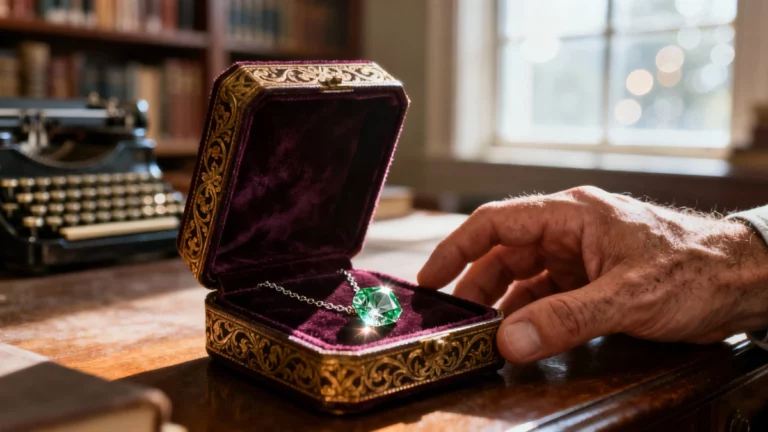
A Marketplace in the Shadows: Jewels as Collateral
The exceptional theft has revived a troubling lead: the jewels may not have simply vanished, but instead, could be used as collateral for secretive loans between organized crime groups. This hidden financial logic sheds new light on criminal methods, the movement of stolen goods, and the network of complicities that enables such operations. It challenges every layer of security, protocol, and traceability. Within the heart of the Louvre Museum, one pressing question now rules: how do you take down such a swift and discreet black market?
According to intelligence expert Claude Moniquet, the robbery follows the code of a criminal economy. As reported by French outlet cnews.fr, the jewelry acts as guarantees in murky loans, circulating quietly behind closed doors instead of being sold openly to the public. Inside the Louvre, this system transforms the stolen pieces into a kind of underground currency. Traceability is weak, logistics are fragmented, and the rules of the game are written in the shadows.
From Paris to the World: Art as a Liquid Asset
This scheme is not unique to France. International cases reveal a strikingly similar pattern: stolen art becomes a fungible asset to secure debts, advance payments, or illicit deliveries. Jewels change hands rapidly—sometimes disassembled, sometimes simply stashed away. Speed is of the essence to those brokering such deals, as value is better preserved with jewels than with cash, which can be tracked far more easily.
The Investigation Unfolds
The heist took place on Sunday, October 19, 2025, with the haul valued at around €88 million (roughly $93 million). Investigators are painstakingly tracing the movement of the loot, cross-referencing sources and profiles, and zooming in on potential exit points for the goods. Their goal is clear: identify the holders, freeze the stolen pieces, and sever criminal access to credit.
Thirteen days after the heist, two new indictments brought the tally of detainees to four. A 37-year-old man, allegedly part of the commando team, and a 38-year-old mother, both protested their innocence. They face charges of organized group theft and criminal conspiracy. A debate is pending before the judge of liberties and detention (the French ‘JLD’).
Previously, two men aged 34 and 39 had also been detained. One was arrested at Charles de Gaulle Airport (Roissy) as he attempted to fly to Algeria; the other in Aubervilliers, a suburb north of Paris. At the Louvre, investigators are piecing together evidence from DNA, video surveillance, and phone records. Prosecutor Laure Beccuau refers to “transfer DNA,” and the mother, from the La Courneuve area, remains in custody.
Three more people interviewed this week were released without charges. Their lawyers called the arrests “like trawling with a drift net.” Detention rulings are made by the JLD when criteria are met. According to senior official Laurent Nuñez, one perpetrator remains to be found—along with the masterminds. The theory of foreign interference, including Russian involvement, has been dismissed for now.
Security Lapses and the Road Ahead
French Culture Minister Rachida Dati flagged what she calls a “chronic underestimation” of intrusion and theft risks. She highlighted outdated security equipment, poor governance, and obsolete protocols at the Louvre. Authorities have now announced measures to secure the museum’s surroundings and entrances. The priorities: faster response, stronger technological shields, and a sharper command chain.
On the day of the heist itself, a cherry-picker truck was parked beneath the museum’s facade. Two men used an aerial work platform to reach the Apollo Gallery, a telltale sign of meticulous planning, scouting, and technical assistance—a real-life Ocean’s Eleven, minus the snazzy suits. The operation raises pressing questions about immediate and perimeter controls at such an iconic venue.
Experts note that the lure of art for organized crime is only growing. Traceability remains fragile: pieces change use and cross borders faster than authorities can keep up. Retrieval teams work methodically, step by step, targeting trafficking networks, fences, and funding sources to cut off criminal profits and isolate every link in the chain as quickly as possible.
This isn’t a sprint, but a marathon—future action will require consistency and method. Success hinges on modernized security, visible controls, and regular audits. Authorities still need to find and isolate the remaining perpetrators—not to mention the jewels themselves. The Louvre will stay at the epicenter of monitoring efforts until the stolen pieces are finally back home. International cooperation will be vital, especially targeting parallel financing. Every shut-down channel means less room for criminal networks to breathe.