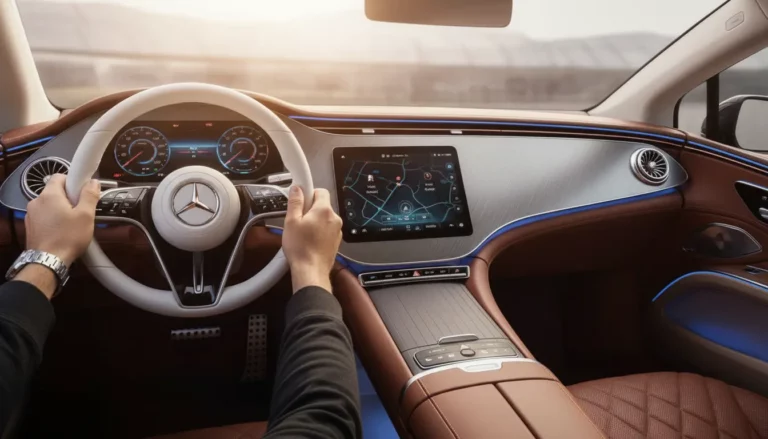
The End of the ‘All-Touch’ Era at Mercedes
The age when every car function got shuffled onto a touchscreen was a real turning point at Mercedes. For a while, the German automaker went all-in on digital, but is now gradually rolling physical buttons back into its interiors. Why? According to Mercedes’ own software chief, physical controls are simply safer and more effective.
When Mercedes unveiled its MBUX Hyperscreen—a whopping 1.41-meter (about 55.5 inches) slab stretching across the entire dashboard—the goal was crystal clear: put all functions, from climate control to navigation, at your fingertips via one giant touchscreen. This approach, picked up by plenty of competitors, sent old-school buttons packing, or even made them extinct for a brief, digital moment.
Buttons Strike Back: Practicality Meets Demand
But the tide is turning with the arrival of the latest GLC and CLA Shooting Brake. These models feature redesigned steering wheels bringing back dials, scroll wheels, and real, tactile buttons. According to Magnus Östberg, Mercedes’ chief software officer, there’s a straightforward reason for the rethink:
“Buttons are better.”
Östberg emphasizes that the mix of touch surfaces and physical controls is the most efficient combo for both safety and user-friendliness. New SUVs from Mercedes are set to gain even more physical buttons, making the most of available space—and, more importantly, answering customer demand. The company is also tweaking its strategy to suit local markets: European drivers are apparently big fans of physical buttons, while buyers in Asia tend to prefer screens and voice control. So yes, it turns out not everyone wants to live in a sci-fi movie.
A Broader Industry U-Turn—But Not Universal
Mercedes isn’t the only carmaker putting the brakes on all-touch controls. Volkswagen, for example, is also bringing back mechanical buttons after discovering that touch solutions aren’t always the most practical in real-world driving. At the Munich Auto Show, VW introduced a new design language that spotlights genuine physical controls, ditching the much-criticized capacitive buttons of recent years.
Safety bodies are in on the act, too. Euro NCAP—the European New Car Assessment Programme—has announced that its coveted five-star safety rating will soon hinge on keeping physical controls for core functions like turn signals and air conditioning settings. Clearly, safety is weighing heavily in the design decisions of carmakers these days.
The Button Renaissance—But Not Everywhere
That said, not everyone’s steering in the same direction. Mazda, long a champion of small screens and plenty of physical controls, is now heading the opposite way. With the 2025 CX-5, the Japanese brand is shifting key controls to a large central touchscreen—a choice that runs counter to Mercedes’ new strategy.
Even as buttons make a comeback, Mercedes isn’t about to chuck its dazzling touchscreens into the scrapyard. Gordon Wagener, the brand’s chief designer, underscores how crucial great software still is, name-checking Apple as the gold standard for user experience. The automaker is sticking with its bold Hyperscreen displays—just adding back some well-loved buttons for the most frequent tasks. Honestly, it might turn out to be the best of both worlds: high-tech when you want it, tactile when you need it!