India Faces American Pressure Over Russian Oil Imports
On Thursday, the Indian Ministry of External Affairs reiterated an unwavering principle guiding its energy policy:
“Our priority is to defend the interests of Indian consumers in a volatile energy market.”
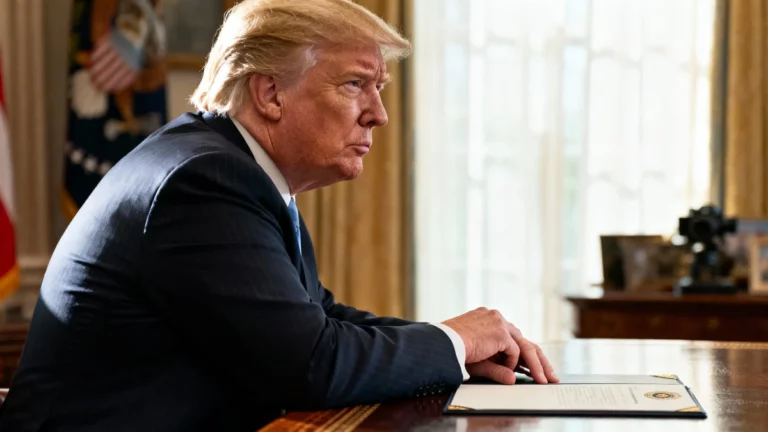
This assurance came on the heels of remarks from Donald Trump, who claimed that New Delhi had promised him it would halt imports of Russian crude.
The statement from New Delhi sounded both prudent and cautious, especially since the Ministry did not explicitly confirm or deny the American assertion about any such promise. Instead, they chose to emphasize the importance of protecting Indian consumers’ interests, a sentiment no doubt shared by anyone filling up their tank anywhere on Earth.
Tariffs and Tensions: The Global Oil Game
Late in August, in response to India buying Russian oil—which Trump argues helps bankroll Vladimir Putin’s war in Ukraine—the U.S. President slapped a hefty 50% tariff on all Indian exports to the U.S. This new surcharge, a kind of economic slap on the wrist, underscores the high stakes and intricate ties between the world’s major economies.
India, after China, is now the second-largest customer for Russian “black gold.” By 2024, Russian oil accounted for nearly 36% of all Indian oil imports—a massive leap from just about 2% before the Ukraine war began in 2022, according to the Indian Ministry of Commerce. If you’re keeping score at home, that’s an eighteen-fold jump. Whether you call it geopolitics or shopping around for the best deal, it’s hard to ignore such numbers.
Statements, Promises, and Diplomatic Zigzags
On Wednesday evening, the White House host stated that Indian Prime Minister Narendra Modi had assured him these purchases would soon stop.
“I was unhappy that India was buying oil, and he assured me today that they will not buy oil from Russia,”
President Trump told members of the press. The Indian ministry, for its part, stuck to its choice of words—sidestepping any direct confirmation or denial, but highlighting ongoing priorities and the ever-present volatility of the market.
The Indian Ministry also noted,
“The current U.S. authorities have expressed their interest in increasing energy cooperation with India. Discussions are ongoing.”
This suggests a diplomatic balancing act, with dialogue continuing though tension remains in the air.
Falling Oil Prices Spark Worries Beyond India
Amidst all this, the price of oil has recently dropped—now sitting at $60.90 per barrel, approaching a level set by Algeria in its national budget for 2026. This marks a worrying point for several oil-producing countries, especially since the price dipped below $61 per barrel, a threshold not seen in years. For Algeria, where oil and gas make up more than 90% of exports and nearly half its budget revenue, such a price drop could spell trouble. The 2026 Algerian budget, for instance, is based on a $60 per barrel assumption, seen as the minimum needed for fiscal balance. As prices inch closer to this red line, concerns are mounting about the country’s financial stability, especially given Algeria’s heavy reliance on hydrocarbon exports.
The oil market is a fickle beast. Fluctuations are not just dictated by producer decisions but by a mishmash of global factors: demand, OPEC’s production policy, and—no surprise—geopolitical choices. The recent dip in prices is linked to oversupply coupled with tepid demand—particularly due to sluggish economic recovery in certain regions.
Institutions like the International Monetary Fund and the World Bank keep a close watch on these price swings, frequently updating their economic forecasts in response. Oil prices remain a key indicator of global economic health, after all.
This slump in prices hits public finances in oil-producing nations hard, and complicates their economic diversification strategies. Algeria, for example, is making efforts—albeit slow—to wean itself off oil, developing industries such as manufacturing, agriculture, and Islamic finance. But these reforms are gradual, leaving diversification an ever-shifting goal, still at the mercy of oil market winds.
Countries with large foreign exchange reserves from oil are particularly vulnerable to these mood swings in the market. If the price continues to fall, nations like Algeria may face even greater financial hurdles, especially when it comes to funding public projects and much-needed infrastructure for economic transition.