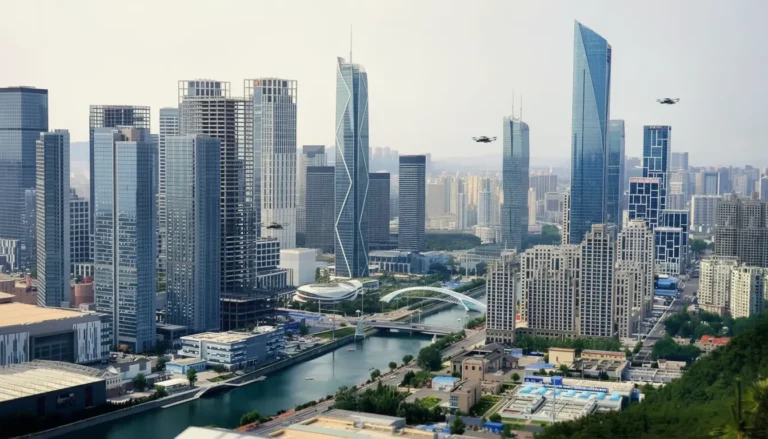
Skyscraper Ambitions, Elevator Nightmares
China has truly become a world champion of mega-construction, setting some rather unusual records—like the tallest abandoned skyscraper on Earth. But no one really foresaw the day-to-day problems these concrete and steel giants would create. In some towers, just taking the elevator has become a real brainteaser—so much so that an entirely new, if tiny, job had to be invented just to cope.
A New Breed of Delivery: Couriers for the Couriers
This curious development was reported by The New York Times and takes us to Shenzhen, southern China’s economic powerhouse with a sizzling population of 18 million. Here, in the depths of a skyscraper like the SEG Plaza, towering 70 floors above the bustling city, getting a takeout order delivered is, frankly, a nightmare. At peak times, elevator waits can easily stretch to 30 minutes. For regular food couriers, all that waiting is a massive waste of time that eats straight into their earnings.
Faced with this problem, a spontaneous solution popped up: couriers… for couriers. Typically, it’s teens or retirees offering this rather oddball service. If you guessed the model is to pick up the food at the building entrance and, for a small commission, take on the last leg of the journey up to the client—you are absolutely right. It’s the relay race of the gig economy!
Inside Shenzhen’s Micro-Economy: The Case of Li Linxing
Take Li Linxing, for example, a 16-year-old who exemplifies this new micro-economy. He spends his days in front of SEG Plaza, earning roughly 100 yuan per day (about $13 or £10). For just a few cents per order (around $0.30), Li squeezes past dozens of competitors, waits in front of jam-packed elevators, and trudges down endless corridors to deliver meals. This job is neither stable nor well paid, but it’s all the city’s most vulnerable can find to scrape together a little quick cash. In Shenzhen, this daily 100 yuan is enough to attract both vacationing students and seniors struggling to get by.
How Does It Actually Work?
So how does the system operate in real life? The main delivery driver pulls up on a scooter, hands over the bag, scans a QR code to confirm the first step—and then drives away. Now it’s up to the “replacement” to handle the slowest, most frustrating part of the job: navigating the elevators and endless hallways.
Some, like Shao Ziyou, have taken this to the next level—Shao is known as the first to set up shop outside SEG Plaza. He’s built a small network of assistants, outsourcing deliveries and keeping a cut from each one. On busy days, Shao can coordinate between 600 and 700 orders! That’s a lot of trips up and down the tower.
- Rising competition means growing rivalries—and regular disputes.
- One mistake can get expensive: platforms penalize official couriers for any delays, and the pressure trickles all the way down to these intermediaries.
- Public squabbles over mistaken addresses have become routine, even if things usually get sorted out in the end.
- To draw in more business, some building runners slash their rates even further, intensifying the grind for everyone.
The Price of Informality: Precarious Work in Legal Limbo
Naturally, the totally informal nature of this job raises plenty of questions. Not a single one of these building runners has a contract, insurance, or any social protections. It’s tolerated, but exists in a clear legal limbo. This grey zone even gave children—sometimes of primary school age—the idea to try their luck, lured in by viral videos on social networks. The public backlash was so strong that local authorities eventually intervened.
Now, only those over 16 like Li can keep working—but the precarious conditions are still the same for all.
This scene at the foot of SEG Plaza is a snapshot of Shenzhen’s very soul. This “gig economy inside the gig economy” is typical for new megacities everywhere, where millions of vulnerable people struggle and scrape by any way they can.