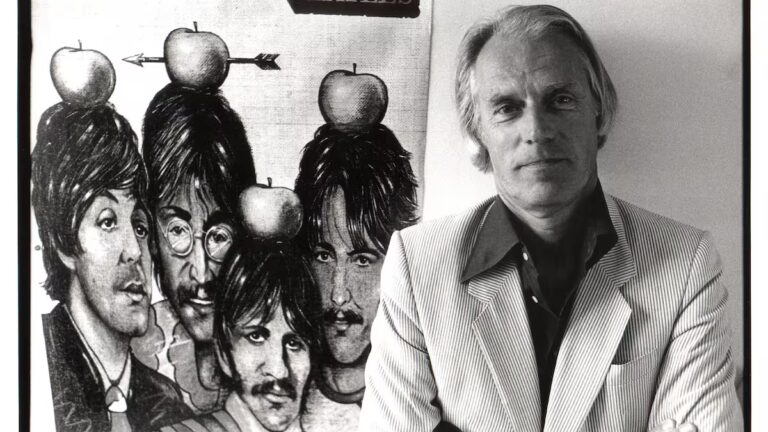
On January 3, 2026, George Martin He would have been 100 years old. Not bad at all for someone who spent half his life being “the fifth Beatle” and the other half clarifying that no, he didn't play in the group, although sometimes it seemed like it. Martin was many things—producer, arranger, mediator, simultaneous translator between musicians and technicians—but above all he was the responsible adult in a band that, without him, might have ended up in the trash sooner than in the history of music.
Before crossing paths with The Beatles, George Martin was not a pop revolutionary, but a serious man from EMI, trained in classical music, an expert in comedy recordings and responsible for albums by Peter Sellers and The Goons. Come on, someone who knew how to work with humor and nonsense, even if he didn't know it yet. When a demo recorded by four kids from Liverpool fell into his office in 1962, His first instinct wasn't exactly a crush. The songs seemed promising, yes, but the sound was rough and the drummer, directly, dispensable. The talent was there, but it had to be organized. And Martin was a specialist in ordering chaos without the seams showing too much.
His arrival in the life of The Beatles was, in reality, a combination of coincidences and professional nose. Brian Epsteinthe group's manager, needed someone to take them seriously, and Martin, although he hesitated, was able to see something that others had not wanted or been able to detect. From there, a relationship that was as creative as it was complex began: The Beatles contributed impossible ideas; Martin, practical solutions. They dreamed; he knew how to turn those dreams into vinyl. He didn't compose the songs, but he gave them shape, body and, above all, sound meaning.
WECB Classic
WECB Classic
The importance of George Martin in the Beatles' career It is not measured in credits, but in decisions. It was he who proposed increasing the tempo of “Please Please Me”, who introduced string quartets in “Yesterday”, who converted an experiment recorded backwards in “Tomorrow Never Knows” and who accepted that a song could last more than seven minutes and still be pop, as happened with “Hey Jude”. He was also responsible for Sgt. Pepper's Lonely Hearts Club Band sounded like the future in 1967, when the future still had no name or instruction manual.
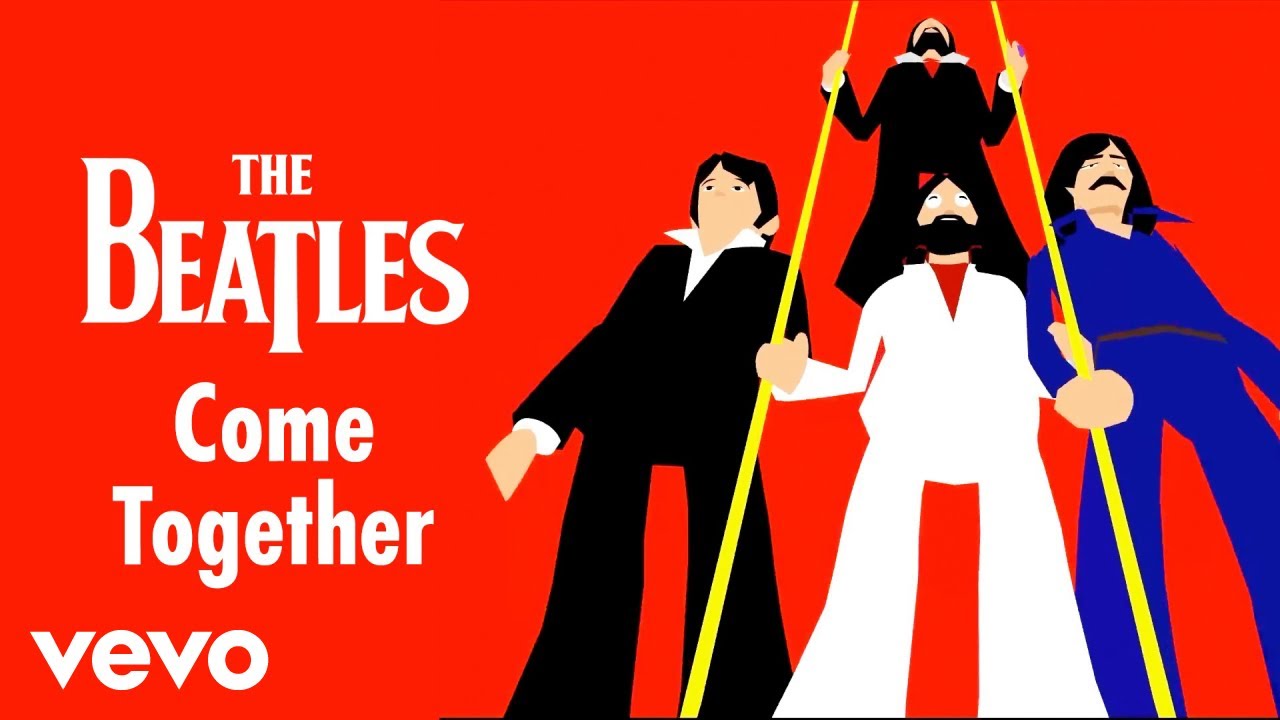
Martin often acted as a translator between two worlds: that of the Beatles, who asked to “sound as if you were in an oriental dream floating on the ocean,” and that of the Abbey Road engineers, who needed somewhat more concrete instructions. He spoke both languages. I knew about harmony, orchestration and study, but I also understood that pop was changing and that Lennon and McCartney could not be produced as if they were lounge singers. His merit was not to impose his classical training, but to put it at the service of the group's intuition.
As the years went by, and especially after The White Album, The relationship began to deteriorate. The group's internal tensions grew, the sessions became fragmented and Martin was no longer present at all. Not because he didn't want to, but because the Beatles no longer functioned as a unit. Still, he returned to Abbey Roadaware that this was probably the last act. It was an elegant farewell: a technically impeccable, emotionally contained album and produced with the precision of someone who knows they are closing an unrepeatable chapter.
After the separation, George Martin's relationship with the Beatles was cordial, but never the same. He continued working with Paul McCartney in different projects, while with Lennon, Harrison and Starr the link was more distant. There were no dramatic breakups or public reproaches, just a tacit recognition that that collaboration belonged to a time and an energy that could not be repeated.
One hundred years after his birth, George Martin remains a key figure in understanding not only the Beatles, but the history of modern pop. He showed that a producer could be creative without stealing the spotlight, that technique was not incompatible with imagination and that, sometimes, the most important man in the group is the one who is not in the photo. A man with a suit, classical training and infinite patience who Helped four Liverpool boys change music forever…and then he had the grace to step away when the miracle ran out.