Music needs to find its own rhythm.
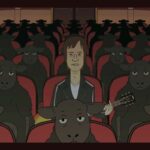
Ceci Bastida is a Mexican singer-songwriter with more than 20 years of experience. She was part of the emblematic protest band Tijuana No! from 15 years of age. His musical journey and knowledge are extremely valuable, which is why his career as a soloist has been in the conversation of fans, colleagues and different media. In Indie Rocks! Magazinewe talk with Ceci Bastida about his most recent release, the single “The World is Mine” and the story behind it.
Indie Rocks!: We come from some singles released in 2024, with collaborations and so on, and now, at the end of 2025, this new single is released, “El Mundo es Mío”. So, how has everything been going so far? How has the reception been?
Ceci Bastida: The truth is, very good. I feel that people have connected very well with the song, and that gives me great pleasure, because I feel that it has taken me a while to release music. If it could be something quite different from what I've done before and still have a lot of people connect with it, it makes me very happy. So, for the moment, I am very good, very happy.
GO!: With this new release, what was your perception of how the music industry is currently progressing?
CB: I don't really love it, you know? Suddenly I feel that everything becomes a kind of race to get things out and about, to be current and for people to know that you are active, and I think that is not the goal of music. But hey, that's how things work now. I try not to be governed too much by those rules and to do things ahead of time, to go the way I like. And go back to—or look for—that feeling of a first album, when you do it more calmly, with more… well, I don't know, like immersed in what you want to do. I want to go back to that place a little bit. I want to work on the record calmly and try not to necessarily fall into these rules that now seem to be what works.
GO!: It is as if it is about each thing having its rhythm, so to speak, its process.
CB: Yes, because I want to feel proud and happy with the work I did. If I make a song in two days, I record it and that's it, like I don't have time to process it. I don't want to say that it's slow, but sometimes I record something, listen to it 20 thousand times, two weeks go by and I don't listen to it again. I like to be sure that what I'm putting out is something I'm proud of at that moment, although I probably won't always be proud of it. When there's a rush, I feel like I don't take the time I need to really know if it's exactly what I want to get out.
GO!: In this moment of listening and relistening to your music, how much do you delegate in your creative processes?
CB: In the composition process I don't delegate much, that is, I am very controlling. Fortunately I've been opening up a little more and, with the producer I'm working with now, I'm looking for a more real collaboration. Not only send him the demos so that he can fix them and they are very close to what I originally did, but that there is feedback, that tells me: “You know what? Why don't we try this?” or “The beat I don't love what you came out with, why don't we try something else?” I want that complicity and that feeling of being part of a team, precisely so as not to get addicted, because sometimes it is a very solitary job: you compose alone, you listen to it a thousand times and suddenly you lose perspective, you no longer know if you like it or not. Collaborating with another person takes away a little of that confusion and those doubts.
On the other hand, whenever I start working on a song or a demo there are a couple of people who I show it to and who usually give me good objective advice. They tell me things like: “This is very strange”, “there are too many things”, “take some away”, “it is too saturated”. That's like the first filter. I have a couple of little people there who I usually teach some things to.
GO!: The support network that you mention is very important, not only for music, but for anything in life, and it is also important to find a good person to produce with, a good producer whose vision is aligned with yours. You have worked with many people, what has that search been like to now connect with someone with whom you feel supported?
CB: Yes, look, with the first album I felt very supported by the producers because we were good friends. They were musicians who played with me and, after battling with a producer whose results I didn't like, they told me: “Give us a chance to get our hands on him.” They got their hands on a song and then I realized that we were on the same frequency, so we decided to make the entire album. It was a super fun process, where I felt part of a real team.
On the second album I worked with a couple of producers, but a lot from a distance. That is very practical, but you also lose a bit of that constant relationship, being with someone physically present in all decisions. I'm happy with those albums, but I had the need to do it again in a more organic way. Although now I am doing it remotely, it is with a person with whom I am completely aligned, not only musically, but in life, in the type of people we are.
I understood that over time, playing with different musicians. Sometimes you can have someone wonderful as a musician, but difficult as a human being. I prefer to surround myself with people I connect with, with respect, affection and a similar vision, than with someone who may be the best guitarist in the world, but is a son of a bitch. Sorry.
GO!: It makes perfect sense. Music is art, we are not assembling cell phones. The human quality of those who participate in a project is essential.
CB: Completely. It is a very vulnerable process, you feel exposed, you are showing something very personal. If there is tension, no matter how small, things do not flow the same. For me the most important thing is to have a real connection with the person I work with. Sometimes it works and sometimes it doesn't, but in this new stage I'm a little slow and I feel like I'm with the right person.
GO!: From your career, what could you tell us about the panorama of Mexican music?
CB: Mexican music is finally being widely recognized. It's not that it wasn't before, of course there have been groups that have come out of Mexico and have been successful in other places, but this movement of younger people that incorporates sounds from different regions of the country and creates fresh and interesting things seems great to me. We are in a very exciting time.
I recently discovered Aratha boy from Veracruz who seems wonderful to me, completely alien to the corrido tumbado movement, but with deep and beautiful lyrics and songs. There are styles emerging everywhere. Before, when I started with Tijuana No!everything went through the record labels; Now you find out about music that is made in all corners of the country, and there are incredible things everywhere.
GO!: There is a lot of talk about the democratization of music: the possibility of recording at home and distributing it on platforms like Bandcamp.
CB: Completely. There is a democratization, but there is also an algorithm. In the end, history repeats itself: the artist is the one who works the most and earns the least. It happened with record labels and it happens now with platforms like Spotify. Unless you have a certain number of views, you don't earn anything. That makes me sad. The ideal would be for there to be fairer platforms, that would decide to pay something truly decent. But hey, that's another topic. At the end of the day, the fact that there is so much music seems great to me.
GO!: It is about dignifying the work of the musician, especially in the independent field. In that sense, the title “The World is Mine” is a powerful statement.
CB: It's just that. We all have doubts: about who we are, about what we do. We seek acceptance, we relate to people who sometimes hurt us, and we lose faith in ourselves. The title talks about taking charge of your life, deciding where you are going and with whom, or even going alone. Imagine that your world is yours, that it does not depend on other people or someone who wants to control you.
I know that it is a generic statement and that life circumstances are very different; Living in a place with opportunities is not the same as living in a marginalized one. But I am referring to your internal world: to seek peace. Believing in yourself is the first step, even if life is not easy and full of obstacles.
The simple “The World is Mine” It is now available everywhere, give it play here: