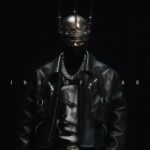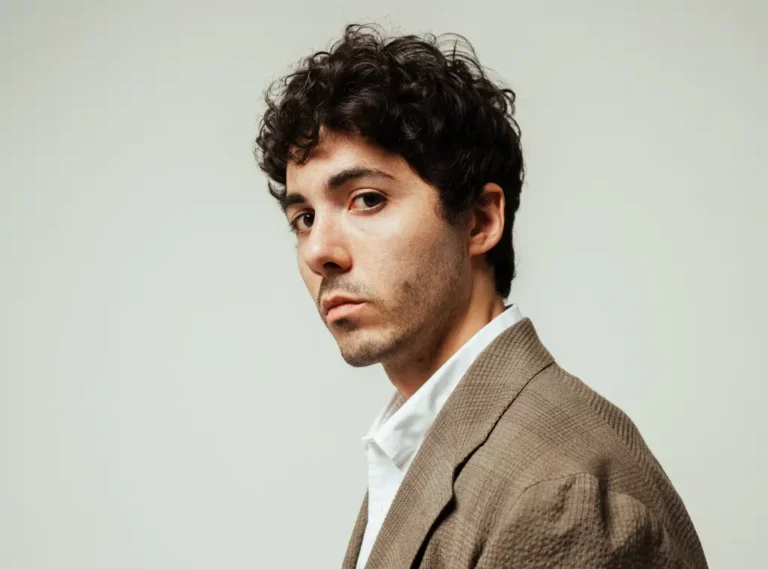
Fulminacci returns to the Sanremo Festival among the protagonists of the 76th edition with the song entitled Stupid bad luck.
During the covers evening, the artist will go on stage at the Ariston Theater together with Francesca Fagnani to give life to a surprising artistic encounter, in which the two will reinterpret “Parole parole”, Mina's timeless masterpiece.
We met Francesco between “Calcinacci” (the title of his new album out on March 13th) and construction sites and we talked about finished relationships and necessary reconstructions, about a generation that goes to therapy but still doesn't know if it believes in love like its parents. In the middle, Sanremo, the arenas, the theatrical lights and a precise idea of success: not the ranking, but the chorus of the public under the stage.
Today Fulminacci is less impulsive, more demanding, surprisingly serene. And perhaps for the first time truly aware of where he is.
THE INTERVIEW
When did you realize it was time to return to Sanremo?
I wanted to come back dressed elegantly. I wanted to come back with new music after a period where I was stopped because I was writing. I thought: the album comes out in March, Sanremo comes first, let's do it.
It's the strongest way to say you're coming back. To present a song you believe in and a record you can't wait to listen to. It seemed like the clearest way to do it.”
After the experience at the Festival a few years ago, what do you expect?
In 2021 I tasted the real atmosphere, but in a lateral way: performance and then hotel, interviews on Zoom, all very isolated. This year will be more challenging, but also more fun. I arrive there with a decidedly happier spirit.”
The competing song was born before Sanremo. How much did this matter?
Very, very much. It's an honest song, written with Golden Years the day we met. We just had to understand if we could work together and instead a finished piece was born immediately. We knew nothing about the Festival. It wasn't written for Sanremo and in fact it isn't forced. He already had an arrangement that lends itself to the orchestra, it wasn't adapted afterwards. It arrived clear and never changed greatly. It was her.”
In the song you sing about “good luck”. What relationship do you have with luck?
I have all the little bad luck in the world. I can never find a parking space, I have never won a bingo, never a both in my life. In sports I often came last. I bought a car and the next day I found it scratched. Glasses fall on me when I meet someone.
But then I have the best job in the world and I have people who love me. So I'm actually very lucky. Let's say that great luck compensates for the small daily misfortunes.”
In the Sanremo song there is also a generational anxiety. Is that so?
Yes. I'm 28 years old, I'm almost thirty. It's an age that is starting to make itself felt. Every time you talk to someone older they tell you that you are very young, but that's not the point. At eighteen I already thought life was over.
There is a fear that also concerns relationships. They are changing. I don't know whether to trust those who say I'm something else or my parents' role model. I want to listen to everyone. I like that today there is more attention to individuals within a couple. Then the excess of individualism creates other problems.
Perhaps many of my generation will have children late or not at all. We may seem more childish, but perhaps we will be a little more at peace with ourselves. Let's go to therapy more, address certain wounds.
I feel in the middle. I need to lean on something, like when in the car you hold onto yourself so you don't fall. I'm looking for a balance.”
What relationship do you have with competition?
I always say that I have no relationship with the competition, but perhaps my analyst should answer. Maybe in reality it is a topic that touches me and I avoid it. It's certainly not the center of my experience.
The Festival has already started and I'm enjoying it. The charts exist, I make pop music and therefore I am part of it.
I don't demonize them, but they're not the point. For me, success is seeing happy people at concerts, singing my songs. Reach as many people as possible with something I like.”
The press welcomed you with enthusiasm. Is it pressure?
I was really happy. It wasn't predictable. Arriving at the Festival with certain ratings is a great thing, regardless of how the ranking ends up. It gave me another spirit.
I'm not superstitious: for me it's just a victory like this.”
What if you could choose between winning and the Critics' Award?
Victory involves that terrible moment of opening the envelope, when there are three of you on stage and everything stops. And maybe you lose. It's terrible. I promised myself that if it were to happen, I would express my disappointment. I won't pretend to be happy for whoever wins, at least if it's a close friend. It would be more honest.
My ideal position? Fifth. Not fourth, which is almost podium. Not third, with all the tension on him. Fifth is perfect: top five, but without the trauma.
The Critics' Award? I don't think they will give it to me. Perhaps to those who have a more “serious” text. Mine is a song of feelings.
I don't know if feelings deserve criticism.”
You said that perhaps the Critics' Award will go to those with “more serious” lyrics. A love song isn't it?
I didn't say it wasn't serious, but that maybe it wasn't perceived that way. I actually presented two songs. One more in line with the piece I'm competing in, the other probably closer to that idea of a committed text. It's on the record, you'll find it. I had two cards. I said: take your pick. For me they were two completely different ways of being at the Festival, but I was enthusiastic about both.
The other song will still be included on the album!
Did the other song touch on political themes?
There were no forbidden words, so to speak. But there were more explicit references: drug dealers, conspiracy theorists, conscientious objectors. A brighter color. Not red, but at least orange.”
The choice of Francesca Fagnani for the cover evening with Words words. Why her?
Meanwhile, she's very nice. I respect her very much, she is a figure of great dignity and she accepted with enthusiasm and lightness.
I wanted to do Words words and I wanted someone who wasn't a musician next to me. Someone the audience would recognize.
We have something in mind that recalls the television of the sixties and seventies. I like to look at the past when I use television. Italian TV in those years was of the highest level.
She has a natural austerity, but she also knows how to make people feel at ease.
She is maternal in her own way, almost a psychologist. He knows how to speak, he knows how to transmit.
He seemed like the right person to me.”
Does the fourth album mark a change?
Yes, because it is almost entirely produced by Golden Years, except for a song by OkGiorgio. The sound is different, more minimal than my previous works. There is less acoustic guitar, which was an obvious feature of mine.
The writing also changed: I listened to different artists while I was composing it and I let myself be influenced. I don't know if the public will be shocked or disappointed, we'll see.
I am very happy. I only post things that I really like and today I like the music I'm making now more than what I made before.
For me, every track must have the dignity of a single. Now the ball is in the court of those who listen.”
On the album you talked about new influences. Which listenings moved you?
I listened to Battiato much more than in the past. He wasn't among my main references, I came from Dalla, De Gregori, Venditti, Battisti. That world there. Battiato was a different, almost external, graft. It has a sonic minimalism, a certain crafty naivety, an elegance that became very recognizable in the 1980s. I think I stole something from that intelligent lightness. It's the name that best sums up this moment.”
The title of the album, “Calcinacci”, dialogues with your stage name. What relationship do you have with that suffix in “-acci”?
It all started from sound. My real surname is Uttinacci and starts with U and ends with a pejorative suffix. For years it was a small trauma, even just making it clear to hotel receptionists. A family friend invented “Fulminacci”, which already exists as a comic exclamation. It's kind of a childish swear word. It represents me: there is the F for Filippo and there is an echo of my surname.
“Calcinacci” arrived the same way. I woke up and thought: that's a beautiful title.Then I realized that was exactly what I was experiencing. An important relationship ended. The rubble. But the rubble is also the construction site, the place where reconstruction takes place.
This record is where I look at the pieces on the floor and try to put a house back together. There are light songs and others less so, but the center is that: realizing the collapse and rolling up your sleeves.”
Will there be any collaborations on the new album?
Yes. There are Franco126 and Tutti i Phenomena.
It was all very natural, born from friendship and the continuous exchange of ideas. With Franco we often found ourselves in the studio, even just to write for fun. We made a piece with him that we sing together, as had already happened on his album.
Tutti i Phenomena is an artist I adore. I believe he is an intellectual of our time, someone who should be listened to carefully. I recommend his latest album to anyone. I would like it to be known by many more people.”
In the buildings you are preparing, what type of visual imagery do you want to build?
I wish lights were more important than LED walls. I'm less interested in animations on screens, those things where everything happens behind them. They tire me easily. I prefer a more vintage, theatrical approach, with lots of lights that create different effects and have a real presence.
Of course, in arenas you need cameras on stage for those who are far away, and I like that part, if done in a cinematic way. But I would like the substance to be there, in the light, not in the digital effect.”
One of the most original and recognizable singer-songwriters on the Italian scene, Fulminacci quickly established himself as one of the most personal pens of contemporary songwriting. His first album, “La Vita Veramente”, met with strong critical success, winning the Targa Tenco for the First Work category.
In 2021 he participated in the 71st edition of the Sanremo Festival with the song “Santa Marinella”, contained in his second album “Many Dear Things”.
His third studio work “Infinity +1” allows him to conquer the whole of Italy with a very successful tour.
Thanks to a writing capable of combining depth, irony and authenticity, the artist will return to the Ariston stage for the 76th edition of the Sanremo Festival.
THE TRACKLIST
“Essential”
“Damn me”
“Stupid bad luck”
“Somewhere in Italy”
“Just in case”
“Fantasia 2000” feat. Franco126
“Nothing special”
“Less than zero”
“Everything OK”
“Mitomani” feat. All Phenomena
“Below cost”
“Nothing amazing”
“The Adventure”
THE TOUR
In April 2026 the “PALAZZACCI TOUR 2026” will start in Rome, which represents a new stage in the artist's growth path and in the affirmation of his unique pen in contemporary songwriting.
09 April 2026 – ROME, Palazzo dello Sport
11 April 2026 – NAPLES, Palapartenope
15 April 2026 – MILAN, Unipol Forum
18 April 2026 – FLORENCE, Nelson Mandela Forum
CLICK TO BUY TICKETS
WEB & SOCIAL
@fulminacci