When compassion moves beyond the hospital ward and into everyday life, it can change the course of an entire family. This is the story of a nurse who chose not just to care — but to commit.
A Teenage Mother Alone In The NICU
In 2020, in the middle of an already uncertain year, a hospital nurse named Katrina Mullen noticed something she couldn’t ignore. A 14-year-old girl had just delivered premature triplets — two months early — and the babies were fighting for strength in the neonatal intensive care unit.
Teen pregnancy in the United States has declined significantly over the past three decades, according to the Centers for Disease Control and Prevention (CDC), yet it remains a complex social challenge, particularly for young mothers with limited support systems.¹ What struck Katrina most was not just the girl’s age — it was her solitude.
Day after day, the teenager, Shariya Small, sat by the incubators alone. No relatives rotated through the waiting room. No friends brought snacks or extra clothes. She simply showed up, quietly, consistently.
Katrina later shared with NBC’s Today that the young mother often stayed by her babies’ bedsides for days at a time without visible support.² As any nurse will tell you, hospitals reveal more than medical charts — they reveal lives.
A Shared Story Creates Trust
At first, Shariya kept her distance. Katrina tried gentle conversations, small check-ins — the kind nurses learn to use when patients seem overwhelmed. But the breakthrough came unexpectedly.
Katrina opened up about her own past. She had become a mother at 16 and had placed her baby for adoption. It was a deeply personal detail, and one that shifted the atmosphere between them. Suddenly, this wasn’t just a nurse offering advice — it was a woman who understood the weight of teenage motherhood.
That vulnerability built trust.
Throughout the babies’ hospitalization, Katrina offered practical guidance: feeding schedules, follow-up appointments, how to navigate early developmental care for premature infants. According to the March of Dimes, premature babies face higher risks of respiratory, digestive, and developmental challenges, making parental support crucial.³
When the triplets were finally discharged, Katrina gave Shariya her phone number. “Call me if you need anything,” she told her. Sometimes, those simple words become lifelines.
When Foster Care Becomes Forever
A few months later, Katrina learned that Shariya’s living situation had deteriorated. The young mother and her three infants were staying with relatives, but conditions were unstable. The babies reportedly slept in a small portable playpen, and Shariya had little space or autonomy.
Then one of the triplets was hospitalized with digestive complications and severe eczema. Doctors identified signs of failure to thrive, a medical condition in which infants don’t gain weight or grow as expected. The American Academy of Pediatrics notes that early intervention is critical in such cases.⁴
Social services stepped in and decided that Shariya and her children needed foster placement.
But finding a home for a teenage mother and three premature infants is no small task. Foster care systems across the country face shortages; the U.S. Department of Health & Human Services reports that hundreds of thousands of children are in foster care nationwide.⁵ Keeping siblings together is already challenging — adding a teen parent to the equation makes placement even more complex.
Katrina didn’t hesitate.
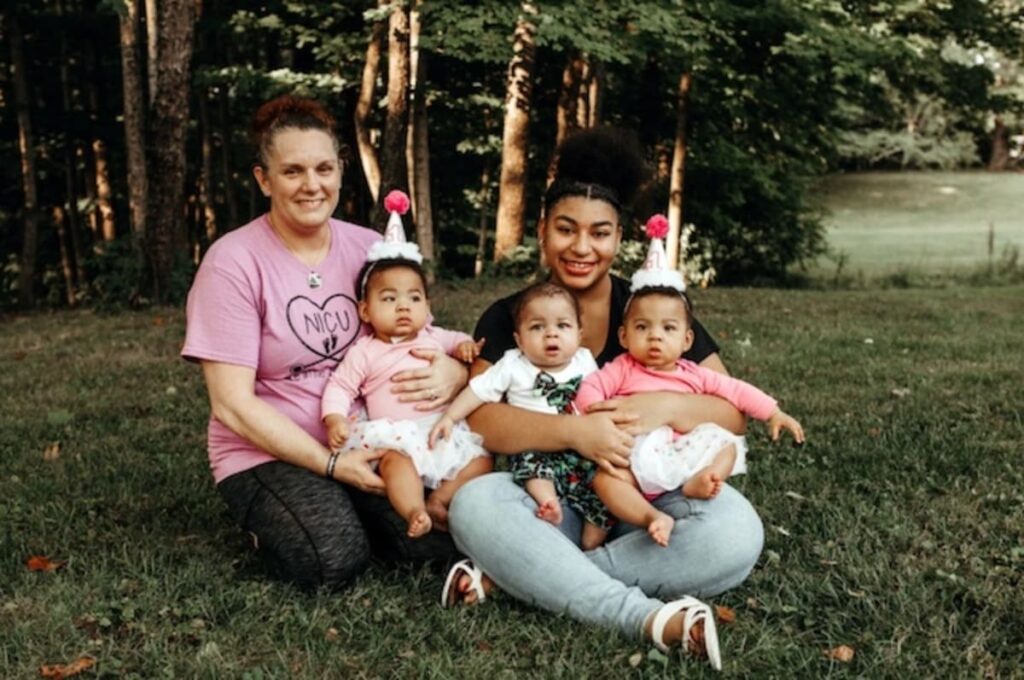
Although she already had three children of her own, she completed the required training to become a licensed foster parent. She brought Shariya and the triplets into her home. What began as professional concern evolved into family.
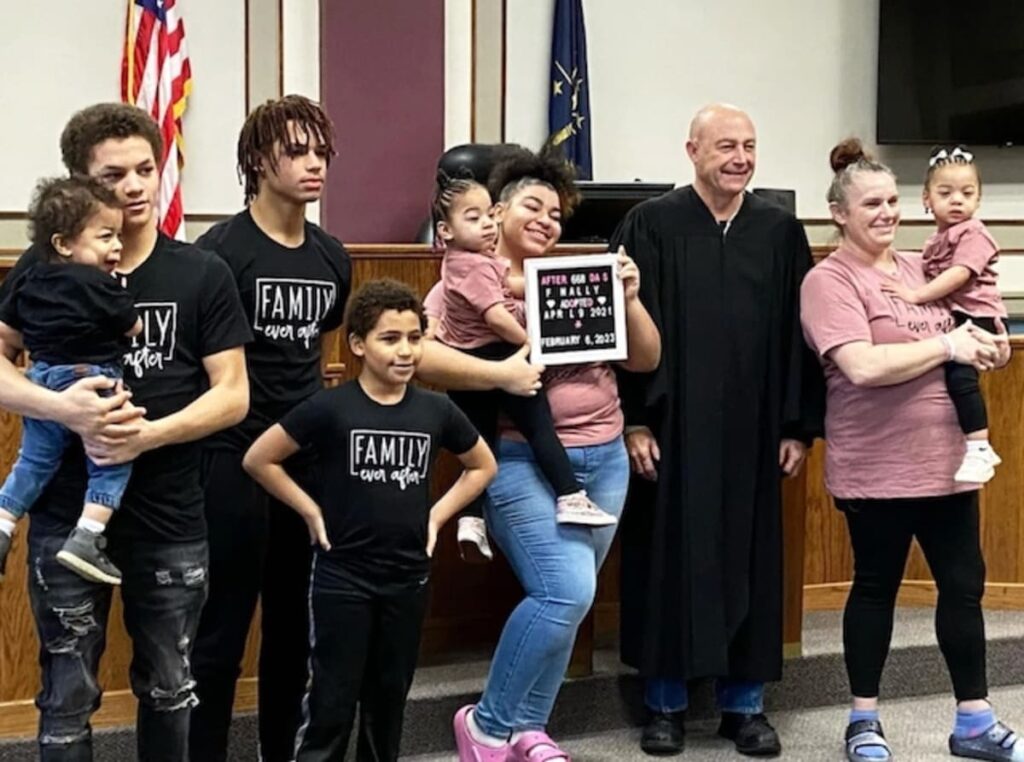
On February 6, Katrina officially adopted Shariya. Today, she calls her daughter.
As for Shariya, she has since earned her high school diploma and is considering a career in social work — inspired, perhaps, by the very system that once intervened in her life.
Stories like this resonate not because they are dramatic, but because they are deeply human. A nurse saw a teenager sitting alone in a hospital room and decided not to look away. In a healthcare system often stretched thin, one act of personal responsibility transformed into something permanent — a reminder that sometimes, the most powerful form of care is simply staying.