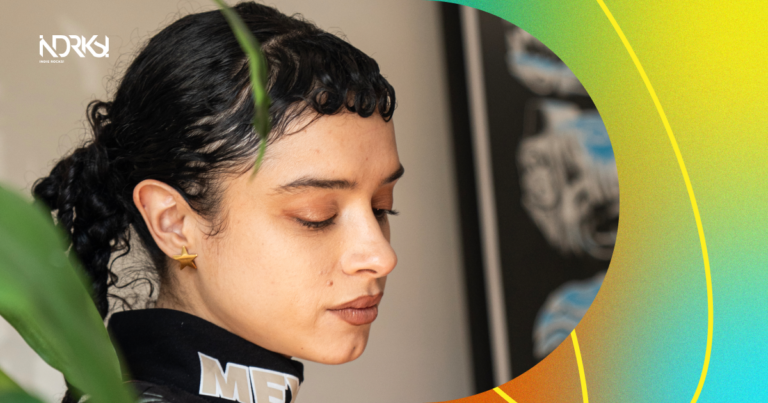
Coyota: the power to lower the mask.
Alaide is an artist who, despite having been making music for several years, released her first full-length album on February 12, 2026. It is about Coyotaan album made up of 10 songs that range in musical genres from Latin dembow to cumbia and rap. Regarding the release of this album, we spoke with the Mexican singer and songwriter about her sonic identity and the stories behind the formation of Coyota.
Indie Rocks! Magazine: Let's talk about Coyotayour first full-length. But first let's go a little bit into history. How much has happened in your career to get to this first album?
Alaide: Wow… it already rained, but hey, I'll try to summarize it. I am from Tepoztlán, Morelos, and I always loved music. More or less when I was 19 or 20 I started releasing my songs. I came to study music and then I started acting and doing fashionable things. I also love painting, reading, poetry… obviously music. But it all started from there. I started by releasing singles and then I released an EP called Clara Agüitawhat I did with Ferraza Venezuelan producer. That EP is very much about my own deconstruction of romantic love. Then it came Coyota. I feel like it was more of an encounter with myself, understanding myself through the music I was making and going deeper into what was happening to me. Search for the deepest, most magical and mysterious side to the things I was experiencing.
GO!: We have been following your music for a long time here at the magazine and we have noticed that you are an artist who is very sensitive to the environment. But, from your personal history, have you always been surrounded by different currents and influences? How does all that impact your work?
TO: Yes, totally. Since I was a child I grew up soaked in all that. She drew a lot, she sang, she was surrounded by nature. There was a lot of music playing and there was a lot of painting around. To date I believe that everything enriches everything, sometimes in non-linear or not so explainable ways. But in the end art is art. Everything we perceive influences us and, naturally, if you are creating, that is reflected in your work.
GO!: Even in finding a unique visual identity in the midst of a sea of content and currents. From the way they dress to building their own style, also starting from Mexico, such a colorful and sunny place, right?
TO: Yes, with Coyota I started to think a lot about the truth, about creating from authenticity. That was the compass of the album. The album appeared as it was composed, but my rule was to create from the truth. And I feel like that applies the same to clothes, to acting, to everything. It's what I can control: connecting with what is authentic. That I like the music I'm making, that I believe in the scene that I play, that I like it. I believe a lot in the power of truth and I trust that when you do things from there, the other connects in a more honest way and sees themselves reflected.
GO!: In many interviews, the debate has arisen about the importance of publishing an album today, when the industry pushes more to release singles or EPs because they are more “digestible.” Why do you think it is still important to release an album like Coyota?
TO: I feel like it's holding on to a tradition that has some mystique to it. For me, making an album is also honoring a stage: all the efforts it involves and naming a moment in your life as a musician and as a woman. For me it was a dream to release an album. The net, it's exciting.
GO!: In Coyota You are accompanied by several collaborations and producers that we have also followed for a long time, such as Raúl Sotomayor. What was the production process like and finding the right people for this project?
TO: Music passes through many people; It is always a collective work. In Coyota I sought to collaborate with artists I dreamed of working with: Raúl, Bebo, Teorema, ALONGamong other producers. I didn't start from a clear concept; I trusted that the path was going to tell me where. Little by little everything became clear. Working with people I admire made the process perhaps longer, but sharing music is a gift and also a great learning experience.
GO!: In addition, there is collaboration between different countries: Chile, Puerto Rico and Mexico. That is reflected a lot in the sounds, where there are cumbias, reggae, soul. How was that journey through genres?
TO: As a listener I have always been like that, I fall in love with many types of music. In Coyota I wanted to go through places that I feel are very close to my musical origins: reggae, pop, soul, rap. I wanted to pay tribute to sounds that have accompanied me since I was a child, from dosmilero reggae to neo-soul and cumbia. I gave myself the license to move freely between genres because that's how I want to relate to music, from freedom.
GO!: We come from times where genres were very locked in their niches. Today we see more mix and diversity, even in the curation of festivals. At what point do you think we are musically in Mexico?
TO: I think it's an incredible moment for Latin music. There is a very strong global focus, but also a need to honor roots and reinterpret them. That's something I sought to do with Coyota and I feel that it is a collective movement. Music in Spanish is being heard all over the world and Mexico has always been a very important cultural point. Here there is a lot of movement, many encounters, many possibilities, and you can feel that.
Listen “PLEASE” part of the album Coyota of Alaide here: