Have you ever typed your last name into a search bar just to see what would happen? You’re not alone. A growing number of people are curious about their roots — not just their family stories, but the geography and history hidden inside their surnames.
A Map That Brings Your Surname To Life
Interest in genealogy has surged in recent years. According to a 2022 survey by the French polling institute Ifop, 7 out of 10 French people say they are interested in researching their family history. And it’s not just a French trend — platforms like Ancestry and MyHeritage have reported millions of users worldwide exploring their ancestry.
One website that stands out in this space is Geneanet, a genealogy platform launched in 1996. Built on contributions from more than 4 million members across the globe, it allows users to explore the geographical origin of a surname through interactive mapping.
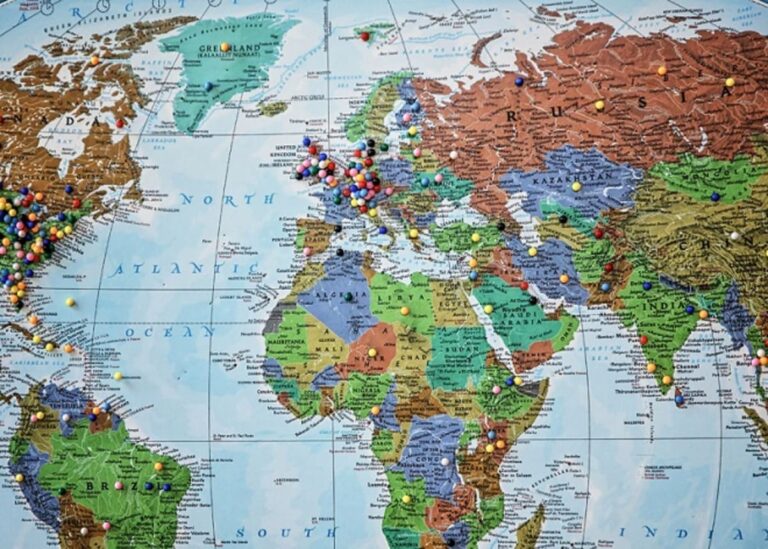
Here’s how it works: you simply type in a last name, and the site generates a world map showing where that surname appears most frequently. The darker the color on the map, the more common the name in that region. Lighter shades indicate a lower presence.
When I tested it with a very common French surname — Dupont — the map lit up across France in deep shades, with scattered traces in neighboring countries. It’s strangely satisfying to see something as personal as your name visualized on a global scale. It makes history feel tangible.
A Free Tool To Explore Your Family Name
One of the best parts? It’s completely free to use.
After entering your surname, the site doesn’t just show a map. It also provides a brief explanation of the name’s etymology of surnames, when available. Many last names have origins linked to professions, geographic features, or personal characteristics. For example, names derived from trades — like Baker or Smith — are among the most widespread in English-speaking countries.
The platform’s data is drawn from millions of family trees created by its community of users. This means the distribution figures are based on real genealogical records, not just census data. While it’s not a definitive scientific database, it offers a fascinating starting point for anyone curious about their roots.
Genealogy experts often remind people that surnames can evolve over centuries due to migration, spelling changes, or administrative errors. Organizations like the National Archives in the UK and the U.S. National Archives emphasize that tracing lineage requires cross-checking multiple sources. But tools like this make the first step accessible and engaging.
Why So Many Of us Are Curious About Our Origins

There’s something deeply personal about discovering where your name comes from. I remember a friend who always believed his surname was Irish. After a quick search, he discovered its highest concentration was actually in northern Spain. That small discovery sent him down a rabbit hole of migration patterns and historical trade routes — and completely reshaped his understanding of his family story.
In a world where mobility is the norm, understanding your surname’s journey can offer a sense of grounding. It connects you to places you may never have visited but are, in a way, part of your story.
Of course, a map is just the beginning. True family history research takes time, patience, and often conversations with relatives who hold fragments of the past. But seeing your name displayed across a global map can be the spark that starts that journey.
And sometimes, all it takes is a simple search box to open the door to centuries of history.