Beneath the calm waters of one of Europe’s oldest lakes, archaeologists have uncovered traces of a settlement that may date back nearly eight millennia. What lies hidden under the surface of Lake Ohrid could reshape how researchers understand the earliest prehistoric lake settlements on the continent.
The discovery, still under investigation, suggests that communities were already experimenting with sophisticated ways of living near water thousands of years earlier than previously believed.
A remarkable discovery beneath Lake Ohrid
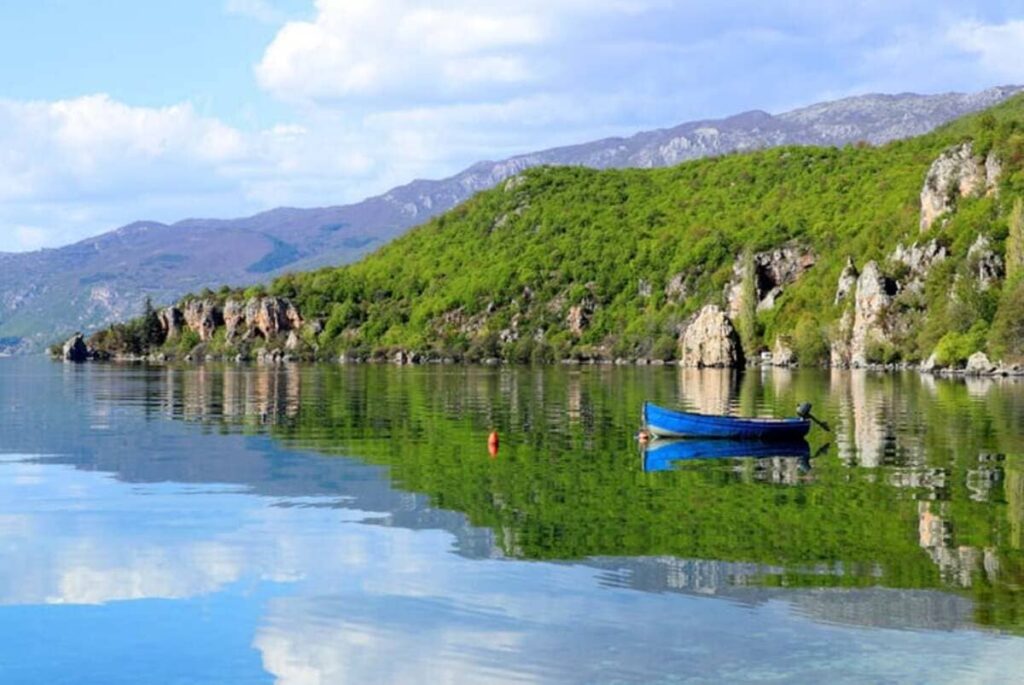
The waters of Lake Ohrid, a vast body of water shared by Albania and North Macedonia, have long fascinated scientists. Recognized as a UNESCO World Heritage Site, the lake is considered one of the oldest continuously existing lakes on Earth. According to UNESCO, it is more than one million years old and hosts exceptional biodiversity (UNESCO World Heritage Centre, 2024).
But its biological richness is not the only reason researchers are interested in the site.
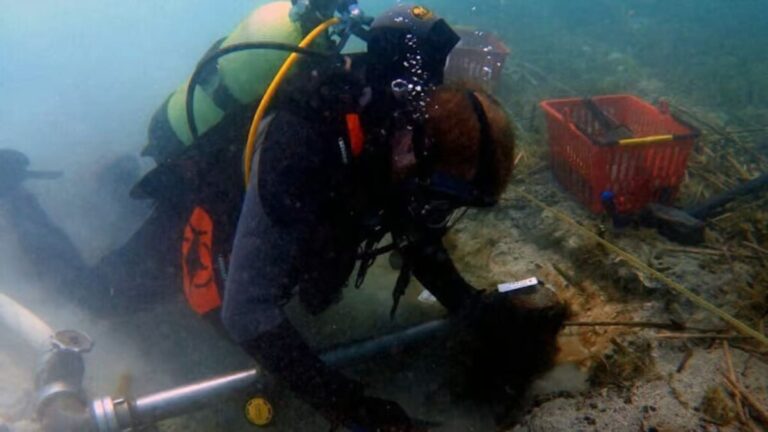
Archaeologists exploring the Albanian shoreline near the village of Lin recently discovered submerged remains of what appears to be an ancient stilt village. Early analysis of wooden posts, tools, and organic materials suggests that the settlement could date back to between 6000 and 5800 BCE, placing it roughly 8,000 years in the past.
Albert Hafner, an archaeologist at the University of Bern involved in the project, explained that the site may represent the earliest lake-dwelling community discovered in Europe. Similar pile-dwelling villages have been found in the Alpine region and across the Mediterranean, but this one appears to predate them by several centuries.
For archaeologists, that timeline matters. Each new year pushed back in prehistory helps scientists understand how and when early humans began experimenting with permanent settlements.
One of Europe’s earliest sedentary communities?
Estimates suggest that the ancient settlement could have housed between 200 and 500 inhabitants, making it a relatively large community for the Neolithic period.
The houses appear to have been constructed on wooden stilts positioned over shallow water or in areas prone to flooding. These elevated structures—known as pile dwellings—allowed people to live close to the lake while protecting homes from rising water levels.
Researchers are still trying to understand why the inhabitants chose this particular architectural style. It may have provided advantages such as protection from animals, easier access to fishing resources, or even defensive benefits.
Excavations must proceed extremely carefully. Underwater archaeological sites are fragile, and removing material too quickly can damage valuable evidence.
According to the Swiss National Science Foundation, underwater prehistoric settlements often preserve organic material—like wood, seeds, and plant remains—far better than sites on dry land because the lack of oxygen slows decomposition (Swiss National Science Foundation, 2023). That means Lake Ohrid could hold exceptionally detailed clues about daily life thousands of years ago.
Farming, animals and daily life in the ancient village
Early discoveries already provide a glimpse into how the inhabitants lived.
Researchers have recovered plant seeds, traces of cultivated crops, and bones belonging to both domesticated and wild animals. These findings suggest that the villagers practiced early agriculture and animal husbandry, combining farming with hunting and fishing.
This mixed lifestyle was typical of many Neolithic communities transitioning from purely nomadic hunting groups to more permanent agricultural societies.
When I first read about discoveries like this, I’m always struck by how familiar the challenges must have been. Even 8,000 years ago, people were figuring out how to grow food, protect their homes from flooding, and build communities that could survive for generations.
In many ways, the story of early European settlements is simply the story of humans learning how to stay put.

A site that could reshape prehistoric research
Despite the excitement surrounding the discovery, archaeologists emphasize that the research has only just begun.
The lake floor is dense with vegetation, which complicates underwater exploration and slows excavation work. Divers must carefully document each wooden stake, artifact, or fragment before removing it.
Yet this patience is essential.
Prehistoric lake settlements are considered extremely valuable to archaeologists because they preserve unique information about early societies. UNESCO notes that similar prehistoric pile dwellings in the Alpine region have helped scientists reconstruct ancient diets, agricultural practices, and even climate conditions thousands of years ago (UNESCO World Heritage Centre, 2023).
The settlement at Lin could play a similar role for southeastern Europe.
Researchers hope that continued excavation will reveal the full layout of the village, including houses, defensive structures, and possibly tools or pottery that could shed light on trade and cultural connections across the region.
For now, the submerged city beneath Lake Ohrid remains partly hidden—its wooden foundations quietly resting under layers of sediment and aquatic plants.
But with every carefully recovered artifact, archaeologists are getting closer to understanding one of the earliest known examples of organized life in Europe.
And sometimes, history’s oldest cities aren’t buried under deserts or ruins—they’re simply waiting beneath the water.