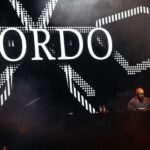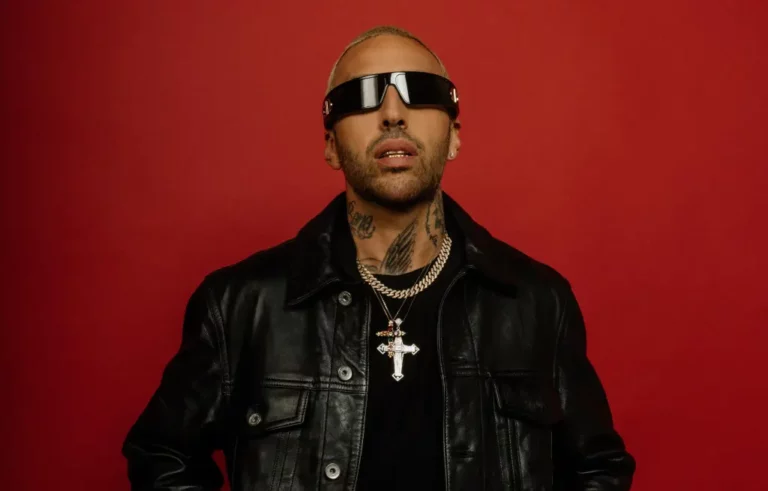
Luchè took the stage at the Ariston for the first time as a protagonist, bringing “LABIRINTO” to the competition at the 76th edition of the Sanremo Festival.
With “Labirinto” he brings to the Ariston a song that delves into sentimental obsessions and mental short circuits, far from the rapper's comfort zone and close to a more exposed, almost vulnerable dimension. For someone who built his own trajectory between platinums and sold outs without the full support of the mainstream system, getting on that stage also means redefining the perimeter of his public identity.
Participation in the event represents a chapter that adds to the countless goals of his career: a prestigious stage that welcomes his musical vision that goes overseas. His music, which combines street credibility with few equals with an extraordinary transversality with an international scope, demonstrates how his language can speak to a global audience without ever betraying its roots.
On Friday evening, he will be accompanied on stage by Gianluca Grignani and together they will bring “FALCO IN HALF”.
THE INTERVIEW
It's your first time in Sanremo. What sensations did you feel going up on that stage, in a context so different from yours?
Emotions are difficult to explain. It's a completely different context from everything I've done so far. I have years of live performances behind me, big stages, my own audience. Here, however, you know that the whole of Italy is watching you, that there are cameras everywhere, that you are facing an audience that perhaps knows you little or superficially. It's a one shot.
You don't have your audience singing with you, there's no cheering to support you.
You lay yourself bare with an unreleased song in front of millions of people. Ninety percent of my energy was spent controlling anxiety and the fear of making mistakes.
But it is an experience that makes you grow, as an artist and as a person. It forces you to learn to handle pressure.
“Labyrinth” is a powerful metaphor. What is this labyrinth? And can we get out of it?
It's a metaphor for life, for a relationship, but also for my brain. There are thoughts that I struggle to get out of. In life you continually enter and exit your own labyrinths. And in my opinion that's right too. Being inside yourself helps you understand yourself better. The important thing is to come out more aware. The song is about a relationship that two people can't break free from, perhaps because deep down they don't really want to. Awareness is the key. Without that you are trapped.
How do you deal with the criticism, especially in a context like Sanremo?
I live it well. Getting on that stage is very difficult, especially for someone like me who was born a rapper. I have never defined myself as a singer in the classical sense. It's a strong emotion to manage, even for those who have been singing since they were children. On autotune, then, it surprises me that in 2026 it is still a controversial topic. In my piece there is not a massive use to cover defects, but a search for sound. There are different vocal effects to build an international sound aesthetic, which is the norm abroad. It's a creative choice, not a shortcut. Behind it is the work of producers and sound engineers. It is a precise sound vision.
Why did you choose to get involved right now in Sanremo?
Because my career has been a long apprenticeship. I have platinum records, sold out tours, a solid fan base for years. Yet I have been told no many times. In Italy certain routes are sometimes recognized late. At a certain point I thought: my audience has always rewarded me, but a certain type of mainstream recognition is still missing. Then I'll come knock on your door. Sanremo is also this: a way to broaden the dialogue, to be listened to by those who perhaps have never really stopped on my music.
Is there anything you would change about the performance?
It's a piece that needs to be interpreted. The first verse is almost recited, very emotional, then the chorus opens. The second verse is more rap, there I can play more with the cameras too. There is a very high bridge. It is built as a path: first the intimacy, then the explosion. I have to get to that point and make it heard, without forcing. Being the first time, for me it's already a great thing to have managed to bring it the way I wanted.
On the collaboration evening you will be with Gianluca Grignani. What should we expect?
There is great respect with Gianluca Grignani. We thought about a sort of rereading, almost a remix in my language. I will have two new verses, he will interpret the singing parts. It is a meeting between different worlds which however can become one. I like artists with strong, not tame personalities. In Italy we sometimes tend to tone down those who stand out too much. Instead, more courage is needed, especially for kids: to dare, to take risks, even to make mistakes. Be yourself without fear of judgement. Life is only one.
How has your relationship with the Festival changed over time?
At first I didn't feel it was mine. I lived abroad when I was very young, at nineteen I was already in London, so I didn't follow it for a long time. It was a world away from mine. We saw it as the shell of Italian pop, while we perceived ourselves as an alternative. In recent years, however, the Festival has opened up to other languages, including to my colleagues. I approached out of interest, out of friendship, for work. Today is the most important musical moment of the year. It's nice to feel part of something that once seemed distant.
As a debutant, what impression did this festival “circus” make on you?
It is a circus in the noblest sense of the term. A great space for discussion. You talk to professionals who have different ideas from yours, and without discussion there is no growth. The organization is impeccable, I didn't have a technical problem. I'm having an incredible experience. But you have to get there at the right time.
What do you mean by right time?
It doesn't have to be a last resort. Over the years, some artists have come here to revive themselves. It's a huge risk. It can go very well for you, it can sink you. In my opinion you should come when you are strong, when you have something to say, when you are in a good personal and creative moment. Sanremo amplifies everything. It can't be a desperate move.
What advice would you give to the younger people who watch you today from that stage?
Think less and act more. I see so much fear of the future, the need for certainties. Self-confidence is a skill, but it must be cultivated. In Italy there is a lack of a clear message of trust towards young people. We talk a lot about humility, but sometimes it almost seems like we have to be small by force. I believe in awareness. You can be respectful and at the same time believe in your ideas, say it out loud. I would tell kids to leave early, to have experiences outside, to travel, to make mistakes. Come back with a broader look. Italy should feed itself more on international cultures. Only in this way can we truly grow. More courage is needed. Always.
LISTEN TO THE SONG
THE TOUR
Sunday 15 March 2026 | Rome – Palazzo dello Sport
Tuesday 17 March 2026 | Florence – Mandela Forum
Saturday 21 March 2026 | Turin – Inalpi Arena
Monday 23 March 2026 | Eboli (SA) – Palasele
Tuesday 24 March 2026 | Eboli (SA) – Palasele
Thursday 26 March 2026 | Messina – Palarescifina
Saturday 28 March 2026 | Bari – Palaflorio
Sunday 29 March 2026 | Bari – Palaflorio
Wednesday 1 April 2026 | Padua – Gran Teatro Geox
Thursday 2 April 2026 | Milan – Unipol Forum
Click to purchase tickets
WEB & SOCIAL
www.instagram.com/luche_official/
www.tiktok.com/@lucheofficial