
Sometimes the most unexpected life decisions lead to the most meaningful changes. For two mothers in Maryland, a difficult chapter—divorce—became the starting point for a creative way of rebuilding stability for their families.
Their decision to purchase a home together has since captured attention online, not only for its originality but also for the practical support it provides. As housing costs rise and parenting responsibilities intensify, their story highlights a growing interest in alternative family living arrangements.
Two single mothers start a new chapter under one roof
Shortly after finalizing their divorces, Holly Harper and Herrin Hopper made an unconventional choice: instead of facing single parenthood alone, they decided to join forces. Together, they purchased a large property in Maryland worth roughly $800,000, moving in during the COVID-19 pandemic.
The house—a spacious quadruplex—offered enough room for both families. Harper moved into one level with her 10-year-old daughter, while Hopper settled on another floor with her two children, aged 10 and 15.
At first glance, the arrangement might sound unusual. But for the two friends, who had known each other for years, the idea felt surprisingly natural. They often describe their relationship as “platonic partners,” a term that reflects a practical alliance rather than a romantic one.
In everyday life, the setup functions much like a cooperative household. The children grow up together, and the mothers share responsibilities—from school pickups to cooking dinners on busy evenings.
Many parents will recognize the relief of having another adult nearby. One mother might help with homework while the other finishes a work call, or step in when a child suddenly falls ill. Those small moments of shared responsibility can make an enormous difference.
A lifestyle built on shared support
The arrangement adopted by Harper and Hopper is part of a broader concept sometimes called a “momune.” The term refers to households where single mothers live together and share parenting duties and living costs.
Although the concept gained visibility during the pandemic, versions of communal parenting have existed for decades. Sociologists studying cooperative housing have long noted that shared living arrangements can help families reduce financial pressure while strengthening social support networks.
According to the Pew Research Center, single-parent households often face significantly higher financial strain than two-parent families in the United States, particularly due to housing and childcare costs. Shared housing can ease those burdens by splitting expenses and responsibilities.
For Harper and Hopper, combining their financial resources made homeownership possible in a market where buying alone might have been out of reach.
Just as importantly, the emotional benefits are clear. Raising children can be isolating after a divorce, and having a trusted friend in the same house provides reassurance that someone is always there to help.
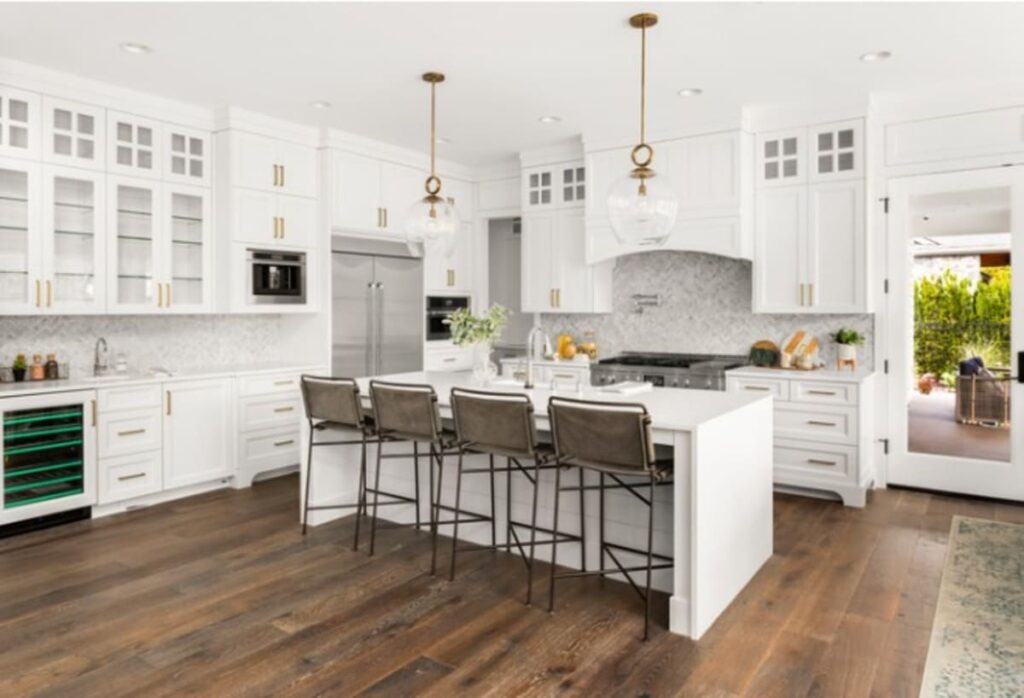
The “mermaid house” welcomes more than just two families
The property the women purchased has gradually become known as the “Mermaid House.” The name, chosen by its owners, is a playful tribute to the mythical sea creatures of Greek legend—symbols of strength and independence.
The house doesn’t only accommodate the two families. A tenant also rents the basement apartment, helping offset the mortgage costs. Meanwhile, the building includes shared spaces where everyone can gather.
That communal area has become the heart of the home. Some evenings, it hosts casual dinners or movie nights where the children and adults relax together. On weekends, it might transform into a homework hub or a place for birthday celebrations.
Living this way requires communication and compromise, of course. But the two women say the benefits far outweigh the challenges.
As urban planners and housing researchers increasingly discuss cooperative living models—from co-housing communities to multigenerational homes—the story of these two mothers illustrates how creativity can reshape family life.
Their arrangement may not suit everyone, but it offers an inspiring reminder that modern families don’t have to follow a single blueprint. Sometimes, the strongest households are built not just on walls and mortgages, but on friendship, trust, and shared responsibility.