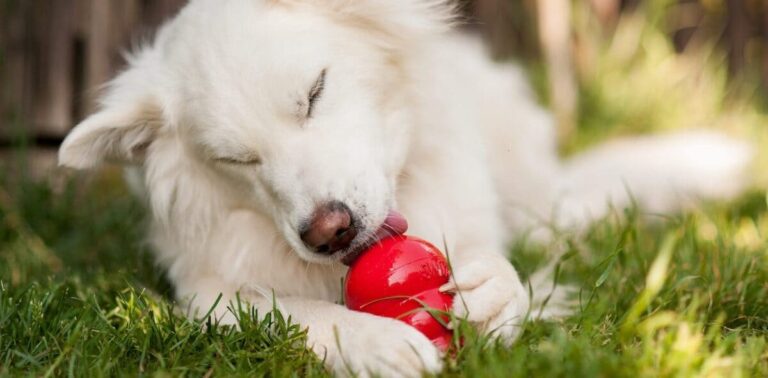
For many dog owners, finding ways to keep their pets stimulated during busy days can be a challenge. Between work, family commitments and unpredictable weather, daily walks don’t always happen exactly as planned.
That’s why a simple rubber toy has been generating so much conversation among dog owners and trainers. Known as the Kong dog toy, this chewable treat dispenser is increasingly used to provide mental stimulation for dogs and help keep them active indoors when walks are shorter or temporarily impossible.
What is the Kong?
At first glance, the Kong looks deceptively simple. It’s a durable rubber toy, often shaped like a cone or small beehive, with a hollow centre that can be filled with food.
The design allows owners to insert treats such as peanut butter, soft cheese, kibble or small pieces of meat. Once filled, the toy becomes a challenge for the dog, which must lick, chew and manoeuvre the toy to access the reward inside.
The product is widely recognised in canine training circles. According to the American Kennel Club, puzzle toys and treat-dispensing devices can help reduce boredom and destructive behaviour in dogs by encouraging them to work for their food rather than receiving it instantly.
Kongs are typically sold in several sizes and strengths, adapted for puppies, adult dogs and strong chewers. The rubber material is intentionally resilient, designed to withstand repeated chewing without breaking apart.

Why the Kong is so beneficial for your dog
Dogs are naturally curious and problem-solving animals. Without enough stimulation, they can become bored or anxious — something many owners recognise when furniture or shoes start to suffer.
Interactive toys such as the Kong address this problem by engaging both the body and the brain. When a dog tries to extract treats from the toy, it performs a combination of licking, chewing and nudging movements. These actions activate jaw muscles and require concentration.
Veterinary behaviour specialists frequently highlight the importance of cognitive enrichment. The American Veterinary Medical Association notes that enrichment activities — including food puzzles — can improve a dog’s emotional wellbeing and reduce stress-related behaviours.
In practical terms, owners often notice that their dog becomes calmer after spending time with one of these toys. A dog that has spent twenty minutes concentrating on a challenge is usually much more relaxed afterwards.
One simple trick that many owners swear by is filling the toy with soft food and placing it in the freezer for a few hours. The frozen filling takes longer to lick out, extending the activity and keeping the dog busy far longer.
Can the Kong replace a walk?
Despite the enthusiastic claims sometimes shared online, no toy can fully replace the benefits of outdoor exercise. Walks remain essential for a dog’s health, socialisation and exposure to new environments.
That said, there are moments when a long walk simply isn’t possible. Heavy rain, late working hours or recovery after surgery can all limit outdoor activity.
In those situations, enrichment tools like the Kong can help compensate for the missing stimulation. Trainers often describe it as an indoor activity that combines chewing, problem-solving and reward-seeking behaviour.
This type of interactive dog toy engages a dog’s brain intensely. For some animals, mental work can be surprisingly tiring — sometimes producing a similar calming effect to moderate physical exercise.
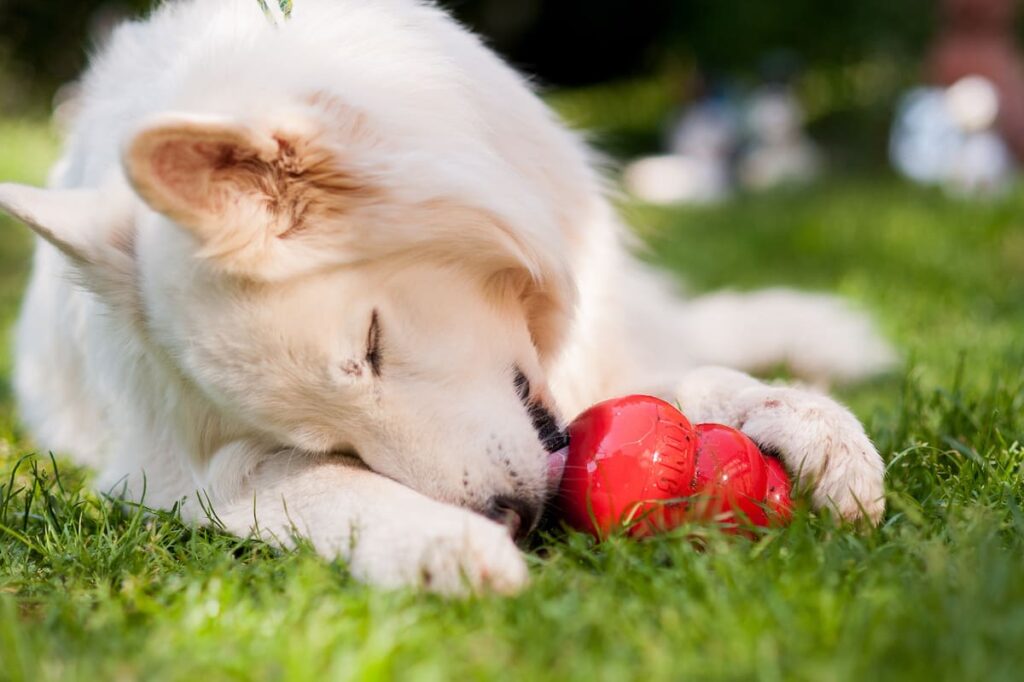
How the Kong can equal a 30-minute walk
The comparison between a Kong session and a short walk mainly comes down to cognitive effort.
When a dog tries to retrieve food from the toy, it must experiment with different strategies: rolling it across the floor, holding it with its paws, licking persistently or chewing at specific angles. Each attempt stimulates problem-solving skills.
Animal behaviourists often describe this as canine enrichment — activities designed to challenge a dog’s mind in ways that mimic natural behaviours such as foraging or hunting.
Because the treats are released gradually, the process can last anywhere from ten minutes to half an hour, depending on the filling. During that time the dog remains focused, engaged and physically active.
For example, one Labrador owner I spoke to recently described using a frozen Kong during video meetings while working from home. “Instead of pacing around the house, he spends twenty minutes trying to get every last bit out,” she said. “By the time he’s done, he’s ready for a nap.”
How to choose the right Kong for your dog
Not all Kong toys are identical, and selecting the right version matters for safety and effectiveness.
The first factor is size. A toy that is too small could pose a choking risk, while one that is too large may frustrate smaller dogs.
Manufacturers usually categorise their products into puppy, standard and extreme versions. Puppies benefit from softer rubber that protects developing teeth, while powerful chewers often require reinforced models designed to withstand intense pressure.
Durability is also essential. A good Kong should resist tearing or breaking even after repeated chewing sessions.
Owners experimenting with dog enrichment activities often start with simple fillings such as kibble or soft food, then gradually introduce more complex combinations to keep the challenge interesting.
Conclusion
The Kong has earned its reputation because it taps into something fundamental in canine behaviour: the desire to work for food and solve small challenges.
While it cannot replace regular outdoor walks, it offers a valuable way to stimulate dogs mentally and physically when circumstances limit time outside.
Used thoughtfully, a Kong can transform a simple treat into a focused activity that keeps a dog engaged, satisfied and relaxed — sometimes long enough to rival the benefits of a short walk.