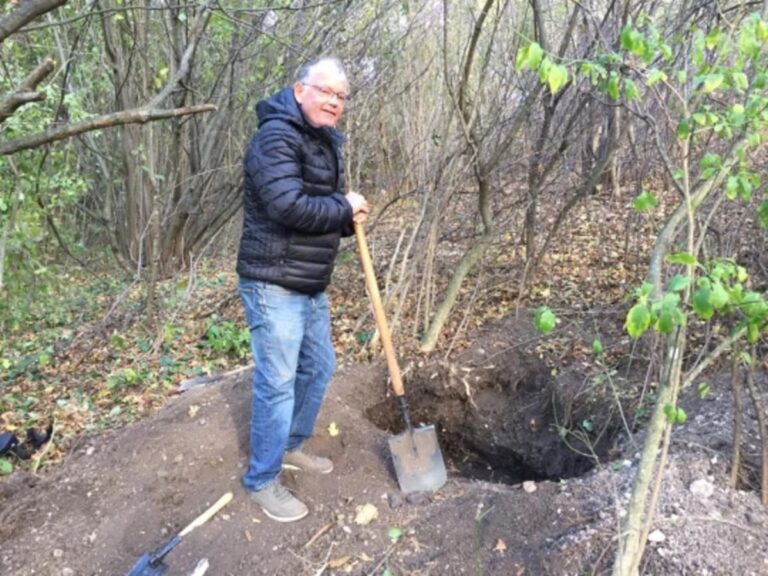
At the start of World War II, a family buried their money and valuables just before the Russian invasion. Eighty years later, their grandson managed to recover the hidden trove thanks to a map drawn by his father.
In September 1939, as the conflict spread across Europe, one family decided to hide their wealth in eastern Poland before the Russian army arrived. The Glazewski family carefully buried cash and precious belongings near Lviv, a city that today lies within Ukraine.
After the war and the upheaval that followed, the family never returned to the exact spot where the valuables had been hidden. The location gradually faded into memory, surviving mainly through family stories.
Eight decades later, however, the grandson of Adams – the head of the household at the time of the invasion – finally managed to locate the long lost family treasure. To do so, he relied on a simple but priceless guide: a treasure map his father had drawn from memory.
At 69 years old, Jan Glazewski asked his father to sketch the map that might lead him to the buried belongings. His father agreed, recreating the landscape as best he could from memories dating back more than fifty years.
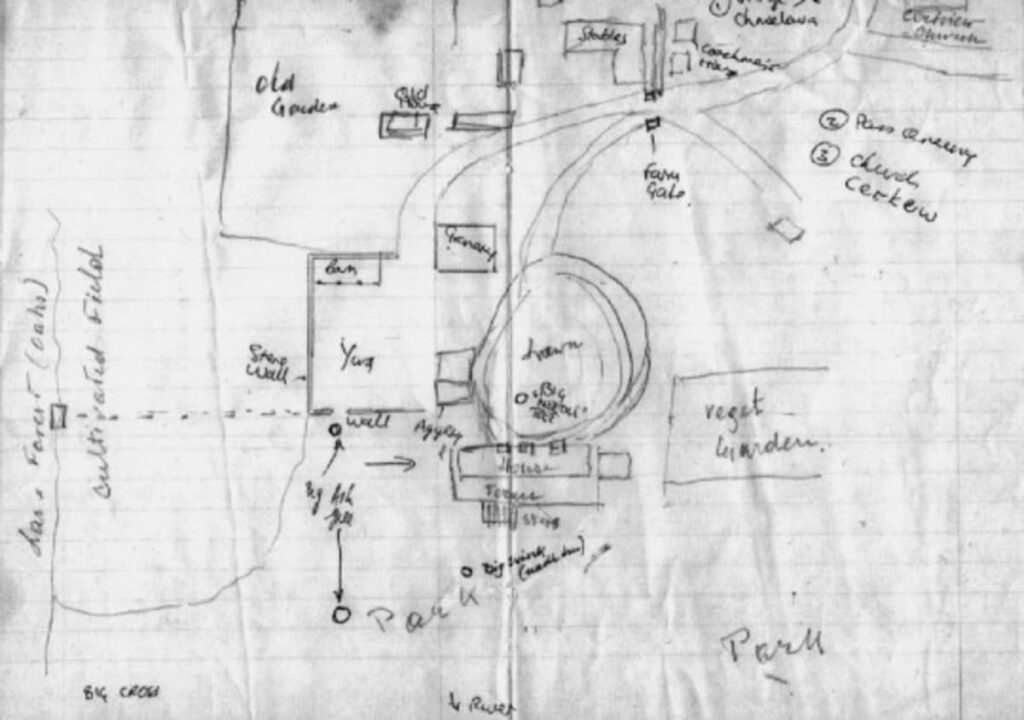
‘He gave me the map along with a few instructions,’ Jan explained. ‘He drew it entirely from memory about fifty years after leaving the place. On the map, he marked where the original manor house once stood. It had been destroyed by the Russians, but we were able to find the foundations.’
The drawing also included a dotted line that crossed what had once been farmland.
‘Today the field is covered in brush,’ Jan said. ‘According to the map, we had to walk roughly 100 meters and then go down a slope.’
He discovers the family treasure
Following those directions carefully, Jan eventually reached the edge of a forest. That was the location his father had indicated as the burial site.
Using metal detectors, he began searching the wooded entrance area. After some time, the signals confirmed what he had hoped for: the buried cache was still there.
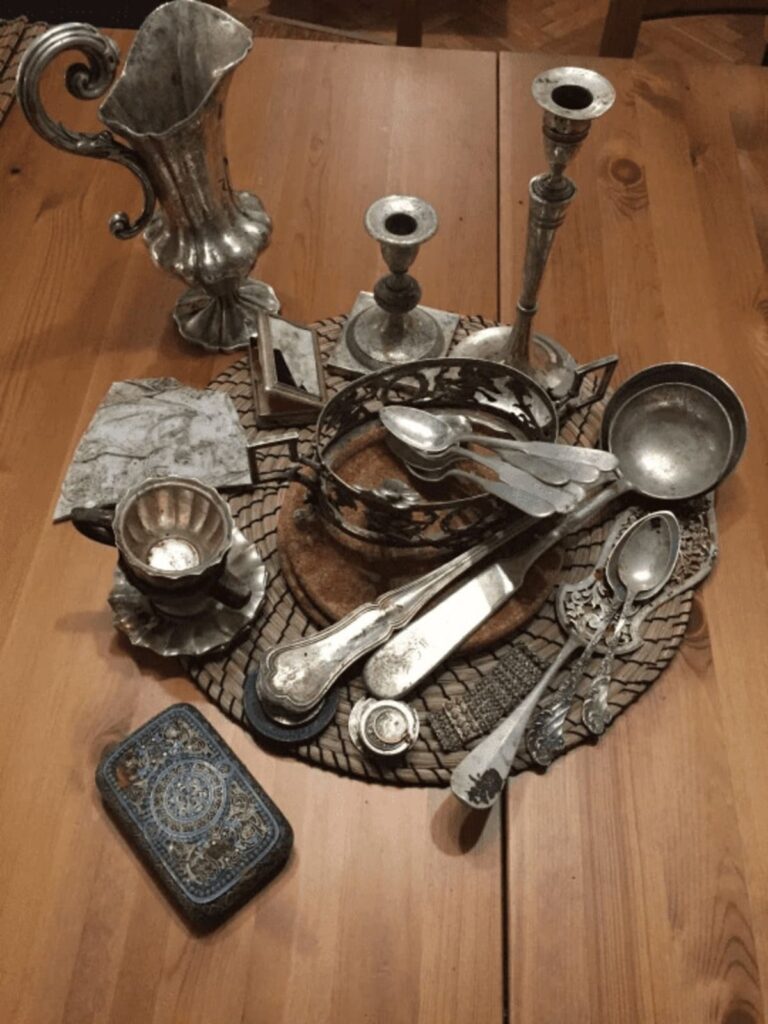
Among the recovered items was a jewelry box that had belonged to his mother, who passed away when he was only seven years old.
Standing there, holding the objects his mother had packed away eight decades earlier, was a deeply emotional moment.
‘I was touching things my mother had placed there 80 years ago,’ Jan said. ‘It was incredibly moving for me. It’s extremely meaningful.’
For Jan, the discovery was not just about finding valuables. It represented something far more personal.
‘In a way, it fulfilled a childhood dream of finding a hidden treasure. But more importantly, it meant carrying out my father’s wishes. That gave me a tremendous sense of satisfaction. I stand taller now. I feel more confident.’
Inside the cache were several family artifacts, including jewelry, an engraved baptism spoon, and various historical objects. Altogether, the items are estimated to be worth several thousand dollars.
For Jan, however, their true value lies in the connection to his family’s past.
He now hopes that some of the recovered pieces may eventually be displayed publicly, preserving the memory of the Glazewski family and the extraordinary story behind their rediscovered treasure.