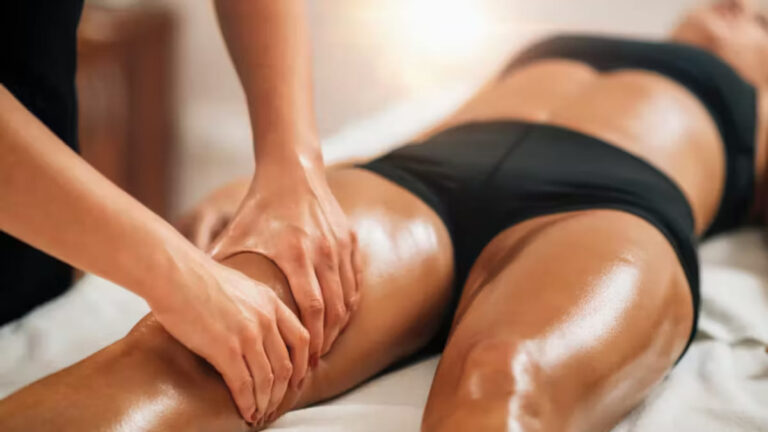
Lymphatic drainage: an effective technique for boosting lymphatic circulation
Origins of lymphatic drainage
Lymphatic drainage originated in Europe in the last century. In 1892, Professor Winiwarter published a work in Austria about lymphatic edema. In this publication, he outlined the basics of a massage technique aimed at reducing these edemas, which became the precursor to manual lymphatic drainage.
In France, the discovery of this technique is attributed to Dr. Fège. His work, published six years after Winiwarter’s, also presented a new medical massage method designed to reduce traumatic edema and drain hematomas.
The medical benefits of lymphatic drainage have been known for over 50 years. The pioneer in this field was Dr. Vodder, who is credited with coining the term “manual lymphatic drainage” (MLD). In 1958, he conducted clinical trials to prove the efficacy of this massage technique. The therapeutic indications for MLD that we recognize today stem from his experiments.
Principle of lymphatic drainage
Lymph is a fluid that circulates throughout the body via lymphatic vessels. It acts as an intermediary between the blood and cells, supplying essential nutrients for cellular function. During their activity, cells release toxins and waste products into the surrounding lymph.
Carrying these waste materials, the lymph flows toward the lymph nodes, located under the armpits, groin folds, and on either side of the neck. These nodes act as filters. If the flow of lymph towards the nodes is impaired, cleansing is no longer efficient, leading to health issues such as heavy legs, cellulite, or swollen ankles.
Lymphatic drainage is a massage technique aimed at stimulating the circulation of lymph to help eliminate toxins from the body. This gentle massage is performed by physiotherapists, kinesiologists, or estheticians specifically trained in this technique.
Why consult a lymphatic drainage specialist?
Lymphatic drainage is well-known for its anti-inflammatory effects on tissues. It is used in both medical and aesthetic contexts.
In medical settings, practitioners particularly recommend lymphatic drainage for:
- Congenital lymphoedema
- Lymphoedema due to lymphatic injury following surgery, trauma, sprains, muscle strains, burns, or grafts. It is also effective after the removal of lymph nodes following breast cancer, often leading to what’s known as “swollen arm syndrome.”
- Lymphoedema caused by obstruction of lymphatic vessels due to infectious or parasitic diseases and neoplasms
- Lymphoedema from venous problems like phlebitis, varicose veins, and skin ulcers
- Edemas associated with neurological diseases
- Inflammation from rheumatic diseases
- Eczema, acne, and sinusitis
In aesthetic contexts, lymphatic drainage is popular for:
- Skin rejuvenation
- Improving the quality of skin on the face, bust, and neck
- Fighting cellulite and lipedema (subcutaneous fat accumulation)
How is lymphatic drainage performed?
Whether in a medical or aesthetic setting, the patient lies on a massage table and is covered with a sheet. The practitioner then exposes the areas to be treated.
In both cases, manual lymphatic drainage (MLD) is a painless, slow, and gentle form of massage. It may involve sweeping motions, rolling techniques (palpating-rolling), or pressure. The goal is to create a pumping motion that facilitates the circulation of lymph toward the lymph nodes.
In medical settings, MLD is practiced in certain hospitals, clinics, and physical therapy offices. Its training always involves knowledge of anatomy, physiology, and pathologies associated with the circulatory system and conditions like lymphatic, venous, traumatic, and systemic edema.
Estheticians may receive similar training and techniques as health professionals. However, they are not authorized to perform MLD for medical purposes. Their focus is on relaxation, comfort, tissue regeneration, and skin rejuvenation.
Two main schools of practice are distinguished:
- Dr. Vodder’s method, the inventor of manual lymphatic drainage, was initially designed for treating chronic sinusitis. Today, it has therapeutic and aesthetic applications, using pressure and circular movements to stimulate lymphatic vessel activity and reduce tissue congestion.
- Dr. Leduc’s method, based on Vodder’s approach, enhances it by adding two primary techniques: toxin capture through absorption maneuvers and toxin elimination through calling maneuvers. These movements aim to clear congestion more effectively and guide lymph towards the lymph nodes.
In the 1990s, Jacques de Micas developed manual vasculotissue dynamization (DVTM). He observed that traditional MLD only treats lymphoedemas without increasing circulatory return. His new technique activates venous and lymphatic return while enhancing interstitial exchanges, reducing tissue fibrosis and promoting healing.
Contraindications for lymphatic drainage
Lymphatic drainage is contraindicated without the approval of your regular doctor in cases of acute infection, carotid sinus sclerosis, tuberculosis, and malignant tumors. Caution should be exercised when treating hyperthyroidism, thrombosis, heart conditions, kidney failure, and severe asthma.
How does a lymphatic drainage session unfold?
In medical contexts, manual lymphatic drainage is prescribed by your doctor. The number of sessions depends on your specific condition. Once prescribed, you can visit a physical therapy office, as some hospitals and clinics also provide this service.
During the first appointment, a brief interview will be conducted, where the practitioner reviews your symptoms and checks for any new conditions that could be contraindications for lymphatic drainage. If everything is in order, the treatment proceeds.
Aesthetic lymphatic drainage is available in beauty institutes, just like any other massage. Simply schedule an appointment with an esthetician trained in the technique. After an initial consultation to determine your goals, they will perform the aesthetic lymphatic drainage. However, they are not authorized to treat health-related issues that require medical or physical therapy intervention.
How to choose your lymphatic drainage specialist?
Lymphatic drainage is performed by a physiotherapist, doctor, or esthetician trained in various lymphatic drainage techniques.
To ensure quality service, it’s recommended to consult professionals trained by the two main schools, Dr. Vodder’s and Dr. Leduc’s, or by lymphatic drainage associations.
In the medical field, two complementary directories are available:
- The French Association of Manual Lymphatic Drainage Practitioners
- The French Association of Masseurs-Physiotherapists for Research and Treatment of Lymphovenous Disorders
Dr. Vodder’s school offers certification for aesthetic lymphatic drainage, but there is no official directory for it.
Duration and cost of a lymphatic drainage session
A lymphatic drainage session lasts about an hour. It costs between €20 and €50 in a medical setting and between €60 and €90 in an aesthetic setting. It is only reimbursed by social security if prescribed by a doctor.
Books on lymphatic drainage
- “Lymphatic Drainage: Theory and Practice” by Albert Leduc and Olivier Leduc (Masson Edition): A book to explore the lymphatic system and the practice of MLD according to Leduc’s method.
- “Massage and Lymphatic Drainage” by F. Gazzola (De Vecchi Edition): A comprehensive book on the benefits of lymphatic drainage in both medical and aesthetic fields.