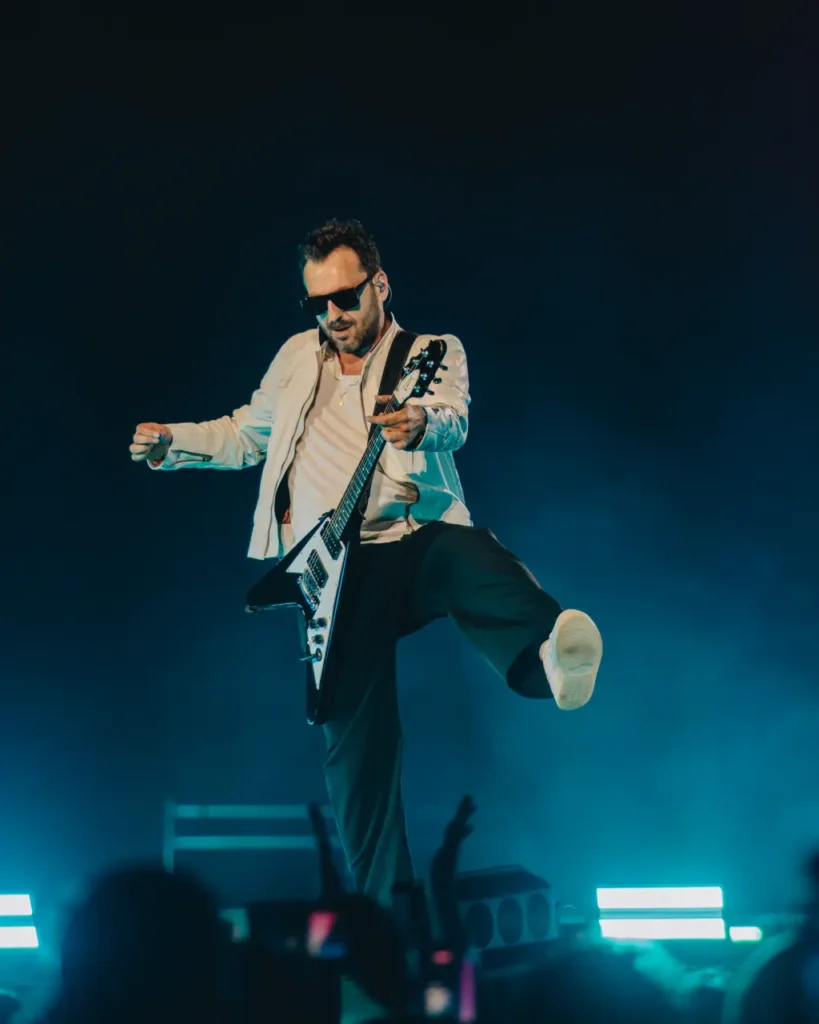
With the first of the two dates at the Circus Maximus in Rome, CREMONINI LIVE26 officially kicked off, Cesare Cremonini's new tour which in the coming weeks will cross some of the largest Italian open air spaces.
A show of great visual and musical impact that marks a new chapter in the path of the Bolognese artist, protagonist of one of the most relevant live seasons on the Italian scene.
On stage, Cesare has built a journey through over twenty-five years of career, alternating the songs that have marked his artistic history with a narrative that already looks to the future. The Roman date in fact arrives at a particularly significant moment: after the success of the 2025 stadium tour and with almost a million total attendances recorded in the last year, the singer-songwriter seems intent on opening a new phase of his creative journey.
On the stage of the Circus Maximus, not only was the celebration of a repertoire that has spanned different generations, but also the story of an artist who continues to question his own language and the forms of contemporary live performance. A theme that also emerges from the previews of the new recording project, currently in progress, and from the growing centrality of the music played within his artistic research.
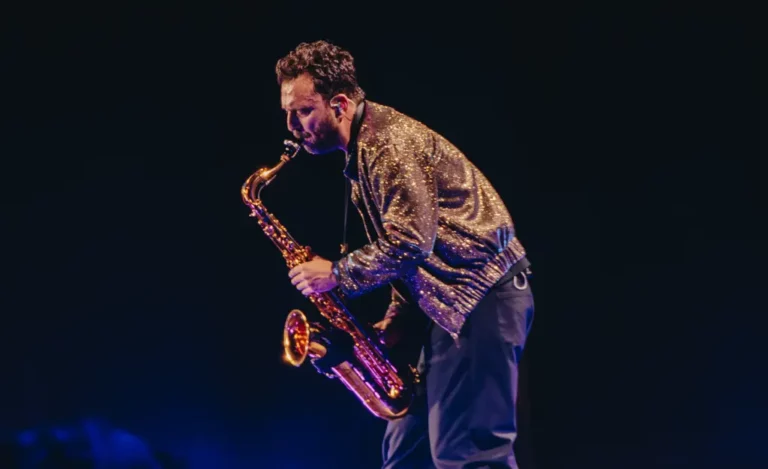
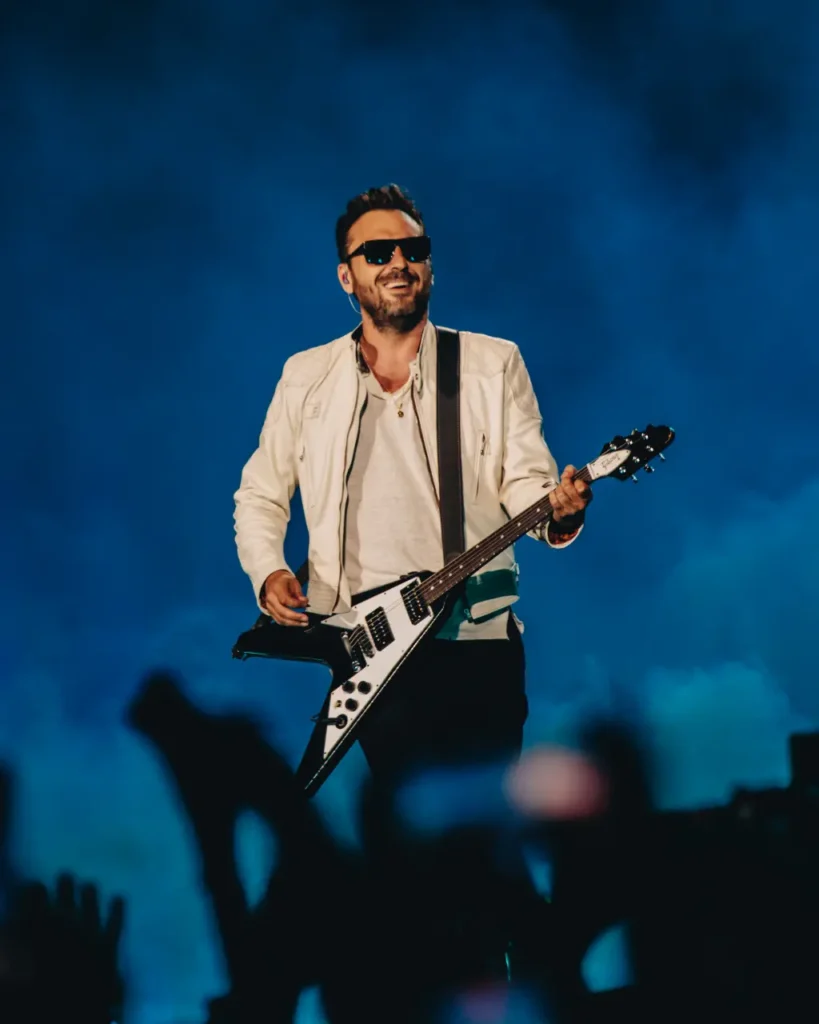
Between a monumental production, an expanded band and the live debut of the saxophone, which has become one of his new musical passions in recent months, Cremonini has inaugurated a tour that confirms his ability to transform the concert into a collective event.
INTERVIEW
Cremonini talks about the new album recorded in London in Damon Albarn's studio, about the saxophone as a lifeline, and about a career that he decided to bend following music instead of numbers.
Since '99 I have played in practically all possible locations in Italy: clubs, theatres, small sports halls like Alcatraz in Milan, large ones, the first stadiums in 2018.
I remember when Lorenzo Jovanotti interrupted that long period in which pop couldn't go to stadiums. He deserves credit for being the first. I still remember that I bought the Corriere della Sera that day, and the Corriere asked me to write an article for it. Then Tiziano Ferro arrived with a show that I still remember: those scenic skyscrapers, that spectacularisation. And then I arrived with a challenge perhaps even more complex than the other two, because bringing singer-songwriter, autobiographical, Bolognese music in the most precise sense of the term, with a bedroom sensibility, to those enormous stages, was not a given.
We are here today. It's the culmination. And it's also, inevitably, the moment when I wonder what comes next.
What comes next?
A new album. I recorded it over the last four months in London, at Thirteen Studio, which is Damon Albarn's studio.
It's a rock and roll record in the most literal sense of the word, completely recorded and played in that studio, and it's a breakup record.
When I say breakup I mean something specific: in the history of music there is always an accident somewhere in the trajectory of certain artists, and then there are those who emerge from that accident changed, find a new path, change their modality, even change their musical religion.
Those often become the most fertile moments of an entire career. I had the impression of experiencing exactly that.
The record has nothing to do with stadiums, and so I asked Live Nation that the next tour not be stadiums. I have the trust and credibility to allow it, it is clear, and I am aware that I am in an advantageous position to be able to say it. I have the numbers on my side right now. But if you are intelligent people, you know very well that giving up something to pursue the true pleasure of music is not the first rule in the record success manual.
Indeed, it is almost the first rule for doing the wrong thing, from the market's point of view. Yet for me it is the only one consistent with what I am about to do.
How was this album born?
The saxophone helped me in a complex moment. In January I was in a very big personal difficulty, one of those difficulties that weigh more as you grow up, not because they are objectively worse than those you had when you were young, but because you have less muscles to face them, less naivety to protect you.
I started studying the saxophone because I needed something that occupied the self-destructive part, that stole it, that moved it elsewhere. And the study of scales, of C sharp, of D flat, of harmonic minor, of major sevenths, of all these complicated things to transfer to a new instrument for a pianist, stole it from me for months on end. My friends made fun of me, of course. I was kidding myself too.
They asked me: why are you getting involved now? You can easily go on holiday, but instead you go and disturb your sessions with such a complex instrument, and then you set yourself the challenge of performing it in concert in front of seventy thousand people. And they were right, from a certain point of view.
But I thought that studying the saxophone would also take up my writing time. The exact opposite happened. In three months, once this tool took the self-destructive part of me and kept it, I started producing in a way that I honestly don't think had happened to me in some time.
Without thinking about what the right path was, without the self-pressure that accompanies certain moments in one's career. In 2018, when I published Poetica, I remember Roberto De Luca entering my studio in Bologna and telling me: «Let's do the stadiums next year», he closes the door. Try writing a record with that thing in your head. This time there was none of this. Just the instrument, what I had experienced, and the songs that came out of it. They are testimonies of what I experienced, and they got me out of trouble. It's a very powerful record, and I can say this now because I'm convinced of it, not because I have to promote it.
Can you tell us more about what you experienced?
I prefer to leave it in legend, to use a word I like. It's not my way, dealing with personal life so directly. Every time I try to do it I make a mistake, because it ends up becoming something I didn't want it to become.
The record will speak much better than me about what happened, in fact I'm convinced of it. I have compared it, in recent days, to Squerer: I no longer have the life of a seventeen year old when I wrote it, I am forty-six years old, the things I have gone through are different, but it has the same strength, the same sensation of having written without a net, without calculation. When I joke with friends I say that I killed Ziggy, and I say it with Cremonini's Bolognese Z, so you understand the meaning.
As for the sequins, these are the last five concerts.
Then we'll see. I thought for a long time whether to bring the start of the new project here, but I believe that the great opportunity to open the dance after the Rai Uno celebration is the right thing (the Rome concert will be in prime time in September on Rai1). Shuffling the cards too much wouldn't make sense, and it wouldn't be fair to either project. It's a clear separation that I'm going to make, and I want it to be seen.
You said that the next record will take you to play where the music asks you to play. Does that mean the stadiums are over?
I don't know, and it would be dishonest to answer definitively. How can I tell for sure? I didn't even know it when I decided to go to the stadiums. Evolution is what still rules, and I hope it always continues to do so. What I can tell you for sure is that my head is going in a specific direction: an expanded band, a real horn section that can involve the audience in a different way, places and a production that are completely different from this one.
This is the biggest production I've had in my life, and I think it's competitive with anything there is now in the Italian live scene.
I always ask the promoter for an extra effort from this point of view, and I must say that with great confidence they don't just satisfy me, they understand what the stage is for me, what a performance is. They know not to throw resources away.
But the next album asks for something different, it asks for a different dimension, and I have learned over time to trust what the music asks for. I have dreamed of all this since I was a child, I have fought all my life to have such a large audience and to be able to dominate that dialogue, that connection with the public.
There would be no reason to change course other than a true artistic need. And that's the one that wins in the end.
Or at least, that's what I choose to believe.
THE LADDER
This is the setlist played
1. Looking for Camilla (The First Kiss on the Moon, 2008)
2. Alaska Baby (2024)
3. They say about me / Father mother (The first kiss on the moon, 2008/ Bagus, 2002)
4. The comedian (You know what laughter) (The theory of colours, 2012) – CREMONINI AL SAX
5. The Girl of the Future (The Girl of the Future, 2022)
6. Now That I Don't Have You Anymore (Alaska Baby, 2024)
7. Broadway's New Star (Color Theory, 2013)
8. Latin Lover (Bagus, 2002) – CREMONINI ON GUITAR
9. Possibili Scenari (Possibili Scenarios, 2017) – CREMONINI AND CHRISTMAS AT THE GONG DRUMM
10. Buon voyage (Share The Love) (Più che logico (live), 2015) – CREMONINI AL SAX
11. Acrobats – (Alaska Baby, 2024) – CREMONINI ON THE PIANO – PERFORMER IN CYR WHEEL
12. Come and see why – (Bagus, 2002) – CREMONINI AT THE PIANO
13. Six twenty-six – (The first kiss on the moon, 2008)
14. World – WITH LORENZO JOVANOTTI
15. The navel of the world – WITH LORENZO JOVANOTTI
16. Logico – (Logico, 2014)
17. Gray Goose – (Logico, 2014)
18. Northern Lights – (Alaska baby, 2024) – WITH ELISA
19. Despite everything remix
20. Son of a king – (The first kiss on the moon, 2008) – CREMONINI ON THE ACCORDION
21. San Luca – (Alaska baby, 2024) – WITH LUCA CARBONI
22. Tie your mother down – (tributes to Queen) – CREMONINI ON GUITAR
23. 50 Special – (…Sequérez?, 1999) – CREMONINI ON GUITAR
24. Jam #25 – (Maggese, 2005) – CREMONINI AL SAX
25. Poetics – (Possible scenarios, 2017)
26. Nobody Wants to Be Robin – (Possible Scenarios, 2017)
27. A Better Day – (…Sequérez?, 1999)
THE BAND
ALESSANDRO DOC; DE CRESCENZO Guitar and musical direction
NICOLA BALLO BALESTRI Bass
ANDREA FONTANA Drums
ANDREA MORELLI Guitar
GIOVANNI BOSCARIOL Piano/Keyboards
ALESSIO NATALIZIA Multi-instrumentalist
ROBERTA GRANA Choir
YURI JURY MAGLIOLO Chorus
DANIELE ALESSANDRO Clarinet, Sax and wind arrangement
GABRIELE POLIMENI Trumpet
FEDERICO PIERANTONI Trombone
MATTEO VALENTINI Sax and wind arrangement
ON TELEVISION
Cesare Cremonini's concert this evening 6 June at the Circus Maximus in Rome will become a major television event and will be broadcast in September in prime time on Rai1.
“ROMA, BABY. CREMONINI LIVE CIRCO MASSIMO” will tell the story of the evening that inaugurates CREMONINILIVE26, the new live project by Cesare Cremonini. A special event that comes after the success of the 13 sold out stadiums in 2025 and will bring the artist to the most important Italian green fields.
The Rai1 special will closely follow one of the most anticipated musical events of the year, restoring all the strength of an artist who is going through one of the most significant moments of his career. A dimension also confirmed by the numbers: almost one million spectators, in less than a year, and 350 thousand people expected at the six concerts in June. But Cremonini's success goes beyond the numbers. In recent years the artist has established himself as one of the most influential and innovative voices in Italian music, capable of building a unique relationship with his audience and transforming each concert into a unique collective experience.
THE DATES
CREMONINI LIVE26 the dates:
7 June – Rome, Circus Maximus
10 June – Milan, SNAI La Maura Hippodrome
13 June – Imola, Autodromo Enzo e Dino Ferrari – Music Park Arena
17 June – Florence, Visarno Arena
CLICK TO BUY TICKETS ON TICKETMASTER
CLICK TO BUY TICKETS ON TICKETONE
CLICK TO BUY TICKETS ON VIVATICKET
WEB & SOCIAL
@cesarecremonini
https://www.facebook.com/cesarecremonini ufficio/
Zero algorithm, more choice. If you want WECB's critical mediation to remain central in your reading ecosystem, you can save the publication among your favorites.