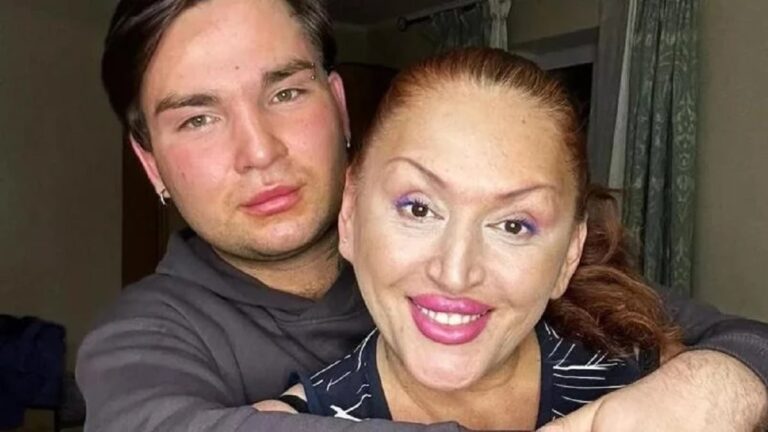
In Russia’s Republic of Tatarstan, a love story has sparked outrage, dividing families, communities, and even child protection services. At the centre of the storm is Aisylu Chizhevskaya Mingalim, a 53-year-old music teacher, who has married her 22-year-old adopted son — a decision that has led to profound consequences.
From adoption to romance
Aisylu first met Daniel when he was just 13 years old in an orphanage. A year later, she adopted him, offering him the chance of a new life. But as time went on, their bond evolved into something far more intimate. By Daniel’s early twenties, the pair had declared themselves a couple and eventually tied the knot.
“Our relationship is perfect,” Aisylu said in an interview with Russian media. “We are completely in sync. We can’t imagine life without each other.”
Voir cette publication sur Instagram
Une publication partagée par Сервис аналитики маркетплейсов (@chizhevskiy.deni_new)
The price of their marriage
While the newlyweds describe themselves as happy, their union has triggered harsh consequences. Child protection services swiftly intervened, removing Aisylu’s four other adopted children from her care. Reports suggest that some were placed in foster homes, while others were returned to their biological families.
For Aisylu, the decision feels like punishment. She insists she wants to be reunited with the children and has spoken about her desire to move to Moscow so that the family could, in her words, “live freely.”
Authorities take a hard stance
The controversy hasn’t ended there. Russian officials have blocked Aisylu from adopting any more children, citing concerns about her choices and the impact on child welfare. She had reportedly been in the process of seeking new adoptions after meeting more children through her work as a music teacher, but those applications were shut down.
Instead, she is now left to embrace her new reality: no longer recognised as a foster parent, but solely as a wife.
Conclusion
The marriage between Aisylu and Daniel has raised questions about ethics, legality, and social norms, not just in Tatarstan but internationally. For some, it is seen as a love story against the odds; for others, a troubling breach of trust.
What is certain is that this union has come at a steep cost — one woman’s decision has reshaped not only her own future, but also that of the children once under her care. And as the debate continues, the couple remains defiant in their belief that their love is worth it.