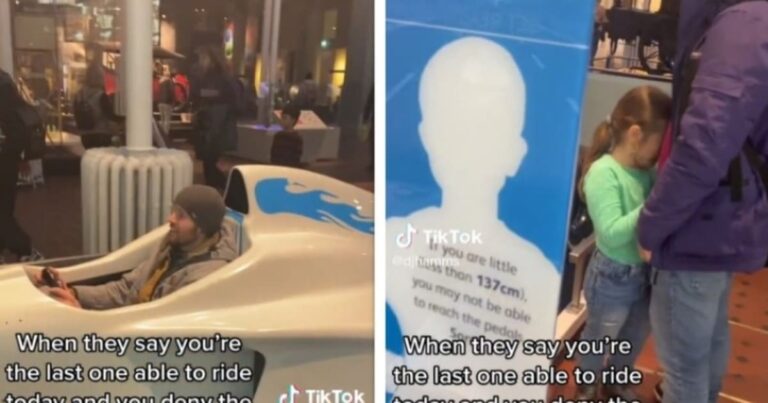
At first glance, it looked like a small, awkward moment in a crowded exhibition hall. But a short video filmed near a Formula 1 simulator quickly sparked a much bigger conversation online about fairness, parenting, and how society teaches children to deal with frustration.
In the clip, a man simply chose to keep the turn he had waited for. What followed — both in the room and across social media — revealed just how divided people can be when expectations collide.
A long wait for a final turn
Anyone who has attended a technology expo or motorsport event knows the feeling: you queue patiently for a popular attraction, sometimes for quite a while. That was the situation facing dozens of visitors at a public exhibition where attendees could test their skills on a Formula 1 simulator.
According to the video circulating online, the queue had grown steadily throughout the day. Visitors waited their turn to experience what many described as a surprisingly realistic racing setup, complete with steering wheel, pedals and an immersive cockpit display.
As the event neared closing time, organisers announced that the next run would be the final session of the day. For the man standing at the front of the queue, it meant his wait was finally about to pay off.
But just before he stepped into the simulator seat, another visitor approached him with an unexpected request.
The moment he refused to give up his place
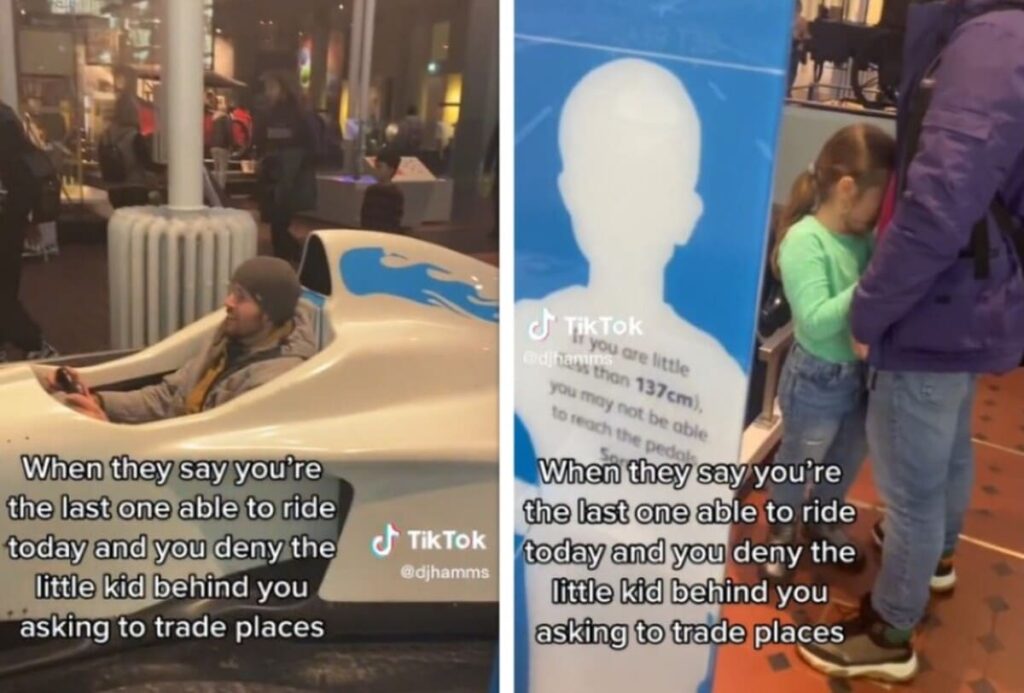
A father accompanying a young girl asked whether the man would be willing to give up his spot so that the child could try the simulator instead. According to the footage, the man declined politely but firmly.
The refusal upset the girl, who began to cry. Despite the emotional pressure around him, the man did not change his decision and proceeded to take his turn in the simulator.
Moments like this can feel uncomfortable in public settings. Many adults instinctively prioritise children’s wishes, especially in recreational environments designed to be fun.
Yet the man’s choice triggered an entirely different reaction once the clip reached the internet.
A viral video and an unexpected wave of support
The video quickly spread on TikTok and other social platforms, accumulating more than 10 million views in a short period. Rather than criticising the man, many commenters supported his decision.
A common argument appeared repeatedly in the discussions: he had waited his turn in line. From that perspective, giving up the spot would have been generous, but not an obligation.
Several viewers also emphasised the importance of respecting social rules in shared spaces. Queuing systems exist precisely to ensure fairness, whether in theme parks, shops or public events.
Online reactions highlighted how people often value clear, consistent rules in everyday situations. Even when emotions are involved, many believe that fairness should remain the guiding principle.
Why many people think the lesson matters
Beyond the immediate incident, the debate quickly shifted toward parenting values and what children learn from small everyday experiences.
Child development specialists frequently point out that learning patience and coping with disappointment are important parts of growing up. According to the American Psychological Association, helping children tolerate frustration can contribute to stronger emotional regulation and problem-solving skills later in life.
In other words, moments when children do not get what they want can become valuable learning opportunities.
Many commenters argued that the situation illustrated exactly that point. Instead of expecting others to give way automatically, children can gradually understand that shared environments operate under common rules.
A small moment that sparked a bigger conversation
What makes the story fascinating is how ordinary it is. There was no dramatic confrontation, no raised voices — just a simple refusal and a child’s disappointment.
Yet the discussion that followed revealed broader questions about fairness, public etiquette, and expectations placed on strangers in shared spaces.
Anyone who has waited in a long queue — for a concert ticket, a new gadget release or even a roller coaster — probably recognises the quiet satisfaction of finally reaching the front. In those moments, the line itself becomes a kind of social contract.
The viral clip did not offer a perfect answer to how people should behave. But it did remind many viewers that small interactions can reflect larger values about patience, respect and the unwritten rules that keep public life running smoothly.
And sometimes, as the internet demonstrated in this case, simply sticking to the queue is enough to spark a surprisingly thoughtful debate.