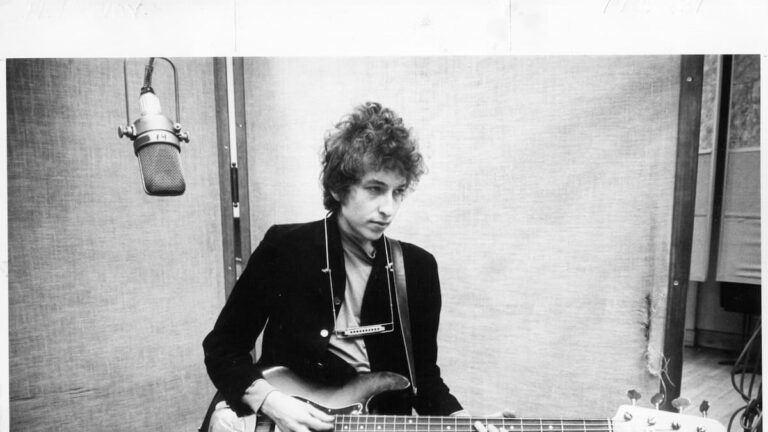
Exactly fifty years ago, on June 26, 1975, it saw the light The basement tapes, one of the most unique albums in Bob Dylan's never-conventional discography. In it, his progressive interest in rock, a new way of composing and recording and the first outline of what would later become a great band, called simply The Band. But the history of that work began many years before…
It is said that on July 29, 1966, Dylan, who was already a renowned folk figure, suffered a motorcycle accident near his home in Woodstock (New York) which caused a slight concussion and broken some vertebrae. At least that's what the illustrious singer-songwriter related; Others point out that it is the excuse he used to withdraw from the photo siege for a few months and distance himself from his manager. Albert Grossmanwith whom he had a strained relationship. The fact is that Dylan took advantage of the situation to abandon his hectic lifestyle in New York and dedicate himself to enjoying private time with his then wife, Sarah (Shirley Marlin Noznisky), and walking with her dog in the countryside.
It didn't take him long to pick up his guitar and dust off his typewriter to start composing songs again. Simultaneously, several Canadian rock musicians who were part of the group had arrived in the area. The Hawks. Given the affinity and proximity, Dylan and The Hawks began to rehearse traditional songs that the one from Duluth (Minnesota) arranged and, not long after, the new songs that came out of his head. At first they met at Dylan's house to play, although they soon changed the meeting place to the basement of the building that The Hawks had rented in Woodstock; a little house painted pink that they called The Big Pink.
WECB Classic
WECB Classic
Dylan's creative incontention and the proven solvency of these musicians led to enormous demo recordings that, in terms of sound, went against the prevailing fashions of those days. In 1967, psychedelic rock and extravagant productions were all the rage; The songs that came out of The Big Pink, on the other hand, were austere, direct, and were recorded with the windows open and a dog sleeping on the floor. Naturally, Dylan once again placed himself at the opposite pole of what trends dictated.
Accounting for the themes that were recorded there seems difficult; It is said that more than thirty. Dylan agreed to record some, although he did not release them on an album. However, the word spread and, with it, versions that other artists recorded of those unpublished songs by the eminent author. Also, the publication of pirated albums that directly compiled the demos. This is how his fans discovered songs like “I shall be released”, “This wheel's on fire', “Quinn the Eskimo (The might Quinn)”, “Tears of rage” or “You ain't goin' nowhere”. Some were signed by Dylan alone; on others he shared authorship with members of The Hawks.
Meanwhile, Dylan, returning to his usual activity, continued publishing albums recorded in traditional studios. Most of these works, authentic masterpieces, such as John Wesley Harding (1967), Nashville skyline (1969) or Blood on the tracks (1975). But in 1975, his record company, Columbia Records, approached him with the idea of compile part of The Big Pink's repertoire on an official album; and this is how he saw the light The basement tapes.
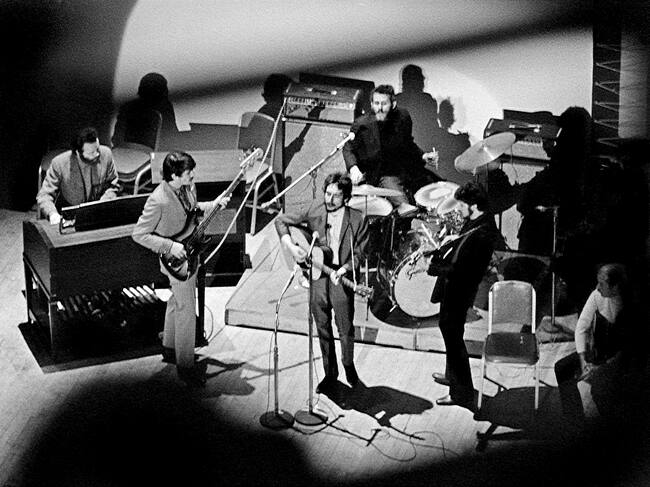
Bob Dylan, playing with The Band (formerly of The Hawks), in 1968. / Charles Steiner
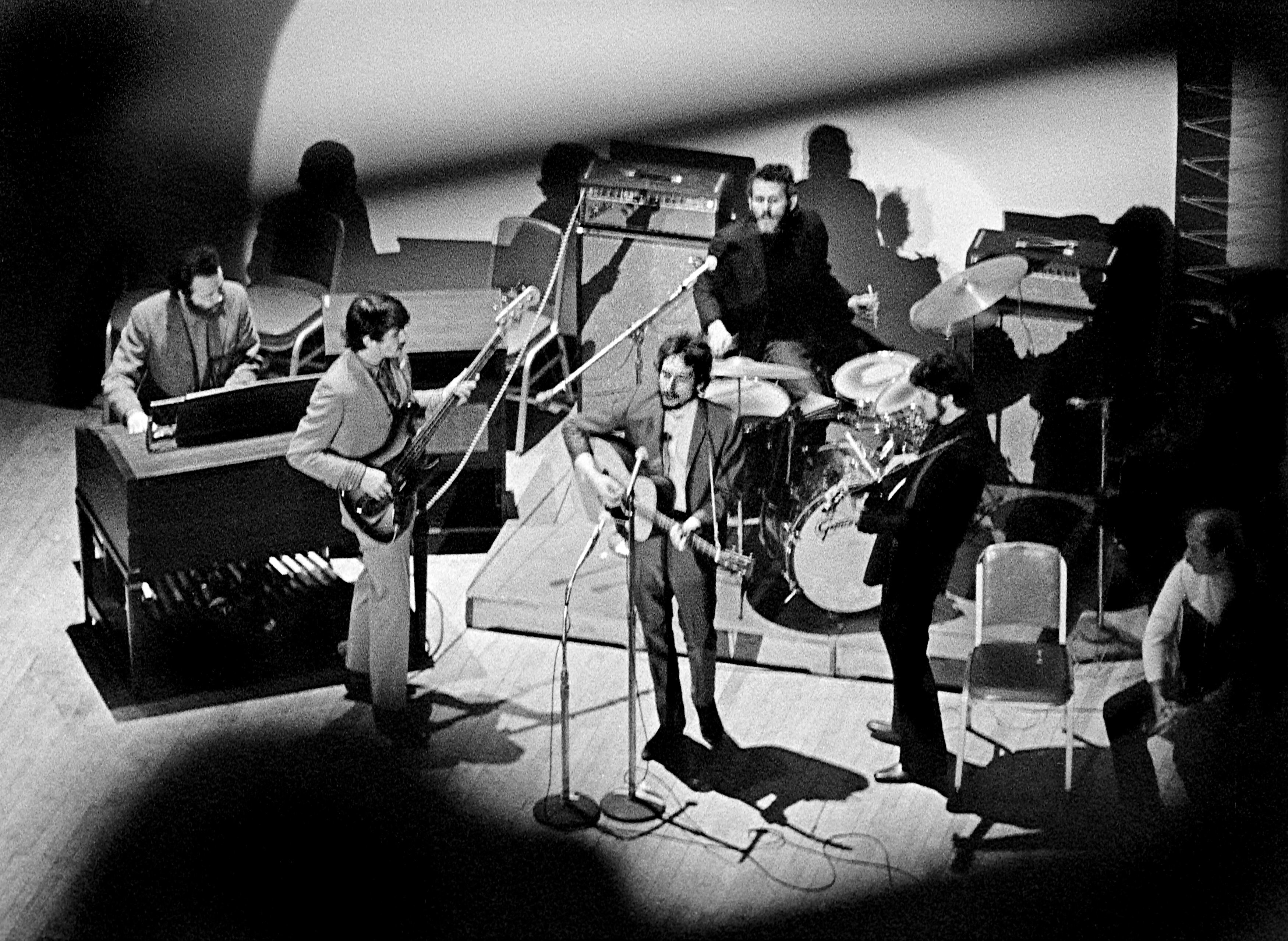
Bob Dylan, playing with The Band (formerly of The Hawks), in 1968. / Charles Steiner
Although Dylan had just achieved two number one hits on the US charts, The basement tapes had a notable impact. It reached #7 on the Billboard album chart. Critics praised it through the roof, highlighting the Spartan character of those songs that emphasized freshness and naturalness in times of opulence and experimentation. Even today The basement tapes It is considered a key album in seventies rock.
It didn't go badly for the musicians of The Hawks either, who ended up residing for six years at The Big Pink. They changed their name to The Band, signed with a major record label, and in 1968 and 1969 they released two albums that you have to take your hat off to: Music from the Big Pink and The Band. That team of great musicians brought together Rick Danko, Levon Helm, Garth Hudson, Richard Manuel and Robbie Robertson; everyone has already died.