After nine months of meticulous work, a British car enthusiast thought he had finally achieved perfection with his restored Ferrari 360 Modena. But a simple vinyl stripe—the kind meant to add flair and authenticity—ended up undoing nearly all of it.
A passion project years in the making
If you’ve ever followed the world of vintage car restoration, you’ve likely heard of Ratarossa. For over fifteen years, this British YouTuber has been rescuing Ferraris most people would have written off for scrap. From the sleek 308 and 328 to the legendary 512 BB, his garage has become a shrine to the prancing horse.
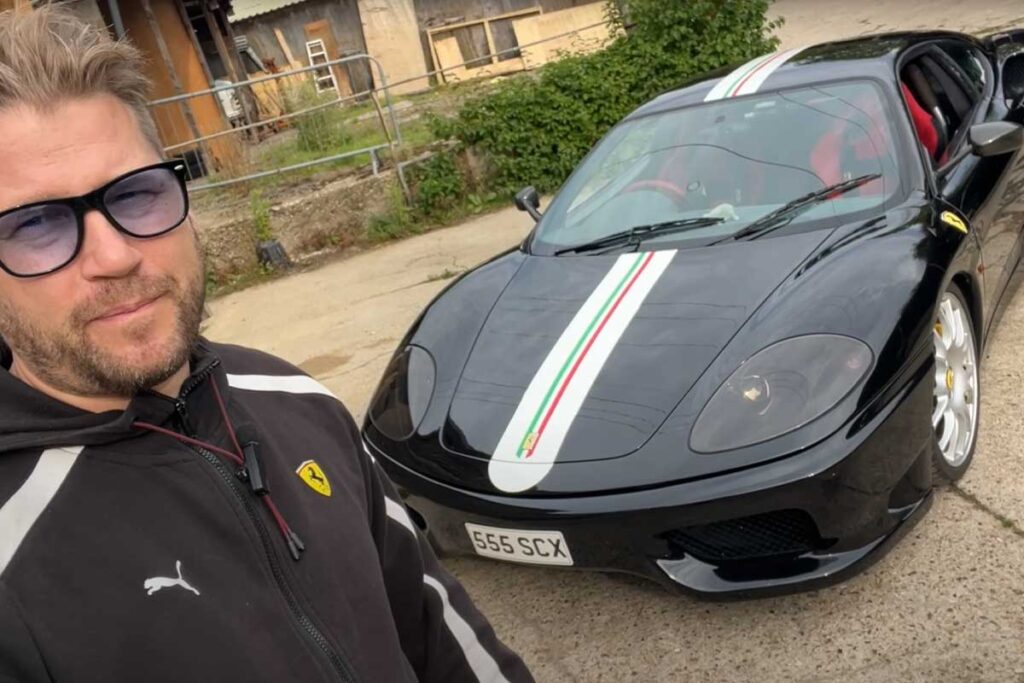
The Ferrari 360 Modena, his everyday ride, was supposed to be the crown jewel. He stripped it down completely—new paint, rebuilt brakes, reupholstered interior, and even a refreshed engine bay. The car looked like it had just rolled out of Maranello itself. For a few shining weeks, it seemed flawless. Until a small, decorative vinyl stripe turned that dream into a costly nightmare.
When a detail becomes a disaster
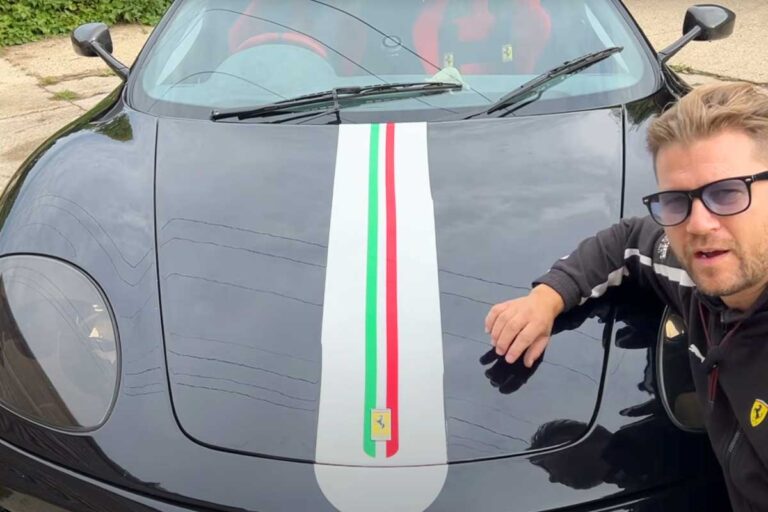
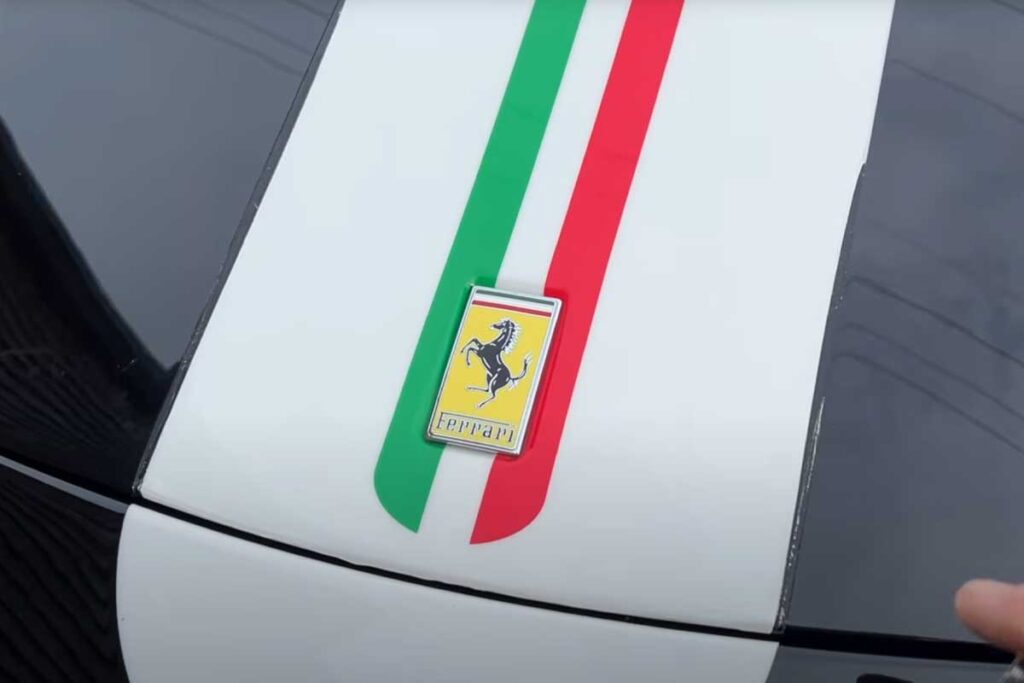
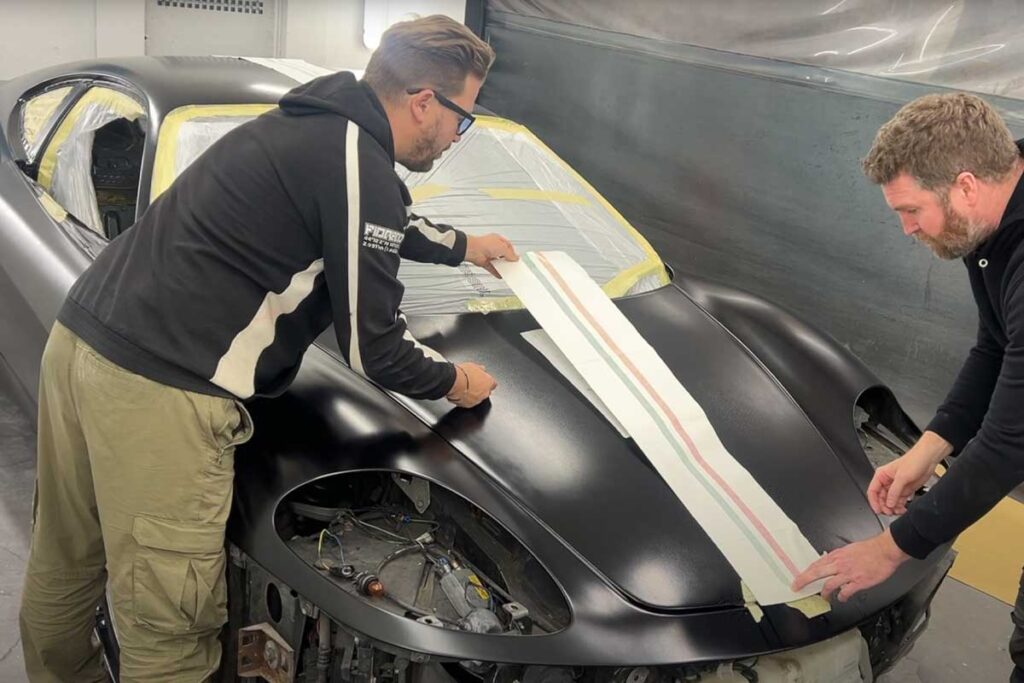
Inspired by the bold racing lines of the Ferrari Challenge Stradale, Ratarossa decided to add a tricolour stripe across the hood. It was meant to be a finishing touch—a subtle nod to Italian racing heritage. But a few weeks after applying it, tiny ripples appeared. Then cracks. Soon, the once-perfect line looked as if someone had carved into the paint with a razor.
‘It’s a nightmare,’ he admitted in a video to his followers. ‘We spent nine months getting everything perfect, and now the stripe is shrinking day by day.’
The verdict was harsh but clear: the vinyl material had shrunk beneath the clear coat, creating visible ridges and distortions. The damage spread from the hood to the roof, meaning that nearly two-thirds of the car would have to be sanded down and repainted.
The science behind the shrinkage
An industry veteran with forty years’ experience in vehicle wraps later weighed in. The culprit, he explained, was the use of calendered vinyl—a cheaper, less stable material compared to cast vinyl, which is designed for complex, heat-exposed surfaces.
On a black car, the problem only gets worse. The dark paint absorbs sunlight, causing the vinyl to expand and contract dramatically. ‘On a hot day, I’ve seen vinyl strips shrink by nearly two centimetres,’ the expert explained. His advice was blunt: the only lasting solution would be to repaint the damaged panels and reapply a high-grade cast vinyl, but this time without sealing it under a layer of varnish.
It’s a small but critical difference—one that can save or ruin months of painstaking restoration work.
Other imperfections emerge
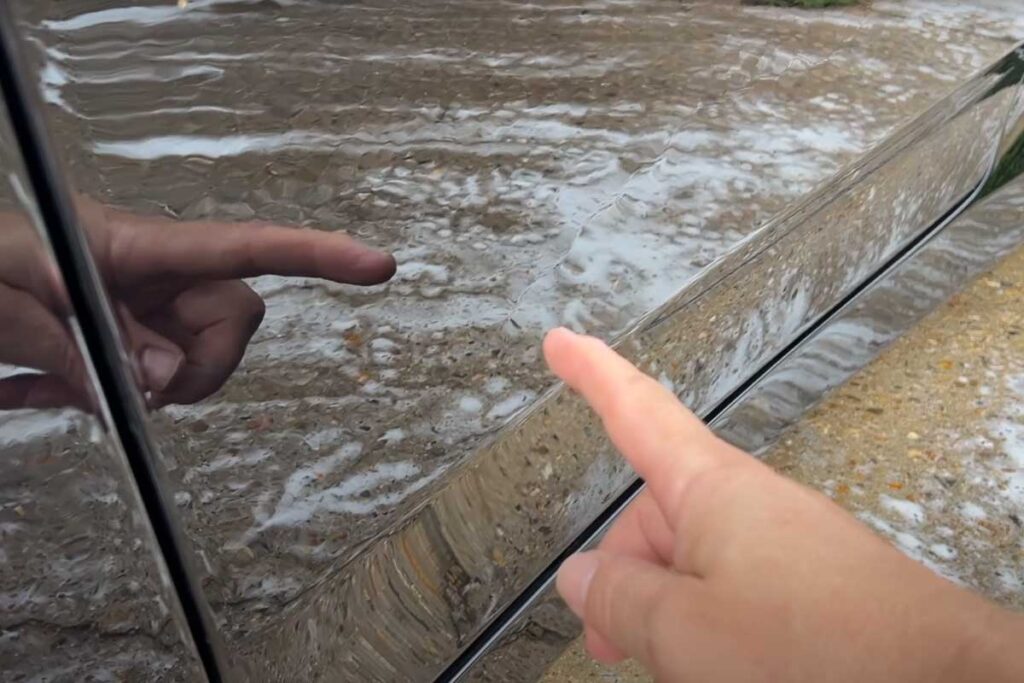
As Ratarossa examined his Modena more closely, more issues came to light. Tiny paint defects had appeared on other panels, including the doors and fenders—places untouched by the vinyl. There were small drips, dry spots, and micro-bubbles, all signs that the paintwork had been affected by uneven drying or winter temperatures during application.
While these flaws weren’t catastrophic, they were enough to frustrate any perfectionist. As any classic car owner knows, paint is both the pride and the curse of restoration: beautiful when right, heartbreaking when it goes wrong.
A costly but valuable lesson
Faced with the prospect of another expensive repaint, Ratarossa managed to keep his humour intact. ‘I’m not a perfectionist,’ he joked, ‘but when my ten-year-old daughter asks what those marks are, I know they’re too obvious to ignore.’
The good news? The car still drives beautifully. Its V8 engine roars to life without hesitation, the brakes are crisp, and the interior looks pristine. For now, he’s planning to enjoy the Modena as it is—and maybe, when the sting fades, give it a new coat of paint altogether. Perhaps even in something bold, like metallic purple.
Restoration, as he’s learned, isn’t just about technical skill. It’s a test of patience, humility, and perseverance. In the world of vintage cars, perfection can be undone by the smallest detail—a lesson written across the gleaming, rippled hood of one unlucky Ferrari 360.