After months of speculation and diplomatic manoeuvres, Bangladesh appears to have made its choice in the race to modernise its air force. Despite earlier interest in European aircraft, Dhaka is now leaning towards a deal with Beijing – a decision that could shift the balance of power in South Asia’s skies.
From Rafale dreams to Chinese reality
For much of the past year, Bangladesh had been flirting with the idea of acquiring the Rafale fighter from France’s Dassault Aviation or the Eurofighter Typhoon produced by a European consortium led by the UK, Italy, Germany and Spain. Both aircraft were seen as strong candidates to replace the country’s ageing fleet of Chengdu F-7s – Chinese-built versions of the Soviet MiG-21 – and a handful of ageing MiG-29s.
At one point, insiders believed the Rafale had the upper hand. Reports in Dhaka suggested that officials were considering purchasing four second-hand jets from the French Air and Space Force, followed by eight new aircraft upgraded to the advanced F4 standard. But political instability at home – including the ousting of the prime minister in mid-2024 – abruptly halted negotiations with Paris.
The Eurofighter Typhoon, backed enthusiastically by Italy’s Leonardo, briefly emerged as the next favourite. In May, Air Chief Marshal Hasan Mahmood Khan travelled to Italy to witness demonstration flights and discuss potential collaboration. Talks even continued into September, when Khan met Italy’s ambassador to Bangladesh to explore broader defence ties.
Then, unexpectedly, another contender re-entered the picture – and quickly took the lead.
Enter the Chengdu J-10CE
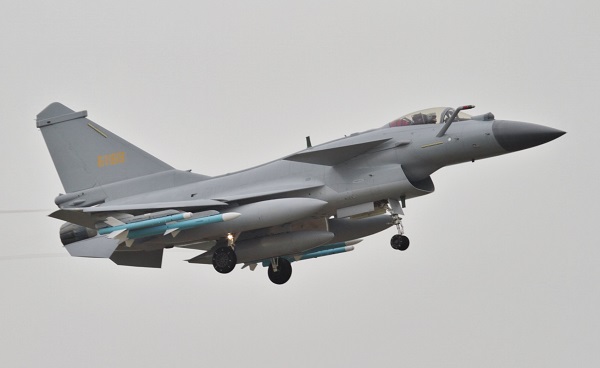
According to defence officials in Dhaka, Bangladesh is now preparing to finalise a deal with China for the Chengdu J-10CE, a multirole fighter already operated by both Pakistan and the People’s Liberation Army Air Force.
The move follows a meeting earlier this year between interim Bangladeshi leader Muhammad Yunus, known internationally as the pioneer of microcredit, and Chinese President Xi Jinping. Sources close to the talks say Beijing’s offer was not only more affordable but also came with long-term support for training, maintenance and spare parts.
The J-10CE, though derived from a 1990s-era design, is far from obsolete. It features an active electronically scanned array (AESA) radar, modern electronic warfare systems, and a Shenyang WS-10B engine capable of thrust-vectoring for enhanced manoeuvrability. Armed with advanced PL-10 and PL-15 air-to-air missiles, the aircraft represents a significant leap in capability for the Bangladeshi Air Force.
Financing a modern fleet
Dhaka’s interim government has reportedly set aside $2.2 billion over the next decade to fund the acquisition of new fighters. The urgency is clear – many of the current F-7 jets are nearing the end of their service lives, leaving gaps in national air defence.
A new interministerial committee led by General Khan has been tasked with negotiating the terms of the deal with Beijing. According to reports, the committee will evaluate whether to purchase the jets directly from the Chinese government or through a designated agency, while also finalising terms for maintenance, pilot training, spare parts and payment schedules.
Navigating geopolitics
Still, the decision isn’t without risk. As one retired Bangladeshi general and security expert pointed out, any major arms deal with China must take into account the country’s delicate position between Washington and Beijing.
‘Tensions between the U.S. and China must be carefully managed before finalising this purchase,’ warned ANM Muniruzzaman, head of the Bangladesh Institute of Peace and Security Studies. ‘However, the need for modern combat aircraft is undeniable.’
The choice of the J-10CE also places Bangladesh squarely in the orbit of China’s expanding defence network in Asia – one that already includes Pakistan, Myanmar and Cambodia.
A strategic turning point
For Bangladesh, this deal represents more than just an aircraft upgrade. It signals a strategic pivot away from Europe and towards Asia’s dominant defence manufacturer. It also underlines a growing confidence in China’s military technology, once dismissed as inferior but now increasingly competitive.
If finalised, the agreement could redefine Bangladesh’s air capabilities – and add another chapter to Beijing’s widening influence in the region.
As one aviation analyst put it, ‘Choosing the J-10 isn’t just about firepower – it’s about partnerships, politics and the future direction of Bangladesh’s defence strategy.’