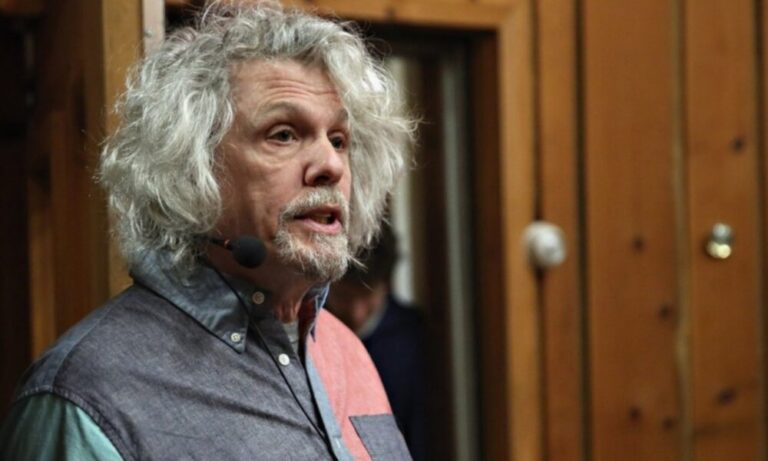
The musician, producer and sound engineer, who worked on classics by A Tribe Called Quest, De La Soul, Erykah Badu, The Roots and D'Angelo, has died aged 73.
Bob Power, the musician, producer and sound engineer who worked behind the console on classics by A Tribe Called Quest, De La Soul, Erykah Badu, The Roots and D'Angelo, has died. He was 73 years old.
Power's death was confirmed by the Clive Davis Institute at New York University (NYU), where he served as a professor. A funeral notice stated that Power died on Sunday, March 1, but no cause of death was given.
An architect of hip-hop sound
Power helped shape the sound of hip-hop and R&B in the early 1990s, particularly when it came to exploring deeper bass and drum grooves. He mixed the album that arguably defined this aesthetic, The Low End Theory from A Tribe Called Quest, while his credits also included Baduizm by Erykah Badu, Brown Sugar by D'Angelo, De La Soul Is Dead by De La Soul, and several Roots albums, including Do You Want More?!!!??! And Things Fall Apart.
Paying tribute on Instagram, Questlove wrote of Power: “You could NOT meet a more engaging, enthusiastic and focused sound craftsman. I mean, he let me pester him endlessly asking “what is this button for?” And this one? » Bob was our little wheels in learning how to present music. I am so devastated by his passing. Thank you for changing all of our lives, Bob. »
DJ Premier called Power a “one of the most talented sound engineers of all time”while Badu wrote on Instagram: “What a great loss for the music community today. The great engineer, producer, mentor and friend @bobpower has left us. I/we appreciate you. You taught me so much… Love and peaceful breaths to your loved ones! Our community will say your name forever. »
From the beginnings in Chicago to the hip-hop revolution
Power was born in Chicago in 1952, grew up in the suburbs of New York and began playing guitar as a child. He later studied classical theory and composition at Webster University in St. Louis, while joining his first rock & roll band, the New Direction. After graduating, he moved to San Francisco, where he enrolled in a master's degree, studied jazz, performed constantly in concerts, and also began composing music for television.
During the late 1970s and early 1980s, Power was the epitome of the hard-working musician. After moving to New York in 1982, a timeline on Power's website half-joked about his career: “Playing every gig imaginable, bad dance records, mafia weddings in Bensonhurst for $75, mental hospitals (yes, really). » He also found work producing and composing music for commercials and corporate clients.
The encounter with hip-hop
What would prove to be Power's breakthrough came in 1984, when the owner of Calliope Studios asked Power to fill in for a vacationing engineer. He found himself in session with hip-hop group Stetsasonic, who were so impressed with Power's work that they asked him to stay on while their debut album was completed, On Fire.
Through Calliope, Power soon met and began working with A Tribe Called Quest, De La Soul and the Jungle Brothers. Although hip-hop and professional sound engineering were relatively new to him, he embraced the possibilities it opened up. As he recalled in a 2014 interview for the Red Bull Music Academy: “I was learning so much at the same time that when people said, 'Okay, we want to do that,' I said, 'How do you want to do it?' » They said “What do you mean?” We just want to do it. » It was creative problem solving for me, and it coincided with a tremendous period of growth in understanding and learning sound engineering. I started to think of engineering as creative problem solving rather than something that had to be done a certain way because of a canon established by someone else. »
Power crafted a sound that expertly showcased and blended powerful drums, “excessive bass” (as indicated in the chronology of his site) and increasingly elaborate and complex samples. On The Low End Theory of Tribe, Power showed a particular talent for meticulously cleaning, isolating, then assembling the exact sounds that members Q-Tip and Ali Shaheed Muhammad wanted to sample.
As Questlove pointed out in his tribute, he was also capable of making the batteries “crispy and powerful” and the bass “full”. He continued: “Before him? Hip-hop was chaotic and muddy (in the most beautiful way)… I love the dirty stuff… But man — when did Bob enter our sonic sphere? My God. »
A legacy beyond music
Power continued to work with A Tribe Called Quest, while also collaborating with the Roots, D'Angelo and Badu. The classic “On & On” from the latter gave Power her first R&B number one, while her work on Me'shell Ndegeocello's 1996 album, Peace Beyond Passionearned him a Grammy nomination for Best Mixed Album – Non-Classical. He received another Grammy nomination, this time for Album of the Year, for his work on India Arie's 2001 album, Acoustic Soul.
Power remained very active and in demand into the new millennium, collaborating with many of the same artists, as well as Common, Talib Kweli, and J Dilla. His services have also been requested by David Byrne, Scritti Politti and Brockhampton. In 2022, he contributed to Phife Dawg's posthumous album, Foreverwhile his last two album credits were The Omnichord Real Book of Ndegeocello in 2023 and It’s Complicated… by China Moses, released last year.