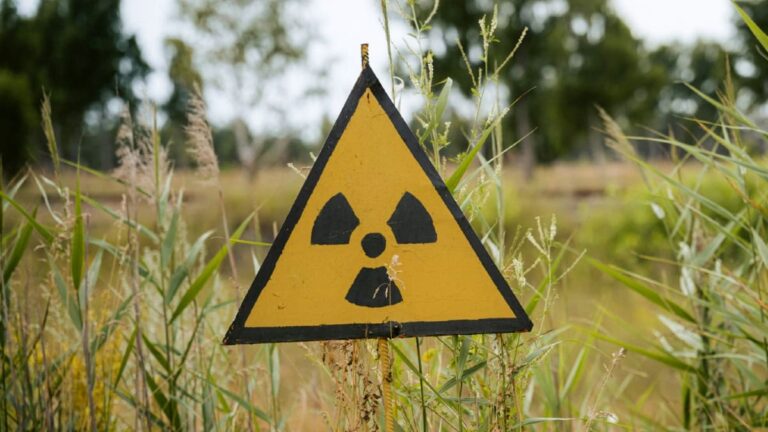
If you’ve ever caught your child surrounded by science project materials, dreaming of being the next great inventor, you might want to double-check the plans before things go too far. While most kids go through phases of building makeshift parachutes for their toys or creating “futuristic” gadgets, one 17-year-old actually aimed to build something far more dangerous—a nuclear reactor—right in his own backyard.
The Ambitious 17-Year-Old Who Tried to Build a Nuclear Reactor
Let’s be honest: the idea of your teenager casually constructing a nuclear reactor in the garden sounds like something straight out of a sci-fi thriller. Yet, for David Hahn, a 17-year-old Boy Scout from Michigan, this became a reality. Back in 1994, Hahn set out to build a nuclear reactor using common household items, believing it would make him a real-life scientist. The materials he gathered included things like smoke detector components and camping lanterns, which contained small amounts of radioactive elements like americium 241, thorium 232, and tritium.
Hahn’s goal was to make a breeder reactor, which would allow him to convert thorium 232 into uranium 233, a much more radioactive element. Although he never reached the critical mass required for a functioning reactor, his project eventually attracted the attention of local authorities. The situation escalated when police discovered suspicious materials during a vehicle search—materials Hahn himself claimed were radioactive.
How Does a Nuclear Reactor Work?
To make a nuclear reactor work, whether it’s for fission or fusion, you need to control the nuclear reactions that occur. In a fission reaction, a heavy atom splits into lighter atoms, while in fusion, two lighter atoms merge to form a heavier one. Both of these processes can theoretically be replicated by amateurs with the right materials. However, fission is easier to achieve, thanks to the availability of small amounts of radioactive materials in everyday items like smoke detectors and certain lamps.
But, while the idea of a DIY nuclear reactor might sound exciting to an aspiring scientist, the reality is much more complicated. To actually create a functioning reactor that generates power, you need to be able to slow down and control neutrons to ensure that the fission reaction happens fast enough to sustain itself without becoming uncontrollable. It also requires proper shielding and cooling systems to maintain safety, something that’s not feasible in a backyard project.
The Challenges of Building a Nuclear Reactor in Your Backyard
Even with modern “microreactors”—small reactors designed to produce just a few megawatts of power—the size is still massive. These reactors are roughly the size of a shipping container and are capable of generating up to 5 megawatts of electricity. This is far too much power to fit into a backyard setup, and even with sophisticated technology, building such a reactor requires expertise, infrastructure, and safety protocols that go far beyond any DIY project.
What Does This Mean for Future Scientists?
While David Hahn’s ambitious project did not result in a fully functioning nuclear reactor, it raises an interesting point about the curiosity and ambition of young minds. The desire to build, create, and experiment is a hallmark of creativity and scientific progress. However, Hahn’s story serves as a reminder of the importance of safety and ethics in science. Not every idea, no matter how brilliant, is feasible without the proper knowledge and resources. It’s crucial that young scientists are encouraged to dream big, but also to understand the limits of what can be safely accomplished without professional guidance.
In the end, building a nuclear reactor in your backyard isn’t just a far-fetched idea—it’s downright dangerous. But it also showcases the lengths to which human curiosity can go. Whether you’re encouraging a future engineer or scientist, remember: the most important lesson is learning how to ask the right questions and understand the principles that make the world work, long before diving into potentially hazardous experiments.