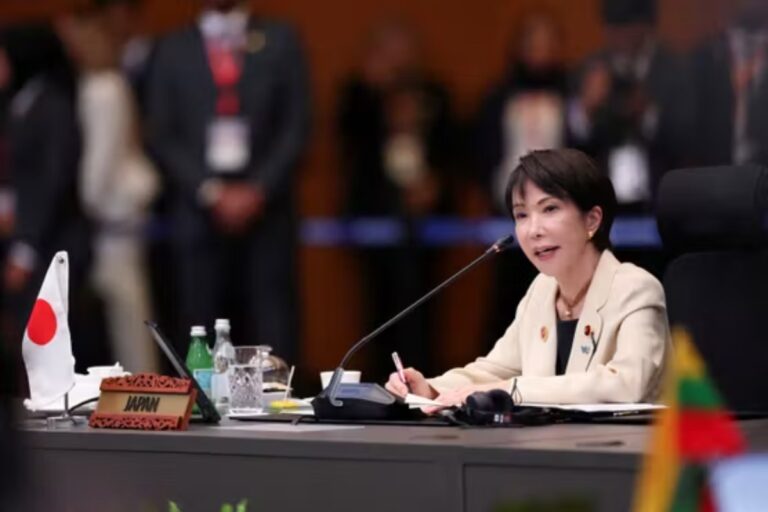
Tensions between Tokyo and Beijing have spiked once again, and this time a few sentences spoken in Japan’s Parliament have sent diplomatic waves across the region. What began as a political remark about Taiwan has rapidly morphed into travel warnings, cancelled flights and a fresh round of accusations. It is a reminder that in East Asia, words rarely float harmlessly into the air – they often land with geopolitical weight.
A remark that set off a diplomatic storm
Japan’s prime minister, Sanae Takaichi, triggered the controversy earlier this month when she suggested that a Chinese attack on Taiwan could constitute a direct threat to Japan’s national security. In her view, such a scenario might justify Japanese intervention. Her warning was framed as a call to prepare for “the worst case”, but it was enough to ignite Beijing’s anger.
Chinese officials condemned the comments as provocative and accused Japan of undermining regional stability. The Chinese embassy in Tokyo went as far as stating that these remarks had “seriously damaged” the atmosphere between the two peoples – a phrasing often used by Beijing when signalling strong displeasure.
The situation escalated swiftly. Citing major security risks, China formally urged its citizens to avoid travelling to Japan in the near future. It is the kind of advisory usually reserved for natural disasters or armed conflict, not parliamentary debate.
Airlines respond as tensions rise
Once the announcement was made, several of China’s largest airlines moved with striking speed. Air China, China Southern and China Eastern each issued statements offering full refunds for passengers travelling to Japan between mid November and the end of December. Travellers were told they could either reclaim their fare or reroute their journey without penalty.
It is not every day that major carriers adjust their timetables due to diplomatic rhetoric, but the decision highlights just how seriously Beijing is taking Tokyo’s position on the Taiwan question. The World Tourism Organization has noted in the past that political tensions are one of the most common triggers for sudden travel disruptions in Asia, and this latest episode fits neatly into that pattern.
Why Taiwan remains a red line
Japan’s stance is shaped in part by simple geography. Taiwan lies just over 100 kilometres from Yonaguni, one of Japan’s southernmost islands. Defence analysts have long warned that any conflict around Taiwan would almost inevitably spill across Japanese air and sea routes. Under Japan’s own security rules, military action is permissible only when its survival is threatened – and Prime Minister Takaichi’s statement was widely interpreted as implying that a Chinese assault could meet that threshold.
Beijing, which claims Taiwan as part of its territory, called the comments extremely serious and promptly summoned Japan’s ambassador. Tokyo did the same in response, accusing a Chinese diplomat of issuing an “unacceptable threat” after he posted – and later deleted – a message online threatening to “cut off that filthy head” in reference to Takaichi’s remarks.
In the often carefully scripted world of diplomacy, such language is as rare as it is inflammatory.
Calls for stability amid rising friction
Despite the spiralling tension, Tokyo insists that its position on Taiwan remains unchanged: support for peace, stability and dialogue. Senior government officials stressed that Japan wants a relationship with China that is “strategic and mutually beneficial”. Yet Beijing’s travel warning paints a very different mood, one in which mutual trust appears increasingly fragile.
For many observers in the region, this exchange serves as a potent reminder of how precarious the security environment has become. A single parliamentary statement, however cautiously phrased, can ripple outward into airline policies, national advisories and, ultimately, strained relations between two of Asia’s most powerful nations.
Where the situation moves next remains uncertain, but one thing is clear: in this part of the world, rhetoric is never just rhetoric. It can reshape diplomacy, unsettle economies and leave millions watching closely for what comes next.