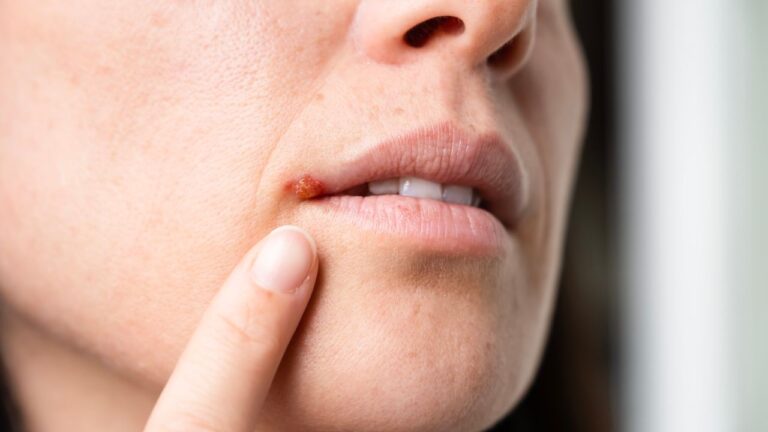
They have an uncanny talent for appearing before a big meeting, a wedding or the first day of a holiday. Cold sores are rarely dangerous, but they are undeniably annoying. Behind that small blister lies a message from your body, often linked to fatigue, stress or a moment when your defences are running low.
Cold sores are among the most common viral skin conditions, and yet they still feel oddly misunderstood. Many people treat them as a random nuisance, when in fact they are usually a signal that something else is going on beneath the surface.
Why Cold Sores Appear In The First Place
Most cold sores are caused by herpes simplex virus type 1. According to national health authorities, the vast majority of adults carry this virus, often having picked it up in childhood without even noticing. Once the initial infection has passed, the virus does not disappear. Instead, it settles quietly in a nerve ganglion, where it can remain dormant for years.
From time to time, it wakes up. When it does, it makes its presence known as that familiar tingling, followed by redness and a cluster of small blisters around the lips. I remember a colleague who could predict an outbreak almost to the hour after a sleepless week before a deadline. The pattern was always the same, and never a coincidence.
The Real Triggers Behind A Cold Sore
Despite the name, cold sores are not reserved for moments when you have a fever. Medical professionals regularly point out that fever is just one of many possible triggers. Stress, physical or emotional, is one of the most common. Long working hours, exams, family worries or even intense excitement can weaken the immune response just enough for the virus to resurface.
Fatigue is another major factor. When the body is run down, its ability to keep the virus in check drops. Sun exposure also plays a role, particularly for people who spend long hours outdoors without lip protection. Hormonal changes can be a trigger too, which helps explain why some women notice outbreaks around their menstrual cycle.
Doctors often encourage patients to identify their personal trigger. One GP I spoke to compared it to learning what sets off a migraine. Once you know, prevention becomes far easier. For those sensitive to sunlight, for example, using a lip balm with UV protection can significantly reduce flare ups.
How To Make A Cold Sore Disappear Faster
When it comes to cold sores, timing matters. The moment you feel that tell tale tingling or warmth, action is key. Pharmacists routinely recommend applying an antiviral cream straight away, ideally before the blister even forms. These treatments are available without prescription and can shorten both the duration and severity of an outbreak.
For people who suffer frequent or particularly severe cold sores, doctors may prescribe an oral antiviral medication. Health organisations advise starting this treatment within the first 72 hours for best results. It is not a cure, but it can make a noticeable difference.
There are also simple habits that help. Avoid touching the area, wash your hands regularly and resist the temptation to pick at the sore. It sounds obvious, but many infections linger simply because they are irritated repeatedly.
Listening To What Your Body Is Saying
Cold sores are inconvenient, but they are also informative. They often appear when the body is under strain, quietly reminding us to slow down, rest or manage stress better. While you cannot eliminate the virus, understanding your own patterns can help you stay one step ahead.
Think of a cold sore less as a random blemish and more as a small warning light. Pay attention, respond early and your body will usually thank you.