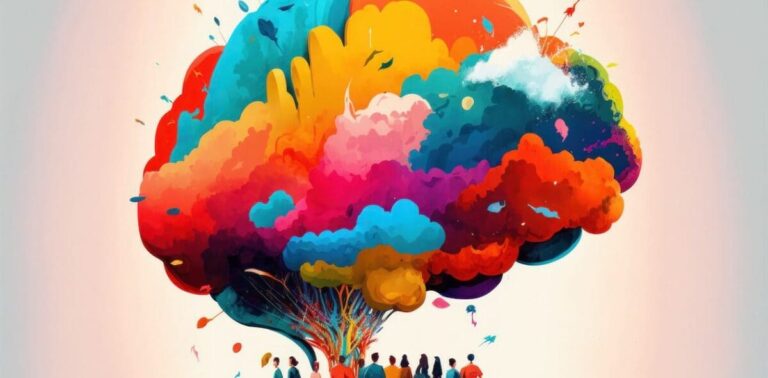
Not all gifted individuals are child prodigies solving complex equations before middle school. Many are adults navigating ordinary lives—careers, families, responsibilities—without realizing that their minds work a little differently. If you’ve ever felt slightly out of sync with the world around you, it might not be a flaw. It could be a clue.
Psychologists often refer to this profile as high intellectual potential, typically associated with an IQ significantly above average, often measured at 130 or higher on standardized tests, according to the American Psychological Association (APA). But intelligence alone doesn’t tell the whole story. The way it expresses itself in adulthood can be subtle—and surprisingly relatable.
An Unconventional Academic Or Career Path
One of the most common patterns among adults with high potential is an atypical journey. Some skip grades or excel early; others appear disengaged in school, bored by repetition or rigid teaching methods.
I once interviewed a software engineer who nearly failed high school because he “couldn’t focus.” Years later, he built a startup from scratch, teaching himself advanced coding languages along the way. His story isn’t unusual. Many gifted adults either flourish spectacularly—or struggle quietly—within traditional systems that don’t match how they think.
Multipotentiality is also common. These individuals may change careers several times, driven not by instability but by deep curiosity. They’re energized by learning, not titles.
Nonlinear Thinking And Unusual Creativity
If your thoughts branch like a tree—one idea sparking five more in seconds—you may recognize this trait. Specialists sometimes describe it as “divergent thinking,” a pattern associated with creative problem-solving.
Adults with high potential often connect seemingly unrelated concepts. They question assumptions. They propose solutions that sound unconventional—until they work.
Research published by the National Association for Gifted Children notes that high-ability individuals frequently demonstrate advanced abstract reasoning and creative thinking. In practice, that might look like redesigning a workflow no one else questioned or seeing patterns others miss.
This divergent thinking can be exhilarating. It can also feel overwhelming when your mind refuses to “turn off.”
Emotional Intensity And Heightened Sensitivity
High cognitive ability doesn’t mean emotional detachment. In fact, it’s often the opposite.
Many adults with high potential report emotional intensity—strong reactions to beauty, injustice, music, or human suffering. A moving film scene may linger for days. A social issue might feel personally urgent.
The APA acknowledges that gifted individuals may experience heightened emotional responsiveness, sometimes described as “overexcitabilities” in psychological literature. While this depth can foster empathy and commitment to meaningful causes, it may also increase vulnerability to stress or anxiety.
If you’ve ever been told you’re “too sensitive,” it may simply mean you process the world deeply.
Self-Taught Skills And Exceptional Memory
Another recurring theme is autodidactic learning. Many high-potential adults teach themselves languages, instruments, coding skills, or complex hobbies without formal instruction.
A friend of mine learned conversational Japanese in a year using online resources and podcasts—no classes, no tutor. She describes it not as discipline but as fascination.
Strong memory often accompanies this drive. Remembering obscure historical dates, detailed conversations from years ago, or complex numerical data with ease can be part of the profile. These abilities become powerful assets in fields ranging from science to entrepreneurship.
A Deep Need For Autonomy And Meaning
Finally, many adults with high potential share a strong desire for independence. They resist rules that lack logic. They crave authenticity. They question social norms—not to rebel, but to understand.
This critical mindset can make workplace hierarchies challenging. It can also lead to meaningful innovation and ethical leadership. According to the APA, intellectually gifted adults often show advanced moral reasoning and a persistent search for purpose.
That search for meaning may sometimes bring loneliness. Feeling different—even subtly—can create distance. Yet it can also shape a life rich in depth, originality, and conviction.
So, Could This Be You?
Recognizing yourself in several of these signs doesn’t confirm anything on its own. Formal assessment by a qualified psychologist is the only reliable way to evaluate cognitive profile and intellectual ability.
But self-understanding matters. Whether you identify as gifted or simply deeply curious, learning how your mind works can be transformative. It may explain past struggles. It may reframe old doubts. And it may help you build a life that aligns with how you truly think and feel.
Sometimes, what feels like “being different” is simply thinking differently.