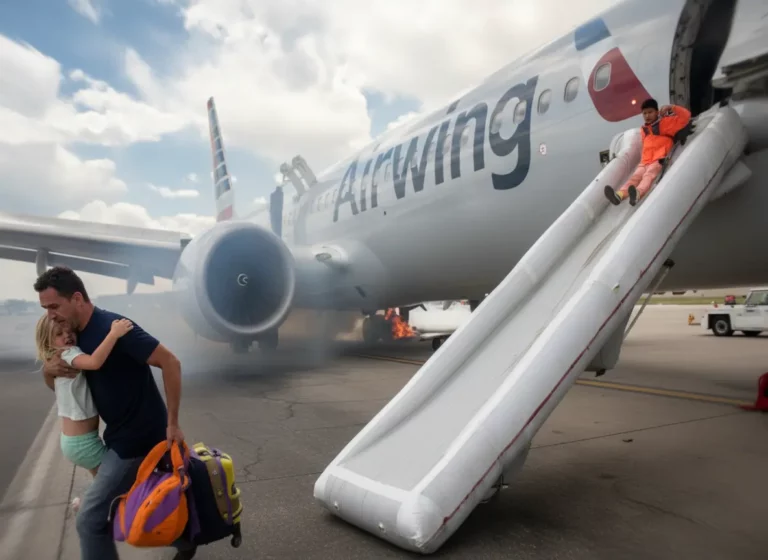
FAA to Airlines: The Message Isn’t Sinking In
On September 16, 2025, the Federal Aviation Administration (FAA) issued Safety Alert for Operators (SAFO 25003), with a very clear title: Addressing Risk Associated with Passenger Non-Compliance and Retention of Carry-On Baggage and Personal Items During Emergency Evacuations. The alert follows a troubling number of incidents where passengers have slowed down evacuations by stopping to grab their bags—sometimes even damaging emergency slides in the process. So much for “grab your loved ones, not your luggage”!
Three days later, on September 19, the FAA doubled down. In a follow-up statement, they called on U.S. airlines to take a hard look at how they train crews, deliver safety announcements, and instruct passengers during evacuations. According to the FAA, several reports show that breaking the “leave your stuff behind” rule leads to much higher risks, including:
- Aisles blocked by people hauling roller bags
- Frequent falls
- Life-threatening delays in evacuation
- Increased injuries and fatalities
The agency stresses that this alert isn’t a new law—it’s a strong recommendation. SAFOs are advisory documents issued by the Flight Standards Service, but they carry significant weight in investigations and inspections.
What Will Airlines Change?
Over the coming weeks, airlines are expected to adapt their procedures. Areas highlighted by the FAA include:
- Reviewing and updating in-flight safety demonstrations and cards
- Standardizing announcements—whether pre-recorded or delivered by crew
- Adding “passenger tries to take bag” scenarios to evacuation simulations
- Ensuring exit row briefings are clear—and always delivered
The FAA also recommends going beyond the plane cabin by boosting passenger information at airports. This could mean signage, educational videos, universal pictograms, or short slogans such as “For everyone’s safety: Leave your bags.” (Which frankly, should probably be flashing over every duty-free display, too.)
This Isn’t Just Theory—It’s Life and Death
This warning isn’t just bureaucracy. Investigations into recent emergency evacuations show this behavior is a global problem. During the 2019 Sukhoi Superjet crash at Moscow’s Sheremetyevo Airport—an accident that claimed 41 lives—several passengers were photographed carrying their suitcases as they fled. The shocking images reignited debate around evacuation advice worldwide. Similar incidents have been documented across the U.S., Europe, and Asia, proving this “luggage first” reflex is not just an American problem.
Every second matters in an emergency. International civil aviation rules require that an aircraft can be evacuated in 90 seconds using only half the available exits. That’s the gold standard. In reality, panic, stress, and—the big culprit—passengers searching for their bags, mean those 90 seconds are hard to achieve, if not impossible. A moment wasted on a suitcase can cost lives.
Everyone Knows the Rule, Few Actually Follow It
It’s easy to say, “Just follow the rules.” But air travel rarely works with a simple “one fix solves all.”
“Imagine a lithium battery catching fire in an overhead bin you can’t open because the seatbelt sign is on.”
The truth is, while some airlines (like Air France, for instance) always repeat the instruction before takeoff and landing, not all carriers are so persistent. Maybe they should be.
There’s another angle: could retrieving your bag during an evacuation be considered endangering the lives of others? In France, for example, the penalties can reach up to 1 year in prison and a €15,000 (about $16,200) fine. But is adding a locking mechanism to the bins the answer? That’s just one more thing that could break down during a critical moment.
Maybe, instead of plastering the cabin walls with more warnings, airlines should try a new approach. What if the pre-flight message went something like:
“In the event of an incident requiring evacuation, we guarantee you will be fully compensated for lost belongings.”
People taking their bags tend to know better—but many don’t trust airlines to fairly replace their lost property. The perception is, even in an accident, passengers—not the carrier—will have to pay. Perhaps this attitude is what’s really weighing us down.
Or maybe we should train travelers to keep a small “go bag” for essentials—laptop, phone, documents, prescriptions—strapped securely to the waist so it wouldn’t block the aisles or the exits. Realistically, most carry-ons don’t actually contain precious heirlooms—just some gadgets, meds, and the odd souvenir. But tough measures could work, too: systematically applying fines and flight bans to those who ignore the rules might just make the skies a little safer for everyone.
Either way, wouldn’t everyone be a lot more relaxed if they knew there’d be help on the other side? One thing’s for sure: your life is worth more than your luggage.