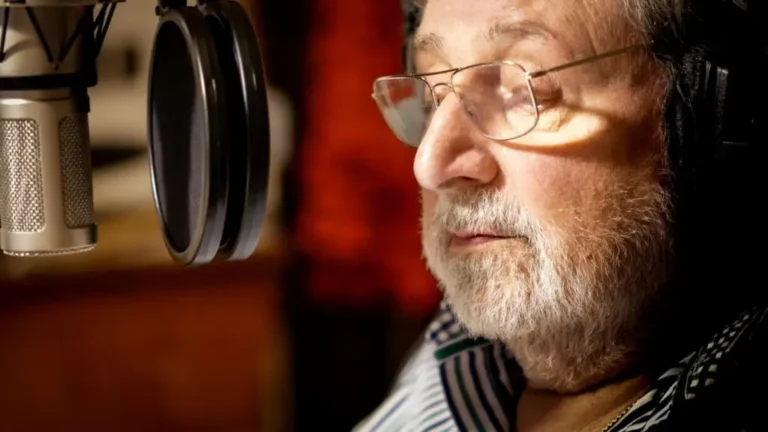
A few days after the death of Francesco Guccini, Rai Cultura retraces the long human and artistic parable of the “master” through a special that returns the portrait of a singer-songwriter capable of transforming memory, irony and freedom of thought into a precise form of authorship.
“Francesco Guccini, ‘master’ singer-songwriter”, created by Jessica Fedele, Ario Giorgino and Enrico Salvatori, will be broadcast on Thursday 13 August at 9.10pm on Rai Storia, with a repeat on Friday 14 August at 11.10pm. The program pays homage to Guccini, who passed away on August 6 at the age of 86, through a montage of television appearances, concerts and interviews spanning almost forty years of his career.
The journey begins on May 1, 1967, when a twenty-seven-year-old Guccini appears for the first time on television in the program Diamoci del tu, hosted by Giorgio Gaber and Caterina Caselli. It is Caselli himself, his recording mentor, who introduces him as Francesco, distinguishing him from the other debutant Francesco Battiato, introduced instead as Franco. Guccini takes up the guitar and plays Auschwitz, a song that he will return to perform thirty years later in the special Francesco tells Guccini.
From that moment, the special follows the transformations of an artist who has never separated the song from the reflection on his time. There is Incontro, performed in 1973 in Ciao Torno Subito, and the 1975 interview in Ora musica, also dedicated to Modena, a city intended by Guccini as a permanent creative laboratory. In 1976 came Canzone per un’amica, the opening song of his concerts for years.
The same year he documented one of the most eccentric episodes of Italian television: Guccini took part in Onda libera together with a young Roberto Benigni. The two animate a sort of pirate television from a stable, symbolically interfering with the Rai signal and imagining an alternative television model to the official one.
In 1977 Guccini was a guest of Lucio Dalla in Automobili, where he performed Il pensionato. In the same year, in the special Elisir, Roberto Vecchioni also entered the scene. It is a RAI in full transformation, which has moved from black and white to color and is increasingly interested in those singer-songwriters capable of embodying new languages and a different idea of popular culture.
Ample space is also dedicated to Guccini’s relationship with the profession of singer-songwriter. L’avelenata, recorded in 1976 as a response to press criticism and public expectations, has become a sort of poetic declaration over the years. In 1997 Guccini sang it and commented on it live, returning to the tensions that had accompanied his career. Following are the interviews conducted for Mixer: music by Gianni Minà in 1980 and for TG2 Sestante in 1981.
The television story then reaches the nineties. In 1990 Guccini performed in the Aula Magna of the University of Bologna for the IX Centenary of the Alma Mater Studiorum and recounted the process through which a song was born. In 1995, during Taxi, he conversed with Vincenzo Mollica retracing some of his most famous songs, from Dio è morti to Canzone per un’amica.
The last part of the special instead shows a now mature Guccini, when music was increasingly accompanied by narrative writing. In 2006, guest of Fabio Fazio on Che Tempo Che Fa, he talks about his literary activity and returns to music with La locomotiva.
What emerges is a television Guccini far from the simple promotional dimension. The images rather build an archive of his intellectual freedom, showing how the singer-songwriter crossed Italian television without letting himself be tamed by its rituals. From the first Auschwitz to fiction, passing through L’avelenata, the satire with Benigni and the conversations with Minà, Mollica and Fazio, the special tells of a figure who made song a place of memory and memory a form of thought.
ON AIR
“Francesco Guccini, ‘master’ singer-songwriter” is on air this evening, Thursday 13 August at 9.10pm on Rai Storia and a repeat on Friday 14 August at 11.10pm.