What would you do if the government accidentally destroyed a hard drive you said held a fortune in cryptocurrency? For one American man, that’s not a hypothetical question. His claim — for more than $345 million in lost Bitcoin — has just been rejected in court, leaving behind a bizarre tale of timing, technology, and trust.
A forgotten drive and a fortune in question
It all began in 2019, when Michael Prime was sentenced to prison for counterfeiting and identity theft. During his intake, he listed his assets for the authorities: two boats, two cars, and, as he put it, “a bit of Bitcoin” — worth somewhere between $200 and $1,500 at the time.
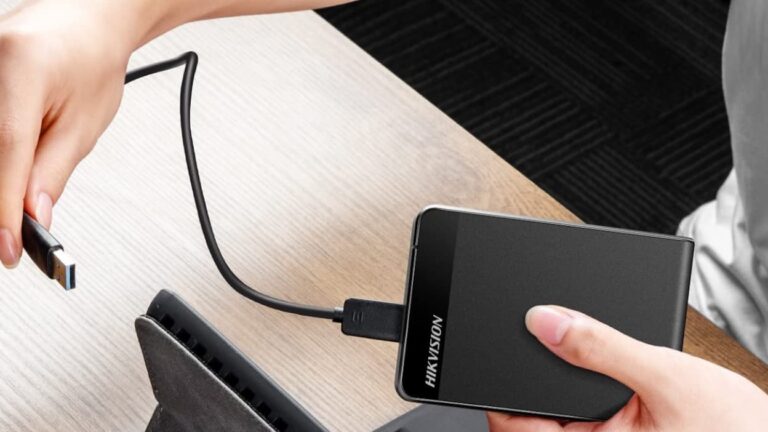
The government stored his personal belongings, including an external orange hard drive. But because nothing on his list suggested it contained significant assets, officials eventually disposed of the device along with other confiscated items.
Fast-forward four years. After his release, Prime suddenly claimed that the same orange drive held 3,443 Bitcoin, worth roughly $345 million at today’s valuation. He demanded compensation from the U.S. government for destroying what he described as his digital fortune.
The appeal that went nowhere
Prime took his case all the way to the U.S. Court of Appeals, arguing that the government was liable for the loss of property. But judges were unconvinced. In their ruling, they pointed out several inconsistencies — starting with his original admission that he owned only a small amount of Bitcoin.
The court concluded there was no reason to believe the drive contained a vast cryptocurrency stash at the time it was destroyed. “We have no difficulty finding that the government would not have disposed of the hard drive had it believed it contained millions of dollars in Bitcoin,” the judges wrote.
They also noted that the evidence offered by Prime was speculative at best and that too much time had passed for his claim to be considered. Simply put, the hard drive no longer existed — and neither did his case.
Timing is everything
Back in 2019, Bitcoin traded for around $10,000 per coin. Today, its price hovers near $100,000, making Prime’s alleged holdings potentially life-changing. That dramatic rise likely fuelled his determination to recover what he claimed was lost.
But as digital asset experts often warn, the volatility of cryptocurrencies can lead to extraordinary — and sometimes desperate — disputes. “We’re seeing more cases where people suddenly ‘remember’ old wallets once Bitcoin skyrockets,” says a cybersecurity analyst at the Blockchain Research Institute. “Without verifiable proof or backups, there’s no way to recover those funds.”
The limits of digital ownership
This case underscores one of the biggest challenges of the crypto age: ownership depends entirely on access. Without a wallet key or recovery phrase, even millions in Bitcoin are essentially gone forever. And in Prime’s case, even the storage device itself no longer exists.
Ironically, the court didn’t dispute that Prime might have once owned Bitcoin — only that he failed to declare it properly when it mattered. The difference between $1,000 in crypto and $345 million was just a few years and one destroyed hard drive apart.
A cautionary tale for the crypto generation
Whether or not Michael Prime ever held the fortune he claimed, his story is a modern parable about digital wealth and the fragility of proof. The court’s final word was clear: no evidence, no payout.
For anyone dabbling in digital currencies, it’s a reminder that your riches are only as secure as the hardware — and honesty — that protects them. In the end, the government may have crushed a hard drive, but for Prime, it’s the dream of unimaginable wealth that’s truly gone.