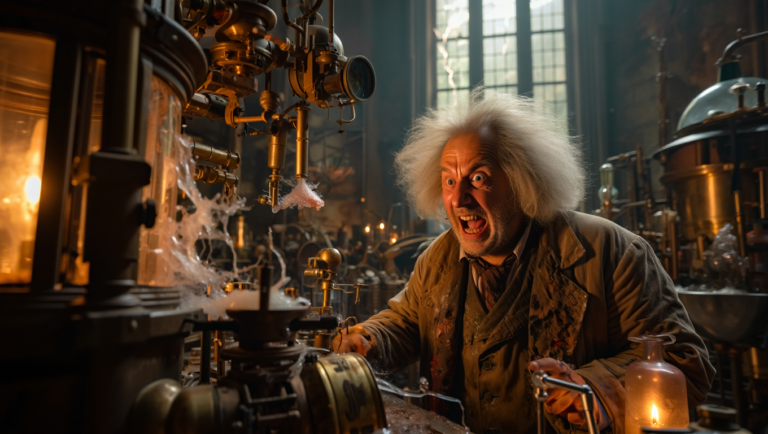
Some people leave their mark on history with genius ideas. Others leave their mark… literally, on the Earth’s atmosphere. Meet Thomas Midgley Jr., an American engineer and chemist whose inventions changed the way we live — but also left us with some serious environmental baggage.
The Gasoline Genius… Who Unleashed Lead Into The Air
Back in the 1920s, car engines had a noisy little problem: engine knocking. It wasn’t just annoying — it affected performance and could damage engines. Enter Midgley, working for General Motors, who had a brilliant idea (at least at first glance): add tetraethyl lead to gasoline.
Voilà! Smooth driving was back.
Unfortunately, what came next wasn’t so smooth. Lead, as it turns out, is highly toxic — especially for children’s developing brains. But that didn’t stop the world from embracing leaded gasoline with open arms. The result? Decades of air pollution, contaminated soil, and countless health issues. Oops.
Freon: The Miracle Coolant… Until It Wasn’t
As if the lead debacle wasn’t enough, Midgley had another trick up his sleeve. In the 1930s, he helped develop chlorofluorocarbons (CFCs), better known by their catchy brand name: Freon. It was the perfect solution for safe, non-flammable refrigeration.
But fast forward a few decades, and scientists discovered that CFCs were punching holes in the ozone layer — our planet’s natural sunscreen. Cue global panic and a race to ban these chemicals.
A Tragic and Strange Farewell
Midgley’s life ended as dramatically as his inventions. In 1940, polio left him severely disabled. Ever the inventor, he created an elaborate system of ropes and pulleys to help him move in bed. Sadly, in 1944, that very system led to his accidental strangulation — or, as some speculate, a tragic suicide.
The Legacy of a Complicated Genius
Awards? Oh, he had plenty — including the prestigious Perkin and Priestley Medals. But fame is a fickle friend. Environmental historian J.R. McNeill famously said that Midgley “had more impact on the atmosphere than any other single organism in Earth’s history.” Not exactly the kind of legacy you dream about as a kid.
Final Thoughts: A Cautionary Tale of Brilliant Mistakes
Thomas Midgley Jr.’s story is both fascinating and deeply sobering. It’s a reminder that human innovation, while impressive, can come with unintended consequences — some of them devastating.
Today, his name might not ring a bell like Einstein or Edison, but his impact? Oh, we feel it — every time we take a deep breath.
Moral of the story? Being smart is good. Being smart and responsible? Even better.