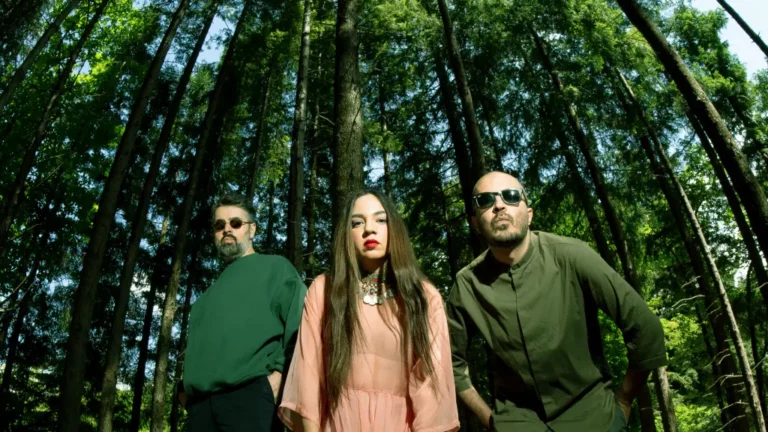
Milan and Florence in these first days of August share the red stamp of tropical heat, but they also represent two central places in BowLand’s journey: the first will be one of the stages of their live return in November, the second is the city where one of the most fascinating electronic projects on the Italian scene was born in 2015.
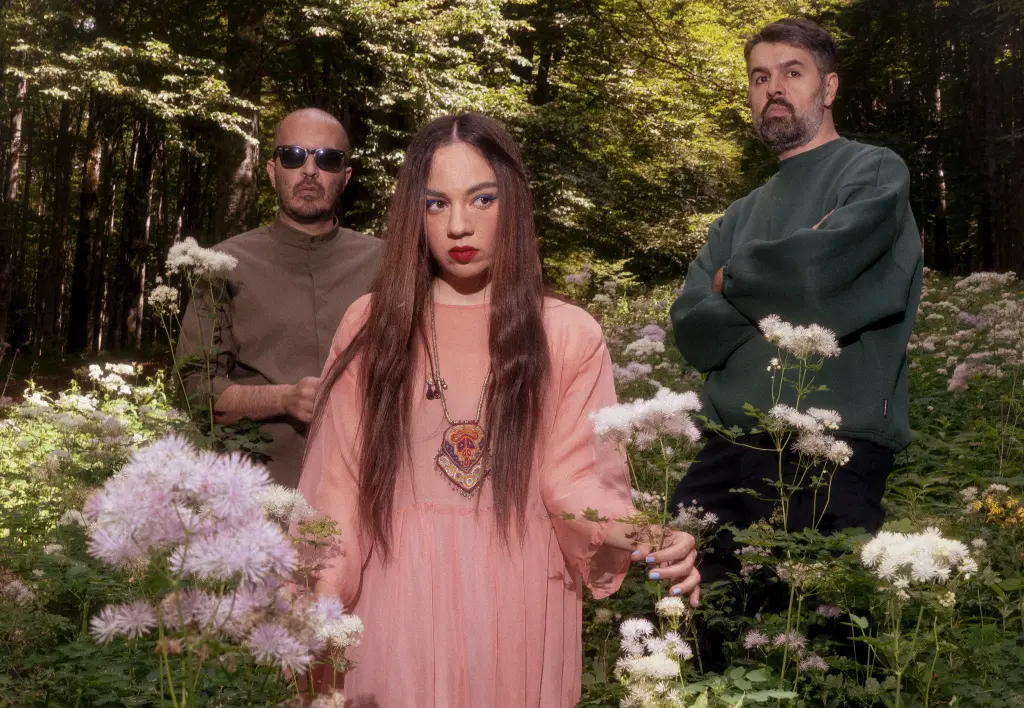
BowLand, a trio made up of Leila, Pejman and Saeed, come from Tehran but have built a sound universe in Florence suspended between trip hop, electronics, cinematographic suggestions and Persian contaminations.
With the new single Look at Methe band inaugurates a new phase of their journey, anticipating an upcoming album and a winter tour.
We spoke with them about musical evolution, visual research, the value of slow listening in an era dominated by algorithms and the difficult situation that the Iranian people are experiencing.
THE INTERVIEW
With Look at Me a new phase of your journey seems to begin. What does this song represent and what does it open for the future of BowLand?
Look at Me it is a new departure, the official beginning of a phase that we have actually been preparing for in recent years. We worked a lot on new songs, on production and on many aspects of the project. The album is almost ready and this single is the first step to start again. New music will arrive in the next few months and there will also be a tour in November.
Listening to your early works, for example Don’t Stop Me of 2018, an evolution is perceived. What has changed from your beginnings to today?
In recent years we have changed and consequently our music has also changed. When you grow up, it changes the way you live and also the way you create. We believe our music has become more mature.
The structure of the songs has also changed: before we made longer songs, today we look for a more compact and structured form. But the underlying theme has remained the same: electronics, trip hop, cinematographic influences. The basis of our identity has not changed, it has simply evolved.
Your music requires time and attention. In a moment dominated by algorithms and fast content, is it a clear choice to continue offering more immersive listening?
Our music is not very commercial and, even when we try to make it more immediate, in the end we fail to change its nature. It was born like this and we think it should continue like this.
Today many songs last two and a half minutes, they are very short. In our case it is difficult because it takes time to express what we want to say. It is difficult to enclose certain emotions in too fast a form. Maybe for a soundtrack you can create something shorter, linked to a specific scene, but an entire song needs space.
Your research is not only musical but also visual. The video of Look at Me it was filmed at the Daniel Spoerri Gardens. How important is it to build an imagery that accompanies the music?
When we create a song we often also imagine something visual. I personally think of music as if it were a film: each piece creates images in my head.
We had already been to the Daniel Spoerri Gardens and when we saw that place we immediately thought it would be perfect for a video. It’s a magical place, with a very particular atmosphere, and we felt it could dialogue with this song.
You come from Tehran. This is a particularly complex period for Iran. How are you experiencing this situation from afar, considering that you still have family and friends in the country?
It was a very difficult time. First there were protests, then repression, the closure of the internet, censorship. Many people lost their lives and many stories were unable to reach the world precisely because communications were blocked.
Then came the war and everything became even more complicated. For those who live outside Iran it is difficult, but for us who have family, friends and a deep connection with our country it is even more painful.
In January you wrote in a post on IG that you believed in the possibility of a new freedom for the Iranian people. After these difficult months, is this hope still present?
We are sure that the Iranian people will achieve freedom. It is not a quick process: people have been seeking freedom, democracy and justice for decades.
The problem is that we are faced with a very ferocious and criminal regime, and this makes the fight more difficult compared to other moments in recent history. Furthermore, Iran is a very complex region, with many international interests involved.
It’s not just an internal issue, there are many intertwined dynamics. However, we are convinced that we are on the right side of history and that sooner or later this freedom will come. Music and art can also do their part.
In November you will return live with a new tour. What can audiences expect from BowLand concerts?
It will be a different concert than in the past. After X Factor in 2019 we had a repertoire more based on covers, because it was part of the path of that moment.
Now, however, our repertoire will have much more space. We will play the songs we love most from that period, but above all we will focus on our music, on new pieces and also on songs that have not yet been released and that we will premiere.
We are also working on new versions of some songs from the first album of 2017. We will see what will emerge during the rehearsals.
LISTEN TO THE SONG
TOUR DATES
3 November – MILAN, Santeria Toscana 31
4 November – ROME, Largo Venue
5 November – FLORENCE, Viper Theater c/o Tenax
WEB & SOCIAL
@bowlandofficial/