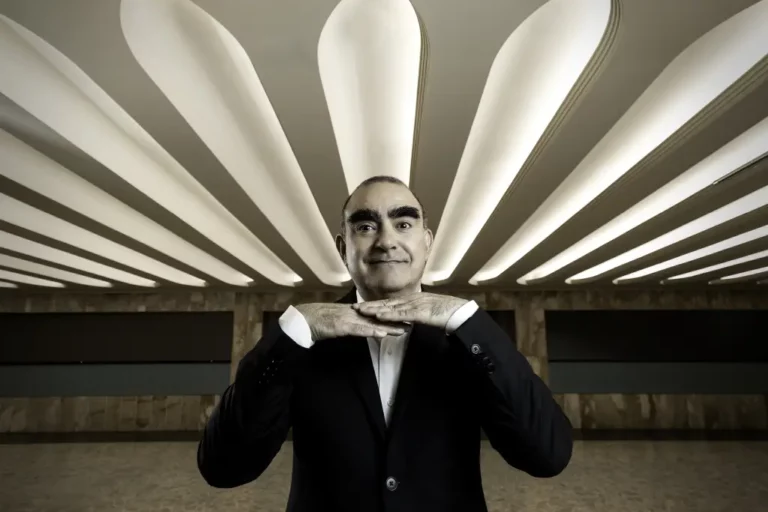
From October ELIO will stage a show that enhances the sadness narrated and exalted through songs, a provocative and irreverent but also programmatic show starting from the title: “The revaluation of sadness” which the protagonist narrates with his usual tone in which irony and seriousness lose their boundaries.
On stage with him an exceptional band: Alberto Tafuri on piano and musical direction, Sofia Tomelleri on tenor sax and flute, Giulio Molteni on bass and Martina Malacrida on drums.
The theme is unsettling: not happiness, but sadness. A show that wants to restore dignity to a feeling that has always belonged to the history of art, literature and music, but which today we tend to hide as something to correct or avoid.
Through a repertoire of iconic songs – from Tenco to Modugno, from De André to Aznavour, up to songs by Elio e le Storie Tese and a mysterious final Japanese “sadness bomb” – the show presents itself as a real scientific experiment: trying to beat the world record for sadness every evening thanks to a “tristometer” that measures the level of emotion in the room.
Elio, why is there a need to reevaluate sadness today?
In reality, for all the things I have done in my life there isn’t even a real cause. I really like doing unexpected and unlikely things. At a certain point it seemed to me that the public was only looking for joy; that is, where you know you can laugh then a lot of people come. So I thought: why not do something very sad instead? Furthermore, in the songs, we realized with maestro Tafuri that very often, or almost always, sadness gives life to beautiful songs that I had never had the chance to sing precisely because I always made people laugh. Putting all these sensations together we thought the time had come to put on a good show about sadness so as to restore its dignity.
In your shows you use irony a lot to play down reality. In this show, what relationship is created between irony and sadness?
I have to make a preview: in reality it is not a real concert but a scientific experiment in which every evening we will try to beat the world record for sadness using increasingly sad songs. Then, the audience laughing every now and then can happen and it doesn’t help in breaking the record, but it always happens due to accidents. I get misunderstood every now and then. When we manage to break this world record for sadness – and it has already happened because the show has already been on stage – then at that point we must quickly return to a more or less neutral state by using songs that make us laugh. We start from a zero state, approximately zero, then we reach a thousand sadness and then with the last pieces we return to the initial zero. So there is no risk, even children can assist, nothing has ever happened.
How did you choose the songs to modulate this sadness?
It’s a significant criterion because, as everyone probably knows, I have a degree in engineering, so we were able to really scientifically choose these songs in a crescendo of sadness. Let’s not start from the saddest song, we start from a neutral song, then slowly a slightly sad song, then increasingly sad until we reach the triad of the saddest songwriters in Italy who are Charles Aznavour, Tenco and De André, and then end with a bomb of sadness that I won’t mention here because I’ve already said too much.
Is there a sad song that made you feel better during a difficult time?
In my case, rather than reassuring me, they led me to a sort of apotheosis of sadness so I thought: no, it’s not possible to go any further. As can also be seen in the video of “Servi della Gleba” with the song by Francesco De Gregori which is listened to by the Servo della Gleba after being abandoned. In that case, listening to that song brought me to such a degree of sadness that I thought: enough, I have to stop being sad, I have to do exactly the opposite.
But does the audience emerge from this show sadder, happier or reconciled?
I believe that the public comes away spiritually enriched first and foremost. And then we do everything to ensure that it comes out in a neutral state: it goes through a very high peak of sadness and then a peak of joy which counteracts this peak and therefore brings it back to the neutral state with which it entered.
Did the need to sing about sadness come to you because of how the world is going right now? Can the spread of forced joy become harmful?
Exactly, because today there is a great demand for joy. I have in mind the fact that after the Covid lockdown the first “LOL” (the television show, in which the participants – actors, comedians or characters, did not have to laugh under penalty of exclusion NdI) had an exaggerated success, much beyond what was expected, precisely because the lockdown had generated this very high demand for joy. The same thing is happening today. The public just wants joy and I thought it was a huge injustice and I decided to do exactly the opposite. On whether it is harmful: it’s just a question of market shares, it’s an economic discussion.
Was the show born more from a personal need or from the desire to rediscover sad songs?
I do outing: all the other shows I’ve done before are simply born from the desire I have to sing certain things hoping that the public will like them too. And so this too was born from my desire to sing these songs that I had never had the chance to perform on stage.
What is the saddest piece of all in the set list?
It’s a good fight, because when you sing Tenco’s “Lontafarto” how can you say that it’s more or less sad than De André’s “The Song of Lost Love”? Then comes the last piece which is a Japanese piece that crushes them all. But I didn’t say the title.
And for the cheerful antidotes at the end, where did you fish?
We have chosen the most scientifically effective of all: Carosone and Gioachino Rossini, who are the ones who reduce sadness most quickly.
In a society that constantly exhibits joy and perfection, has sadness remained one of the few authentic emotions?
Today it seems that we must always and only be cheerful. When we were little, sadness was displayed continuously without any scruple, but today it almost seems like something to be ashamed of. Or they make broadcasts where there are people crying but it’s clearly all fake, with the aim of gaining an audience. Here there is another objective which is to beat the record. This is a healthy, indeed beautiful, sadness. A quality sadness.
On a physical, theatrical and mimic level, how will you position yourself when you interpret the songs?
Always the same, I make no effort. I’m like that film where Pozzetto has to make various expressions but always does the same one (“The country boy” from 1984 NdI).
INFO & TICKETS
21 OCTOBER 2026 – Alessandria (AL), Teatro Alessandrino
19 DECEMBER 2026 – Lecce (LE), Politeama Theatre
28 JANUARY 2027 – Florence (FI), Teatro Verdi
4 FEBRUARY 2027 – Turin (TO), Colosseum Theatre
10 FEBRUARY 2027 – Bologna (BO), Teatro Duse
13 FEBRUARY 2027 – Pescara (PE), Teatro Massimo
20 FEBRUARY 2027 – Varese (VA), Intred Theatre
9 MARCH 2027 – Genoa (GE), Politeama Theatre
22 AND 23 MARCH 2027 – Milan (MI), Teatro Manzoni
16 APRIL 2027 – Cremona (CR), Infinity 1
WEB & SOCIAL
https://www.instagram.com/elio_eelst/
www.instagram.com/elioelst/
www.facebook.com/elioelestorietese