“Umana” is the second album by Brucherò nei Pascoli. The band returns with a work that delves into the most fragile and disarmed reality of our time.
A mosaic of existences – between divorces, addictions, fallen angels and forgotten lives – which recalls the melancholic chorality of the Spoon River Anthology, but with a contemporary, urban and earthly look. Inside Umana, empathy and raw realism coexist, stories of ordinary people treated with dignity, like fragments of a tired but still alive community.
The sound becomes darker, denser, layered, and at the same time freer: a balance between electronic, post-punk, rap and songwriting drifts.
We talked about it with the band, who told us about the genesis of the album, the choice of cover, the musical inspirations and the need to give voice to what often remains invisible.
THE INTERVIEW
Your new album “Umana” almost seems like a novel, a mosaic of existences on the margins. Can you tell us about it?
In “Umana” we wanted to tell real lives, as you were saying: a mosaic of turbulent existences, made up of falls and rises, of fragility and small daily victories. We were interested in giving voice to those stories that often remain on the margins, that do not find space in the spotlight of music or in “official” stories – ordinary lives, but full of meaning. The idea behind the album is precisely this: to restore humanity, complexity and contradiction to those who live in reality, not in the characters.
Some songs arise from experiences we have experienced firsthand, while others are inspired by observed situations or encounters that have struck us. There is never a documentary intent, but not even the desire to fictionalize too much: the songs start from something real, tangible, which then naturally transforms into a story. In this sense, Umana is a deeply empathetic record, because it feeds on the lives of others as much as ours.
Writing about others is something that has always belonged to us: it is not a calculated choice, but an instinct. We have never loved the self-referentiality typical of a certain indie scene, all concentrated on its own microcosm, on personal feelings and on small daily dramas. We have always found more inspiration in looking outside, in listening to the voices of others, in trying to restore a collective perspective. Even when we tell something that concerns us closely – as in “TVB”, born from a loss that we experienced directly – the song does not talk about us, but about who is no longer here, about that person and their absence.
Do you think the artist should have a social or political role?
In our opinion, the artist should freely express what he feels, without limitations. Responsibility arises naturally when the public comes into contact with your art. It is not necessary to talk about social or political themes: if one has a particular sensitivity, this will emerge in his music. The real responsibility, for us, is to do something authentic.
Moving on to the sound, how did Colliva's production influence the album?
We met Tommaso Colliva thanks to Fabio Senna, our historic producer. We came to him with the songs already at an advanced stage and he gave invaluable advice, suggested minimal structural changes, added sounds and supervised the final chiseling. In the studio he was a real amusement park: every intervention he made improved our work without distorting it.
And the collaborations? From Lamante to Edda to the social cooperative AllegroModerato and Glitter Boy, they seem like completely different worlds. How were they born?
Giorgia, Lamante, we met her at a Vasco Brondi concert and she immediately struck us: one morning in the studio we wrote the piece together, a flash but intense experience. Allegro Moderato are a cooperative that works with children with mental and motor difficulties: their musical contribution enriched the song “Andrea”, dedicated to an autistic child with whom we worked.
Edda is one of our main influences: the chorus he sings in the song was written specifically with him in mind, and it was exciting to hear his voice even without recording together. Glitter Boy, on the other hand, represents the world of raves: his character perfectly embodies the theme of the piece in which he is the protagonist.
Speaking of live, on November 6th at the Circolo Magnolia in Milan you will present the album. How do you imagine the show?
We expect a journey respectful of the album, with expanded musical moments and freedom of improvisation. It is important to bring the atmospheres and complexity of the songs to the stage, with the power of live sound amplifying every nuance.
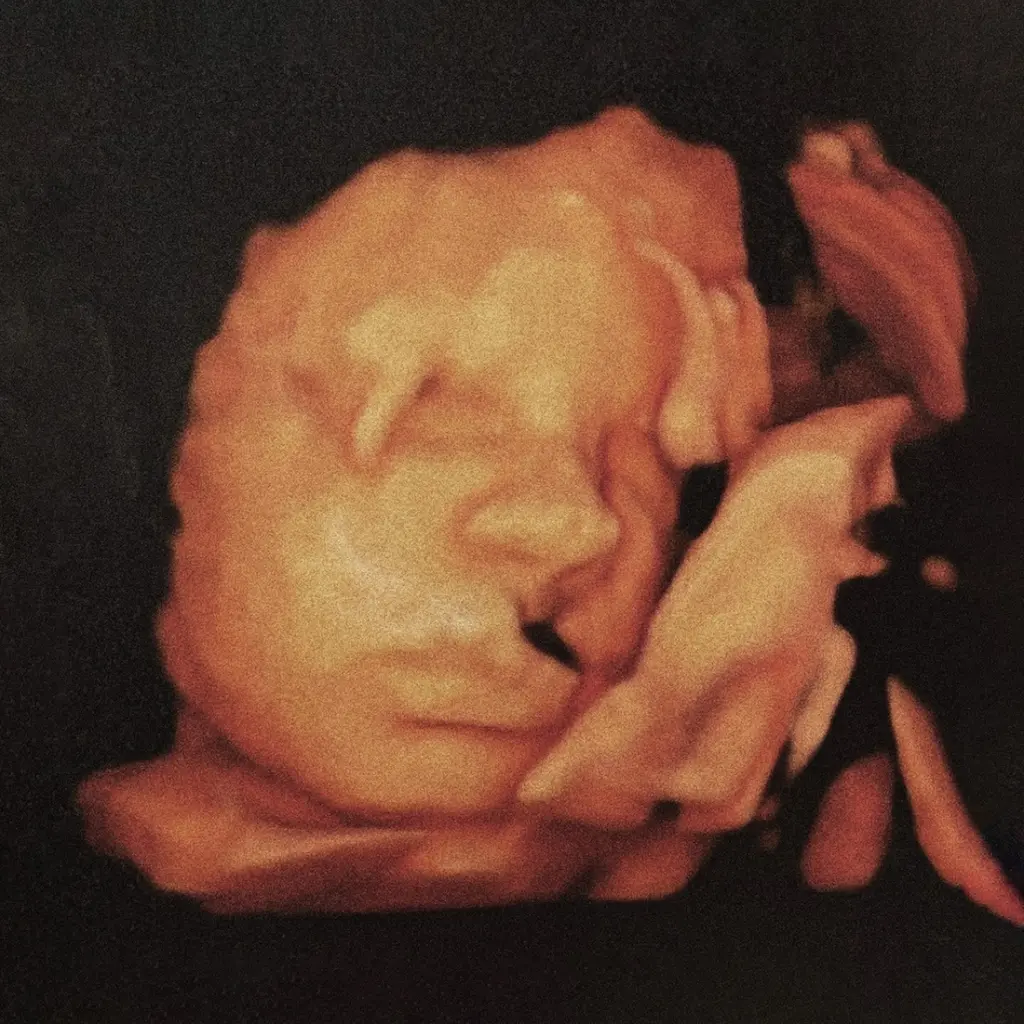
The cover, however, is an ultrasound: how did this image come about?
The story of the cover of Umana is curious, but also very significant. The face you see is that of Olmo, the son of a friend of ours. In reality, getting there was a rather long journey: the album was practically finished, we were working on the visual part and we were wondering how to represent it, what image could really tell what we had inside. We had seen photographers, ideas, shootings, more “glossy” covers, but at a certain point we stopped and asked ourselves honestly: who are we really? Do we really want to present ourselves with a constructed, studio image, when the entire meaning of the album speaks of humanity, imperfection and reality?
From there was born the decision to look for something raw, authentic, deeply human. We liked the idea of low definition as a value, as a language that restores contact with reality. It's a broad, almost theoretical discussion, but that's exactly what we were interested in: an image that wasn't smooth, but alive. In those days I remembered that I had digitized some old videos shot by my father with his video camera – those videos later became the TVB video, recently released. There was the same idea inside: memory, affection, imperfection, the human eye.
And then something serendipitous happened. Stefano sent us a photo found online: an ultrasound of an American woman who claimed to see the “hand of God” on her son's face. We found it bizarre, but also powerfully symbolic, and something clicked from there. I immediately thought of Francesca, a friend, and asked her if she could send us the ultrasound images of her son, Olmo. When we saw them, we were speechless. They were 4D images, hyper-realistic but at the same time surreal, suspended between the analogue and digital world.
We were struck by their ambiguity: on the one hand they look like wax sculptures à la Medardo Rosso, on the other they have an almost unsettling technological clarity. It is an image that speaks of birth, of transformation, of potential – and in some way sums up the whole meaning of Umana: the life that is yet to come, the living matter that merges with sound, with digital, with evolution. It has become the perfect synthesis of the album, its most authentic visual metaphor.
Last question: what are your main references today?
Umana's references arise from very different, but somehow complementary, listening experiences. Compared to our previous works we have certainly approached a more singer-songwriter dimension, with a different attention to writing and the weight of words. It was almost a return, or perhaps a “rediscovery”, of certain Italian authors that we had somewhat forgotten – on my part, for example, there was a rapprochement with Alberto Fortis, who with his way of constructing melodies and giving intensity to the story certainly left an imprint on some of the songs on the album.
Another important reference was Edda, who for us is a central figure: her way of writing is direct, disarmed, but capable of moving naturally from pop to electronic, from the roughest rock to the most intimate folk. In some way it represents that expressive freedom that we too seek: not remaining closed in one genre, but crossing them all, letting writing be the true center of gravity.
During the making of “Umana” we then discovered — or rediscovered — John Lennon's Imagine, which although it may seem like a distant reference, played an important role. It's a record that really struck me: rock, but with softer, more spiritual, more folk openings. We were inspired by the idea of a sound that remains simple but dense, emotionally full. We have not arrived in that direction, but it is a suggestion that we would like to pursue in the future.
Then there's the work of Grian Chatten, the singer of Fontaines DC who came out just as we were recording: that also passed through us a lot. We like to think that every record we love, in some way, leaves a mark, even if just by osmosis.
It must be said, however, that we are three very different heads. I, for example, listen to a lot of instrumental music – jazz, rock, soul, even music from other cultures – while others have an approach more linked to songwriting and writing. This creates a mix of sounds and influences that makes our balance unique. The album's intro, for example, was born from an improvised session between me and Jimmy, our saxophonist: I manipulated the sounds of his sax in real time with effects and distortions, creating an almost “physical” dialogue between acoustic and digital.
There is therefore a component of experimentation and improvisation that runs through all of “Umana”, even in the more “classic” songs. It is that continuous tension between structure and freedom that represents us: the attempt to unite Italian writing with an open, international sound, and with the unpredictability of instinct.
THE VIDEO
ABOUT
THE I will graze in the pastures they are Davide, Stefano and Niccolò. They write songs without genre barriers, ranging from rap to rock, from jazz to electronic. In 2023 they signed with the Woodworm label and Rolling Stone reported them as one of the most interesting projects on the emerging music scene. Poletheir first album, is a mix of styles united by a punk attitude and creative sensitivity, which also spills over into the writing of the video clips signed by the band itself (Ghicci Ghicci is among the finalists of the Videoclip Italia Awards). In 2024 they produced the EP together with Crookers NOLOTOVdenouncing the issue of gentrification. They are the first band to have collaborated with an automaton, Sophia the Robot, for the creation of the EP Call Me Resurgingpresented at the Triennale Milano in June 2025. The album marks the first step for the band towards a reflection on the concept of “humanity” which will lead them to conceive their second official album Human (2025), supported by the production contribution of Tommaso Colliva.
WEB & SOCIAL
https://www.instagram.com/brpascoli/