Tenderness as resistance.
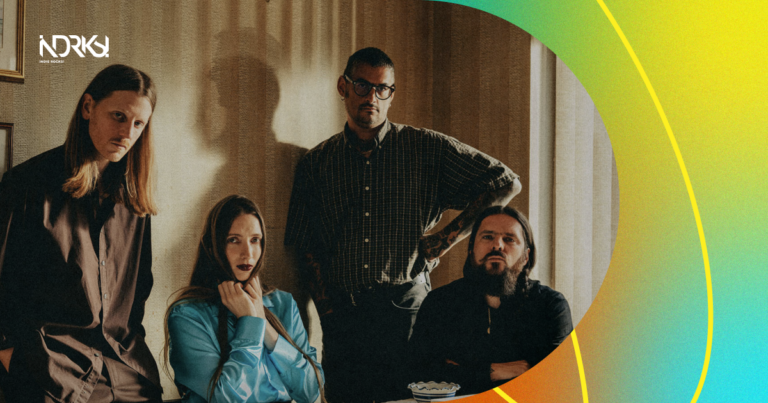
With a proposal that challenges the traditional structures of post punk, Dry Cleaning has built a sound universe where the spoken word, irony and sensitivity coexist with minimalist and enveloping textures. In Secret Lovethe band immerses itself in a context marked by digital overload and the emotional tension of the present, betting on tenderness and introspection as a response. In interview with Florence Shaw and Nick Buxtonthe group reflects on their creative process, the duality between studio and live, and how to stay faithful to their essence without falling into repetition.
Indie Rocks!: I love the new album, it's really amazing. I feel that it comes at a time marked by political tension, digital saturation and perhaps a certain collective pessimism. How was this album born and what emotional need triggered its creation?
Dry Cleaning: Pessimism is something I feel quite often, especially at this moment and during the year we made the album. It's very difficult not to feel that way. I always try to reach out to people who are naturally positive or hopeful, because maintaining that perspective is difficult right now.
GO!: Yes, I think it is more difficult in this strange era we live in, where it seems that it is easier to share hate than love. Furthermore, the album has a quite confessional tone in some lyrics. What was the process of balancing those feelings—like love or sharing—with your style and the instrumental part? Maybe choose something more danceable or, on the contrary, something closer to a calmer ballad. How did you balance both sides?
DC: We work a lot on that. We tend to constantly return to the songs. We don't spend a whole day working on just one; We prefer to spend little time on them and return to them days later. This way we can listen to them with fresh ears, and that helps a lot to find a balance.
I don't know if we achieved it exactly, but it's a good way to do it: getting back to things instead of working them to the point of exhaustion, to the point where you can't tell what's going on inside the song anymore.
DC: Yes, we work in small blocks. In our process it became very clear that working something until you drop doesn't work. If something gets difficult, you just stop and pick it up another day. It doesn't mean avoiding the complicated, but if something isn't working, you leave it. The next day it may sound better or at least different.
GO!: In that sense, do you think that tenderness can be a form of resistance today?
DC: I think so. In fact, it's a fact: there is a lack of tenderness in the world right now. Maybe not only in the world, maybe on the internet… or maybe yes, in general. There is a lack of time. Everything is very fast. There is no room to listen, to let something sink in, for people to make mistakes or for them to say what they are trying to say. It's a very reactive time, and I think that's been a disaster in many ways.
DC: We have also seen how the idea of “trolling” has transcended the internet and has entered politics and everyday life. It's part of this absurd culture war: trolling is everywhere. These types of attitudes are increasingly common.
And people are trying to understand how to combat that. Because when you respond in the same way, it doesn't make you feel good. It doesn't generate happiness. So, without generalizing too much, tenderness, compassion and trying to be more subtle – as it says Flo—, giving people time to understand things is not easy, but it does work as an antidote.
I guess you could say that Bad Bunny did something like that in superbowl. He did not go out to destroy his enemies, but instead tried to spread love. I didn't see the presentation, I just read about it, but I find it interesting.
And I think that, as a long-term strategy to help people, it is the most effective thing you can do.
GO!: I also feel like it's harder to share these ideas today. On social networks it is easier to spread hate than love or tenderness. That's why this album fits perfectly in that sense. Speaking of the album, they worked in places like Chicago or Dublin and with different producers. How did that environment influence the sound identity?
DC: We wanted to experiment. We intentionally made demos in different places, because until then we had only worked with John Parishwho produced our first albums.
We wanted to see if working with other people really made a difference: if the result would be the same or change. And yes, it changes a lot. Then we re-recorded everything with cate Le Bon in France, but many elements of the demo process were kept in the final result.
GO!: It's difficult to capture all those feelings in a single studio shot. What is the difference between Dry Cleaning in the studio and live?
DC: In studio you can be very precise. I like to spend a lot of time on the voices, repeating takes, adjusting details. I'm not looking to do it in one take; I like to build it little by little, refine it into my own idea of what it should be.
Live it is completely different. It's a one-time thing and depends entirely on how you feel that day: whether you're in a good mood, upset, or just in a different energy. Everything influences.
DC: They are totally different skills, and you don't always understand it at the beginning. In study you focus on the details; live, many of those details don't matter because people don't notice them. You focus on something more general and ephemeral.
Also, songs change over time. Recordings exist as the album that people listen to, but on tour they constantly evolve. When you go back to the album after a while, it sounds strange because the songs are still alive: they change, they mean different things, you learn to like some more and others less. It's like keeping music alive in a strange way.
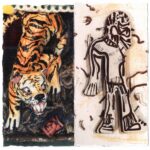
GO!: Another thing I really like about the album is the visual work, especially the choreography. Why expand the sound universe towards the body and movement?
DC: We knew it would add another dimension to the songs. I don't think people think of our music as something to dance to in that way, and that's exactly why it's interesting. There's something a little surreal about seeing those movements, but also something very joyful.
It has a sense of freedom, of lack of self-consciousness, which is very valuable. And it also invites us not to take everything so seriously, to open space for the playful or even the absurd. That idea was what attracted us.
We know that Tom He pushed that direction a lot, thinking about how people move at shows and proposing a kind of more surreal example of what could be done.
GO!: Taking advantage of this talk, one of my favorite songs of the year is “Let Me Grow and You'll See the Fruit.” How was it born?
DC: We are very happy that you like it. We love it too, especially Flo and me. It's nice to do something more tender and feel like it really represents us.
Tom I had a guitar idea with fingerpicking of his solo project. I've always liked the way he plays like that and I wanted him to bring it to the band. It started with that idea, we tweaked it a little and drums and bass quickly joined in.
Flo he wrote the lyrics almost at the same time, responding very quickly to the music. The first time we heard the full lyrics was when we recorded the demo in Chicago, and from then on it felt really good.
DC: The lyrics came directly from the music. It was a very emotional and natural process. It wasn't difficult; It just happened. Even the saxophone, played by Bruce Lamontit was quite improvised at the time.
It's similar to how we did “Leafy”a song from our first album, that just came about very spontaneously. With “Let Me Grow and You'll See the Fruit” Something similar happened: many parts fell into place on their own.
GO!: Yes, sometimes when improvising you don't know when something fits perfectly or when you have to keep working on it.
DC: Exact.
GO!: What is the secret to continuing making music without falling into monotony?
DC: It's complicated. But I think it's about staying interested in the world. Music doesn't just come from listening to music; It comes from everything. It is also important to know how to channel your emotions and accept that you are not always going to get it right.
After Stumpwork We took a six-month break without doing anything. It was risky, it even left us without money, but it was necessary to recharge creative energy.
When we started writing again, everything felt new again. Many ideas emerged in the first weeks. That feeling of starting over is invaluable.
GO!: It makes sense, especially in such a fast and ephemeral era. It's valuable when bands take the time to make things work. This album feels very organic and authentic.
DC: Thank you.
GO!: Last questions, the most difficult. For someone who will be listening to Dry Cleaning for the first time, what song would you recommend?
DC: “No Decent Shoes for Rain”. It has a little bit of everything we do. It's like a central point for several things that interest us. It's epic but also casual at the same time. Although if I thought about it for five more minutes, I would probably say another song.
GO!: The first one I heard was “Scratchcard Lanyard”, but my favorite is “Don't Press Me”.
DC: I like it too. I like that it's so short. Many people ask why he doesn't have another choir. When we made the first album with John Parishhe made us cut things out constantly.
Then we wanted to make very short songs for the next album. But when we worked with him again, he told us to add more parts. So we went from one extreme to the other.
GO!: Last question: Describe Dry Cleaning in three words.
DC: It's impossible.
DC: The best band in the world. (Best band ever)
GO!: Thank you very much for your time.
DC: Thanks to you.